Quick answer
Most corner and edge lifting comes from one of four things: a surface that was not fully cured or cleaned, adhesive that dried before the paper was pressed down, a room with swinging humidity, or a corner that was wrapped instead of cut. Press the loose area flat with a seam roller first. If it stays down for a day, you likely have a humidity or prep problem, not an adhesive failure. If it lifts again within hours, reactivate the adhesive or add a thin bead of wallpaper paste, then smooth from the center outward.
Why corners fail first
A corner is where two flat planes meet, so any movement in the wall gets concentrated there. Fresh paint, fresh plaster, and even a wall that was wiped down with a wet cloth can leave moisture or dust that stops adhesive from bonding. Corners also take the most physical contact: door frames, chair backs, and hands brushing past all push on the same few inches of paper.
That is why wallpaper peeling at corners is usually a prep or environment story rather than a product defect. Before you reach for extra adhesive, check whether the wall was fully dry, whether the corner was cleaned, and whether the room has had a recent humidity swing from a shower, a heater, or open windows.
How to fix wallpaper edges lifting
Work in small sections and do not rush the press. Lift the loose edge gently with a plastic spatula, not a metal scraper, so you do not tear the face of the paper. If the back feels tacky, you can often reactivate it with a light touch of warm air from a hair dryer on low, then press it back with a seam roller. If the back feels dry and smooth, the adhesive is spent and needs help.
For a spent edge, apply a thin line of wallpaper paste or a compatible adhesive with a small brush, wait the time the adhesive label recommends, then press the paper down from the center of the panel toward the corner. Wipe any squeeze-out immediately with a damp cloth. This is the same motion you would use on a full panel, just scaled down to a few inches.
- Press flat with a seam roller before adding anything new.
- Reactivate tacky adhesive with gentle warm air, not high heat.
- Use a thin bead of paste only when the original adhesive is dry.
- Smooth outward from the panel center to push air out of the corner.
When the fix is maintenance, not repair
If the same corner lifts every few weeks, the problem is the room, not your technique. Bathrooms, kitchens, and laundry areas swing in humidity, and paper expands and contracts with it. Running an exhaust fan during and after showers, keeping a small hygrometer in the room, and avoiding direct heat aimed at the wall can stop the cycle. In dry climates, a humidifier in winter does the same job in reverse.
This is also where material choice matters. A water-resistant, gently cleanable, PVC-free textile wallpaper handles occasional moisture far better than a standard paper-backed option, so it is worth checking the material line before you commit a whole wall to a damp corner.
Stop points: when to call it
There is a clear line between a fixable lifted edge and a wall that needs to come down. If the paper is stretched, torn, or visibly distorted, pressing it back will only create a wrinkle that travels. If the wall behind the paper is soft, crumbly, or damp to the touch, no adhesive will hold until the wall itself is repaired. And if more than a few inches along a seam are loose, a spot fix will look like a patch.
At that point, the honest move is to remove the affected panel, correct the wall, and rehang. It costs more time, but it is the only fix that stays fixed.
Corner and edge diagnosis
- Lifts within hours of pressing: The adhesive on the back is dry or contaminated. Reactivate it with gentle warm air, or add a thin bead of wallpaper paste and press from the center outward. If it holds for 24 hours after this, the fix worked.
- Lifts again within a week: The room is swinging in humidity or the wall was not fully cured or cleaned before hanging. Address ventilation and surface prep before adding more adhesive. A hygrometer reading above 60 percent points to a room problem, not a paper problem.
- Paper is stretched, torn, or distorted: Pressing it back will create a visible wrinkle. Stop spot-fixing and plan to remove and rehang that panel. This is the point to choose replacement over repair.
- Wall behind the paper is soft or damp: No adhesive will hold on a failing substrate. Repair the wall first, then rehang. Do not rehang until the wall is dry and sound.
Material choices that reduce edge lifting
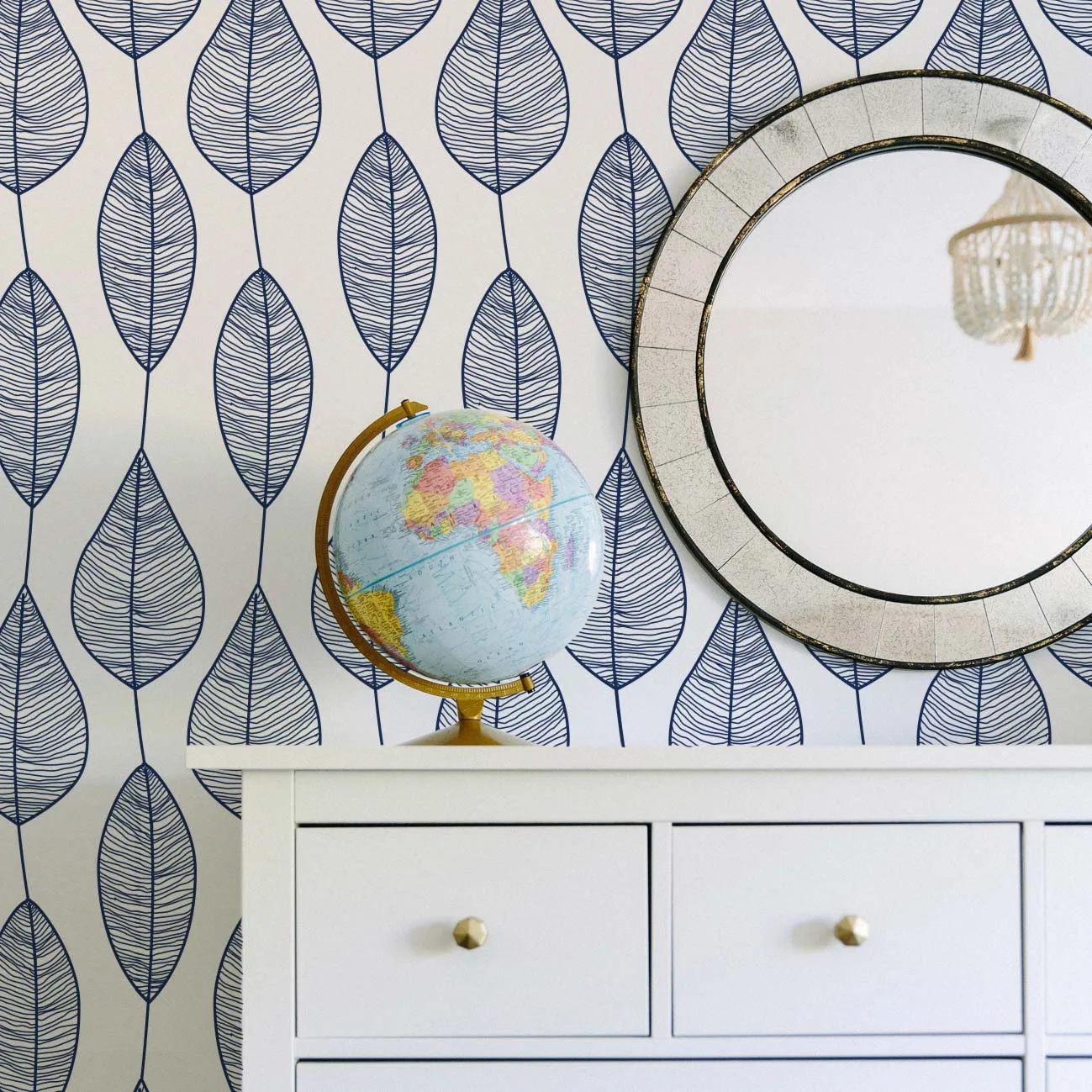
- Stripy leaves wallpaper: Self adhesive removable textile wallpaper, water-resistant and gently cleanable, PVC free, printed with GreenGuard Gold. A water-resistant textile face tolerates the humidity swings that cause many corner lifts, and the removable backing means a failed edge can be corrected without damaging the wall.
- Pink Infinity Lock Grasscloth Wallpaper: Available in sizes from an 11 x 8 inch sample up to full-width panels of 32 x 144 inches. Ordering the full panel size you need for a corner run in one order keeps the batch consistent, which matters because colors can vary slightly between material batches.