Why Rough Iron suits worn dark metal
Warpaints Air Rough Iron is an airbrush-ready metallic paint made for dark iron surfaces on miniatures. If you are painting battered armour, industrial plating, or a grimy weapon casing, a dark metallic base gives you a surface that reads as heavy metal without needing a bright silver highlight everywhere.
The paint is formulated for airbrush use right from the bottle, so you can focus on building the worn iron look rather than mixing and thinning before you start. The supplied product information confirms that no thinning is required and that the bottle includes pre-loaded mixing balls.
What the catalog confirms about Rough Iron
-
Warpaints Air Metallics: Rough Iron: Airbrush-ready paints right from the bottle, with no thinning required. This removes a preparation step and makes the paint practical for quick metallic basecoats on armour panels.
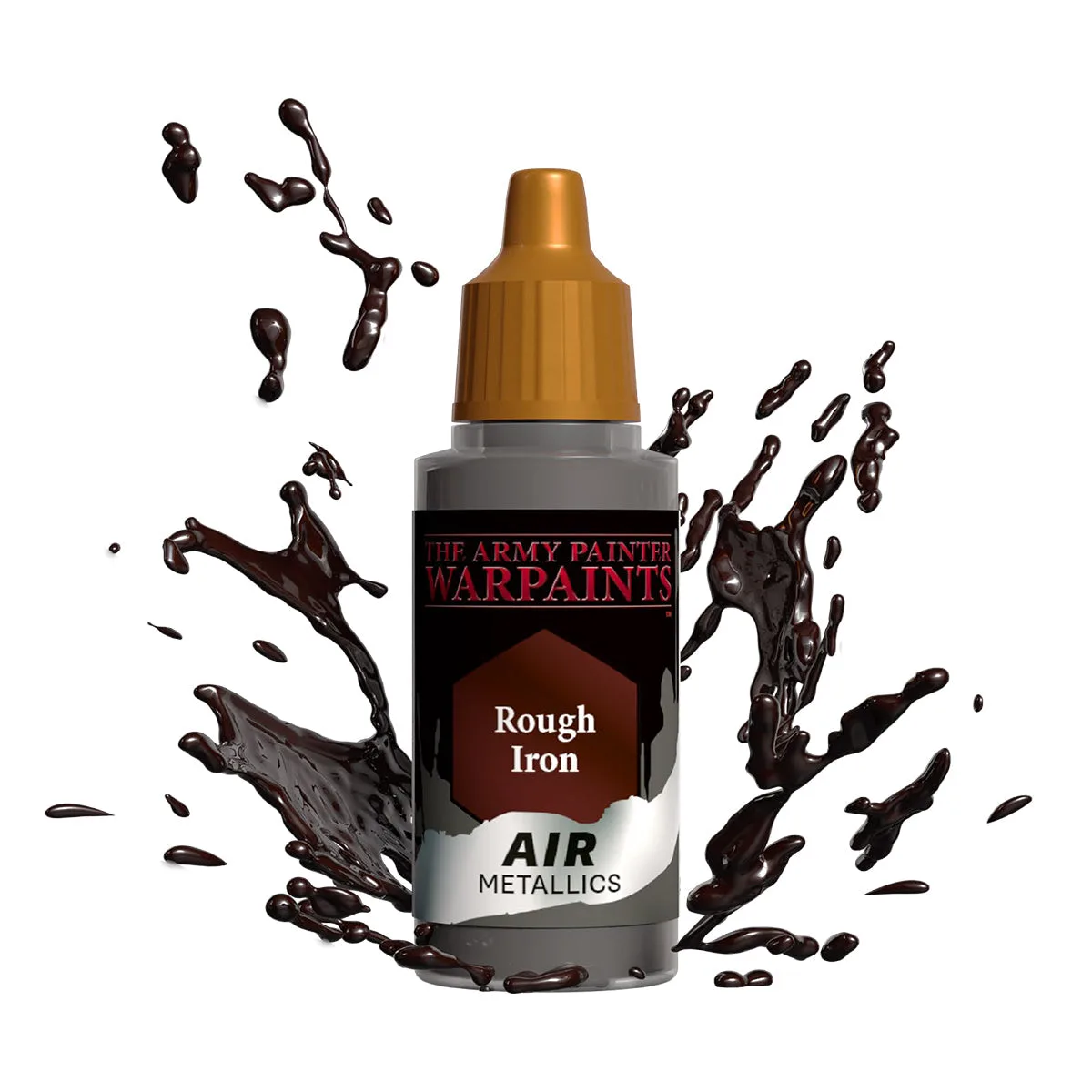
Warpaints Air Metallics: Rough Iron
-
Warpaints Air Metallics: Rough Iron: Pre-loaded Mixing Balls. Metallic pigments settle, so the mixing balls help you agitate the bottle before loading the airbrush.
-
Warpaints Air Metallics: Rough Iron: Developed in a Colour Triad System. Rough Iron belongs to a coordinated colour family, which helps you plan a dark metal scheme that stays consistent across a unit.
A supported airbrushing sequence for worn iron armour
The supplied information does not include a full manufacturer procedure, so treat these as practical checkpoints built around the confirmed product facts rather than a fixed recipe. Work in thin, controlled layers and let each pass dry before judging the result.
- Agitate the bottle: Because the bottle contains pre-loaded mixing balls, shake it well before use so the metallic pigment is evenly dispersed.
- Load the airbrush directly: The paint is airbrush-ready right from the bottle and requires no thinning. Add it to the cup without diluting it first.
- Build the dark metal base: Apply Rough Iron in light passes over the armour areas you want to read as worn iron. Keep the layers thin and let them dry between passes so you can control the density of the metal.
- Check the surface before detailing: Once the base is dry, inspect the armour under good light. The supplied information does not confirm coverage behaviour, so judge the result on your own miniature before adding further layers or highlights.
Where Rough Iron fits in a dark metal scheme
Rough Iron works as the darker foundation of a worn iron armour scheme. On miniatures with large armour plates, it can cover the main body of the metal while brighter colours handle edges and details. Because it is part of a Colour Triad System, you can pair it with related colours from the same family if you want a coordinated look rather than a single isolated metal tone.
For airbrush worn iron armour, the key is to let the dark metal sit underneath and use the airbrush to keep the surface even. Rough Iron is not a weathering product in itself; the worn effect comes from how you layer and finish the armour around it. The supplied information does not confirm specific weathering behaviour, so test the paint on a spare surface if you plan to combine it with other effects.
Rough Iron versus a brighter metallic air paint
Choosing between Rough Iron and a brighter metallic depends on the armour you are painting.
- Rough Iron: A dark metallic air paint suited to worn iron armour, industrial plating, and bases that should read as heavy, aged metal. It is airbrush-ready from the bottle with no thinning required.
- Brighter metallic air paints: Better for polished steel, edge highlights, or decorative metal where you want a cleaner, more reflective finish. The supplied information for Rough Iron does not confirm how it compares directly with other metallic air paints, so use your own swatch test.
Checks before you commit Rough Iron to a whole unit
- Test the finish on a spare part: The supplied information does not confirm coverage or drying behaviour, so airbrush a small area first and check how the dark metal reads under your usual lighting.
- Confirm your airbrush setup: The paint is designed to be used right from the bottle with no thinning required. If your airbrush behaves differently with metallic paints, adjust your technique rather than assuming the paint needs dilution.
- Plan the triad: Rough Iron is developed in a Colour Triad System. Decide which related colours you will use for highlights and shadows before you commit the whole unit to a single dark metal base.
- Check the bottle size you need: The supplied record lists a standard variant. If you are painting a large army, estimate how much paint your airbrush session uses before buying multiple bottles.