Quick answer
Start with the lowest pressure setting on your water flosser, especially if you have sensitive gums or are a beginner. Gradually increase over one to two weeks until you feel a firm but comfortable cleaning pulse. Most people settle between the middle and upper-middle range of their model's dial. If you feel pain or see bleeding that persists, drop back a level and consult your dentist.
Why pressure settings matter more than you think
Water flossers work by pulsating a stream of water to dislodge plaque and debris from between teeth and along the gumline. Too little pressure and you miss the cleaning benefit; too much and you risk irritating gum tissue, especially if you already have gingivitis or recession. The right setting is personal—it depends on your gum sensitivity, the model you own, and how you angle the tip. Unlike a manual toothbrush, a water flosser gives you a dial or button to fine-tune that force, so you can adapt as your gums get healthier.
Start low, then build up gradually
The most common mistake is starting at a high setting because it feels like it must clean better. In reality, your gums need time to adapt. Begin at the lowest pressure for the first three to four days, using warm water if your teeth are sensitive. After that, increase by one level every few days until you reach a pressure that feels effective but not painful. If you have sensitive gums, stay at the lower end and focus on technique—aim the tip at a 90-degree angle to the gumline and let the water do the work.
Match the setting to your model's design
Not all water flossers label pressure the same way. Some use numbers 1–10, others use low/medium/high, and cordless models may have fewer increments. A setting of 5 on one device might feel like a 3 on another. That's why you should always test a new model at its lowest level and adjust from there. If your model has a pause button or a massage mode, use it when you first start—it gives you a break and helps you learn the feel without committing to a continuous stream.
When to dial it down or seek advice
If your gums bleed consistently after flossing, or if you feel a stinging sensation that lasts more than a minute, reduce the pressure. Bleeding can be a sign of inflammation that's already there, but a too-high setting can make it worse. Persistent bleeding, pain, or receding gums warrants a dental visit—pressure settings are not a substitute for professional care. For most people, a comfortable setting plus consistent daily use is what keeps gums healthy.
Step-by-step: finding your ideal pressure
- Fill with warm water and set to lowest pressure: Use lukewarm water to reduce sensitivity. Turn the dial to its lowest setting before you turn the unit on. Checkpoint: If the lowest setting still feels too strong, look for a 'sensitive' or 'massage' mode, or consider a model with a wider low range.
- Aim the tip at the gumline and turn on: Lean over the sink, close your lips slightly to contain splashes, and direct the stream at a 90-degree angle to the gumline. Start with your front teeth and work toward the back. Common mistake: pressing the tip too hard against teeth—let the water pressure do the cleaning.
- Increase one level every few days: After three to four days at the lowest setting, move up one notch. Stay at each new level for at least two days before increasing again. Checkpoint: If you feel discomfort, drop back down. The goal is a firm but comfortable pulse, not the highest number.
- Adjust for sensitive areas: If certain teeth or gums feel tender, pause the stream or lower the pressure when you reach that spot. You can also switch to a gentler tip if your model offers one. Common mistake: ignoring pain and pushing through—it can lead to gum irritation and discourage daily use.
- Settle on your maintenance setting: Once you find a pressure that cleans well without discomfort, stick with it. Most people end up in the middle range of their dial after a couple of weeks. Next step: Reassess every few months. Your gums may become less sensitive over time, allowing a slightly higher setting.
Waterpik models and their pressure control
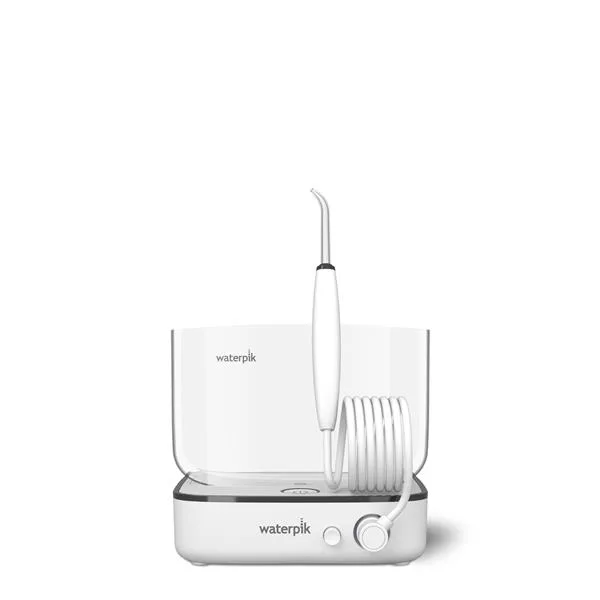
- Sidekick Water Flosser, White with Chrome – White (WF-04CD010-1): Sidekick Water Flosser collapses for travel-ready water flossing anywhere, anytime. Its compact design often comes with a simplified pressure control, so you may need to adapt your usual setting when using it on the go.
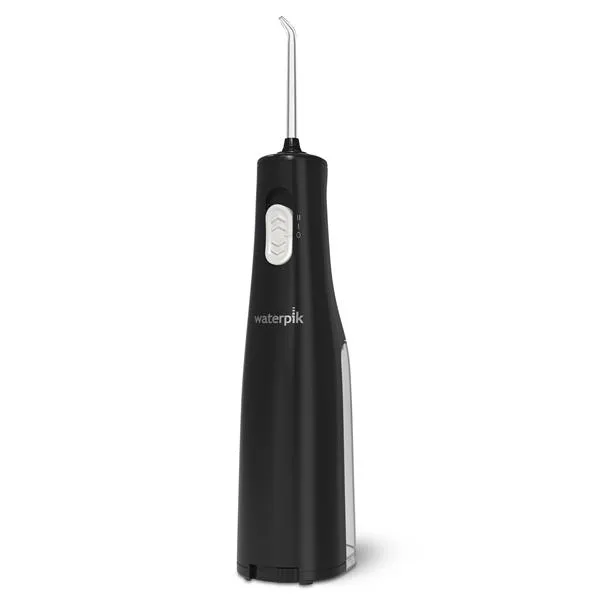
- Black Cordless Express Water Flosser – Black (WF-02W012): Black Cordless Express Water Flosser is AA battery operated and portable, perfect for small bathrooms and travel. With fewer pressure options than countertop models, it's a good choice if you prefer a simple on/off flow and don't need fine-tuning.
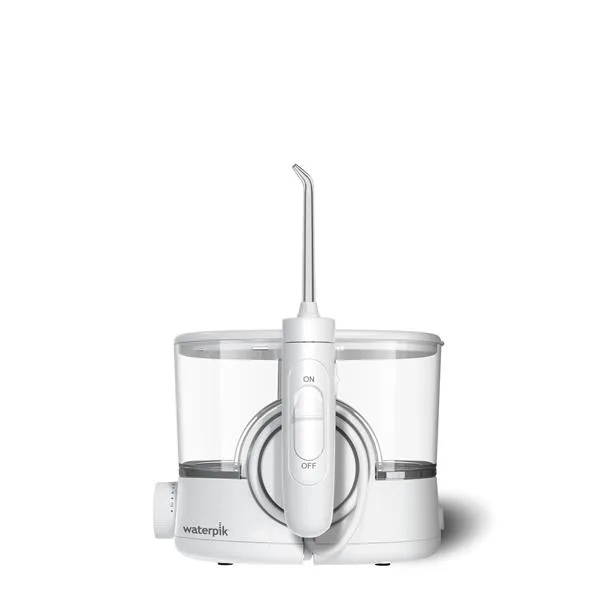
- ION Cordless Water Flosser – White (WF-11W020-1): ION Cordless Water Flosser provides maximum performance with cordless convenience, 30% smaller than traditional models. Its rechargeable design and multiple pressure settings let you adjust for sensitive gums without a bulky countertop unit.