Start with what the bottle record actually confirms
The waterdrop® Glass is a borosilicate glass bottle sold in a Standard variant. The catalog describes it as a bestselling, minimalistic bottle with a simple waterdrop® logo and no prints. That is the full care-relevant description in the supplied record — it does not list dishwasher instructions, temperature limits, or a recommended cleaning method.
That gap matters. You can still build a sensible routine around borosilicate glass, but you should not treat any step below as a manufacturer instruction. Use it as a practical framework, and check the bottle or its packaging for any care label before you commit to a method.
What the waterdrop® Glass record tells you
-
waterdrop® Glass: Bestselling Glass Bottle with a simple waterdrop® logo — no prints needed. The plain exterior means there is no printed decoration to protect with special cleaning, so care can focus on the glass itself.
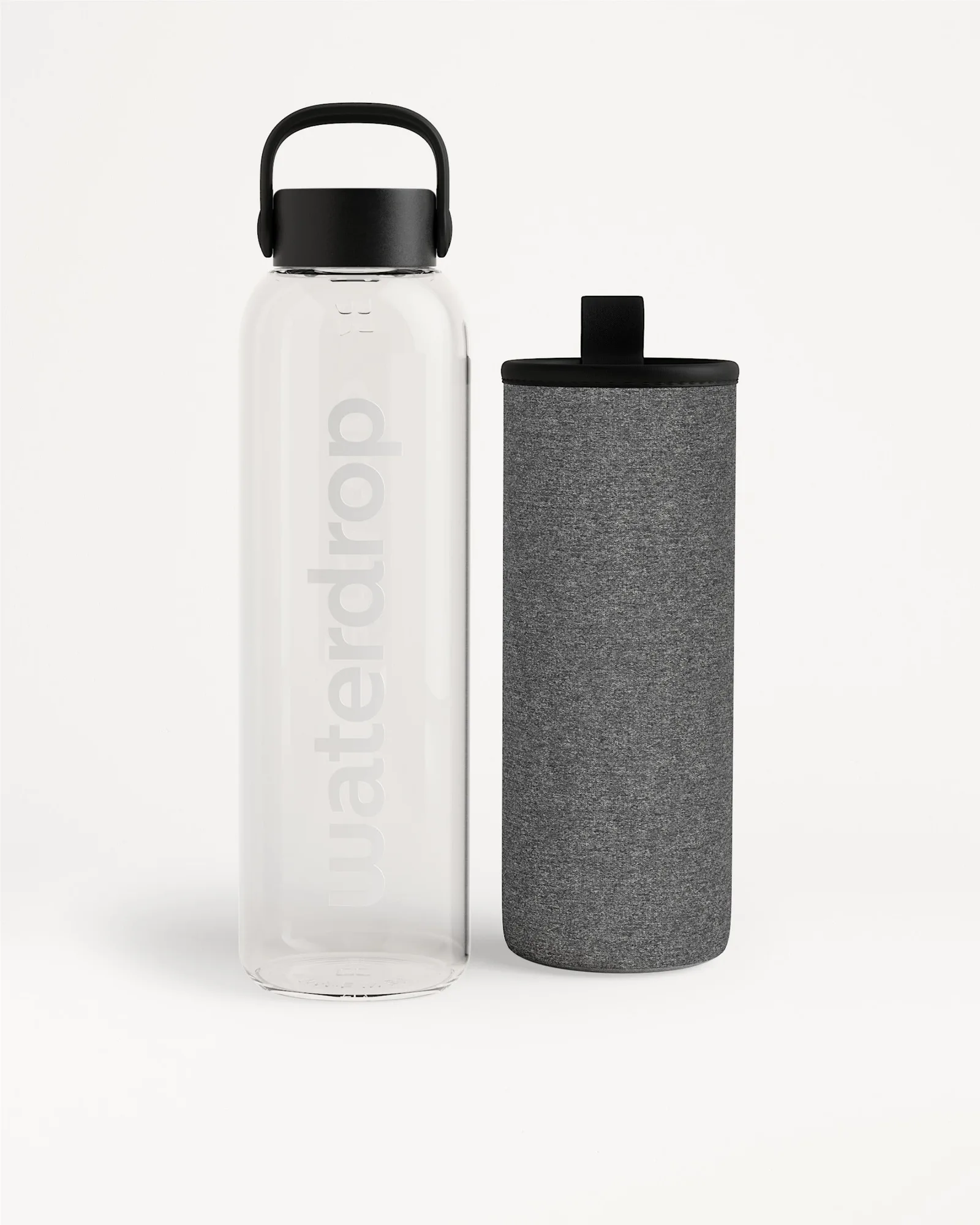
waterdrop® Glass
-
waterdrop® Glass: Available in a Standard variant. There is one listed option, so you do not need to compare care needs across sizes or finishes.
-
waterdrop® Glass: Made of durable borosilicate glass. Borosilicate is the material you are caring for; the record does not add temperature or dishwasher claims beyond that.
A simple cleaning routine for borosilicate glass
These steps are general good practice for glass drinkware, not instructions supplied with the waterdrop® Glass. Keep them gentle and consistent rather than aggressive.
- Rinse promptly after each use: Empty and rinse the bottle soon after you finish drinking. This stops residue from drying on the glass and makes the next wash easier.
- Wash with warm water and a little dish soap: Use a soft bottle brush to reach the base and sides. Avoid abrasive scouring pads, which can scratch glass over time.
- Rinse thoroughly: Remove all soap residue before refilling. A clear rinse also helps you spot any remaining film.
- Air-dry upside down: Stand the bottle mouth-down on a drying rack so water drains out. Leave the cap off until the inside is fully dry.
Is the waterdrop® Glass dishwasher safe?
The supplied product record does not confirm whether the waterdrop® Glass is dishwasher safe. Because that information is not in the catalog, the honest answer is: check the care label or packaging that comes with your bottle before putting it in a dishwasher.
If you cannot find a dishwasher instruction, hand-washing is the lower-risk choice. It also lets you control water temperature and avoid contact between the bottle and other items during a cycle.
Daily habits that protect borosilicate glass
- Handle it like glass, not steel: Borosilicate is durable, but it is still glass. Avoid knocking it against hard surfaces or letting it roll off a counter.
- Skip sudden temperature shocks: The record does not state a temperature range. As a general precaution, avoid moving the bottle directly from very hot to very cold conditions or the reverse.
- Store it dry and open: Keep the bottle uncapped in storage so air can circulate. This helps prevent stale smells between uses.
- Inspect the rim and base: Check the mouth and base for chips or cracks before each fill. A damaged bottle is not a good drinking vessel.
What the record does not settle before you buy
The waterdrop® Glass listing is minimal by design. It confirms the material, the Standard variant, and the plain logo finish, but it does not provide a capacity, weight, cap style, dishwasher rating, or microwave guidance. If any of those details decide your purchase, treat them as unconfirmed rather than assuming a value.
For everyday care, the safe approach is simple: rinse, hand-wash gently, air-dry, and handle the bottle as glass. That routine works with the information the catalog provides and avoids inventing instructions the record does not contain.