The core difference: water transfer vs peel-and-stick
The names tell you most of what you need to know. A waterslide decal is printed on a thin film that releases from its backing paper when soaked in water. You slide it into position on the model, then let it dry and settle. A sticker decal is a pre-cut adhesive film: you peel it from its backing and press it onto the surface. That single difference in how the marking attaches drives everything else — how it looks, how it sits over curves and panel lines, and how much room you have to correct mistakes.
Neither type is universally better. The right choice depends on the kit, the marking, and how much finishing work you want to do. The comparison below sticks to what can be reasonably stated about each type and avoids claims that depend on a specific brand's adhesive or film.
Waterslide decals vs stickers at a glance
- Application: Waterslide decals need soaking and sliding into place; stickers peel and press. Waterslides allow repositioning while wet; stickers generally do not.
- Film thickness: Waterslide decal film is typically thinner than sticker film, so it conforms better to curves and sits closer to the surface.
- Edges and silvering: Waterslides can show silvering (trapped air or poor adhesion under the clear film) if not applied carefully. Stickers have a visible edge by nature and are less prone to silvering but more prone to lifting.
- Durability: A waterslide decal that is fully dried and topcoated can be durable, but it is fragile before topcoat. Stickers are more resistant to handling but can peel at edges over time.
- Correction: Waterslides can be nudged while wet and sometimes removed with water before drying. Stickers are difficult to reposition without damaging the adhesive or the surface.
- Best for: Waterslides suit builders who want a painted-on look and are willing to take care during application. Stickers suit quick builds, toys, and markings that need to survive handling.
A waterslide example: AW-062 Waterslide Decal (White)
-
AW-062 Waterslide Decal (White): High-quality waterslide decals AW-062, scale 1/144 & 1/100. This set is sized for two of the most common Gunpla scales, so it can work across a collection rather than being tied to a single kit.
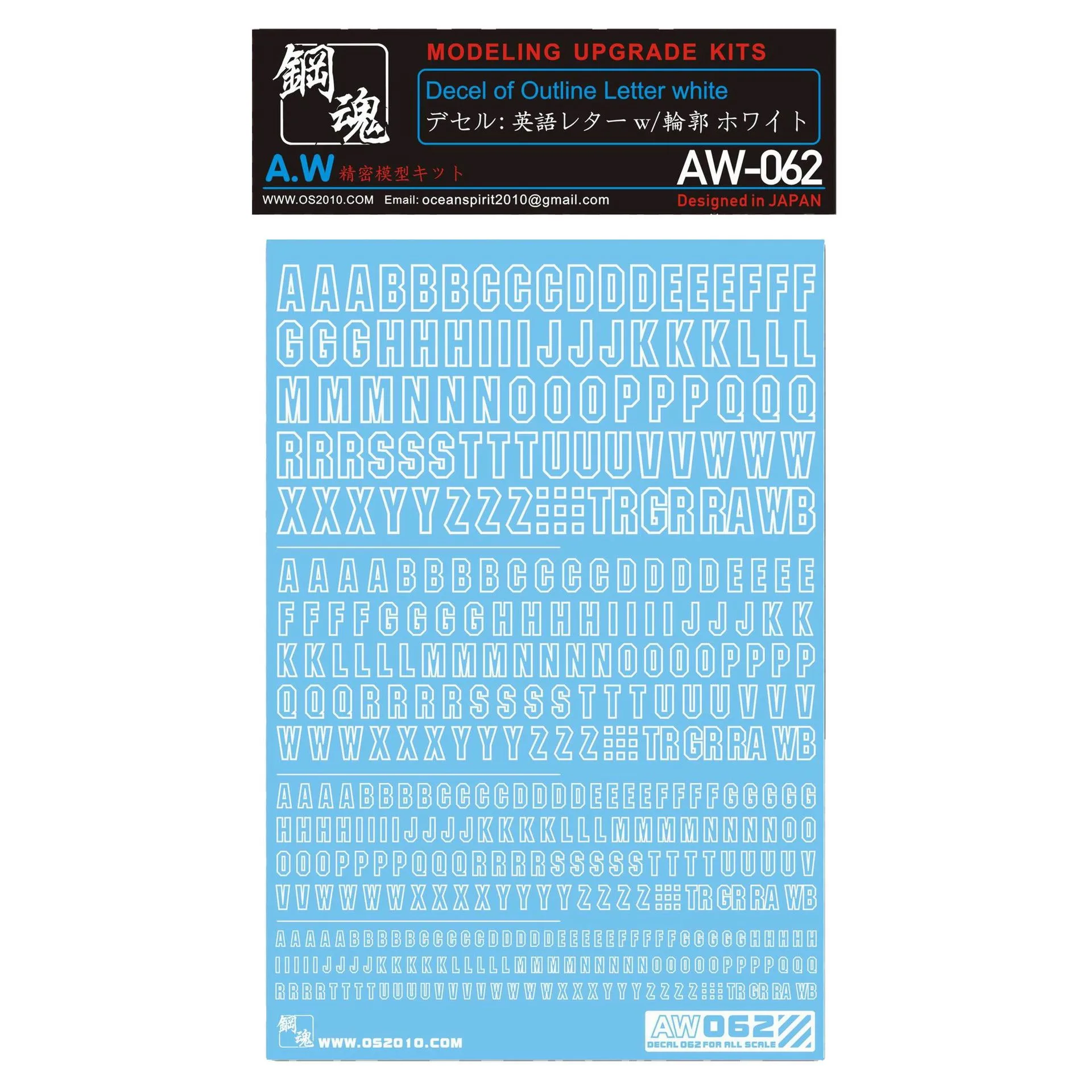
AW-062 Waterslide Decal (White)
-
AW-062 Waterslide Decal (White): No instructions are necessary. These decals are made for you to decide! That open-ended design means you choose placement and marking selection yourself; there is no prescribed layout to follow, which is typical of aftermarket waterslide sets.
When waterslide decals are the better choice
Choose waterslides when the marking is meant to look like it was painted on. Because the film is thin, a well-applied waterslide can sit flush over curved surfaces and panel lines, and it largely disappears under a clear topcoat. That makes waterslides the usual pick for scale-model displays, competition builds, and any Gunpla where you want custom markings without a raised edge.
They also give you a second chance. While the decal is wet, you can slide it into alignment or lift it and try again. That matters on complex surfaces like shoulders, skirts, and shield faces where centering a marking by eye is tricky. The tradeoff is that waterslides demand more patience: you need to manage water, avoid trapping air, and protect the decal until it dries and is topcoated.
The AW-062 set is a straightforward example of this category. It is a waterslide decal sheet in white, scaled for 1/144 and 1/100 kits, and it leaves the layout up to you. That makes it a good fit for builders who already know where they want markings and just need a supply of white decals to execute the plan.
When stickers make more sense
Stickers win on speed and handling. There is no soaking, no sliding, and no waiting for the film to release. For a quick build, a kit that will be handled often, or a model that will be played with rather than displayed, stickers are the practical choice. They are also more forgiving of imperfect surfaces because the adhesive layer is thicker and bridges small imperfections.
The tradeoff is visual. Sticker film is thicker, so edges can catch light and collect dust, and the marking may sit visibly proud of the surface. On a matte or weathered build, that raised edge can break the illusion. Stickers are also harder to reposition: once the adhesive touches the plastic, moving the sticker often stretches it or leaves residue.
If you are building a kit primarily for fun or for a younger builder, stickers are usually the right default. They let you finish the model without the water-and-topcoat workflow that waterslides require.
Practical checks before you commit to either type
- Check the surface finish: Gloss surfaces generally accept both waterslides and stickers better than matte or textured surfaces. If your kit is matte, a gloss clear coat before decaling can help adhesion and reduce silvering on waterslides.
- Plan for topcoat: Waterslide decals are fragile until protected. A clear topcoat locks them in and helps the film blend. Stickers do not strictly need topcoat, but a clear coat can help seal edges on stickers that might lift.
- Match scale to marking size: A marking that looks right on a 1/100 kit can be oversized on a 1/144 kit. The AW-062 set covers both scales, but you still need to choose markings that suit the kit in front of you.
- Decide how much correction you need: If you are likely to misalign a marking, waterslides give you room to fix it while wet. If you want a one-and-done application, stickers are simpler.
- Consider handling: Models that will be picked up and posed frequently favor stickers or well-topcoated waterslides. Untopcoated waterslides can be damaged by handling.
What the supplied information does not confirm
The AW-062 listing confirms the decal type, color, and scale range, and notes that no instructions are necessary. It does not specify drying times, recommended setting solutions, or topcoat compatibility. Those details are not confirmed by the supplied information, so treat any specific timing or product pairing as something to test on a spare surface first. The same caution applies to sticker decals generally: adhesive behavior and long-term durability vary by brand and storage conditions, and those specifics are outside what this comparison can verify.