Two Portable Options, Two Different Approaches
If you are looking for a portable breast pump, two Lansinoh models stand out: the Wearable Pump and the Compact Single Electric Breast Pump. Both are designed for mums on the move, but they solve the same problem in quite different ways. The right choice depends on how much you value true hands-free pumping versus a more traditional electric pump that is small enough to slip into a bag.
This comparison looks at the practical differences in design, portability, cleaning, and pumping style to help you decide which pump suits your daily routine.
At a Glance: Key Differences
-
Wearable Pump: Completely hands-free, Lansinoh’s Wearable Pump discreetly fits into your bra, with no tubes or cords, allowing for portable pumping anywhere. This is the main advantage: you can pump while moving, working, or caring for your baby without being tethered to a machine.
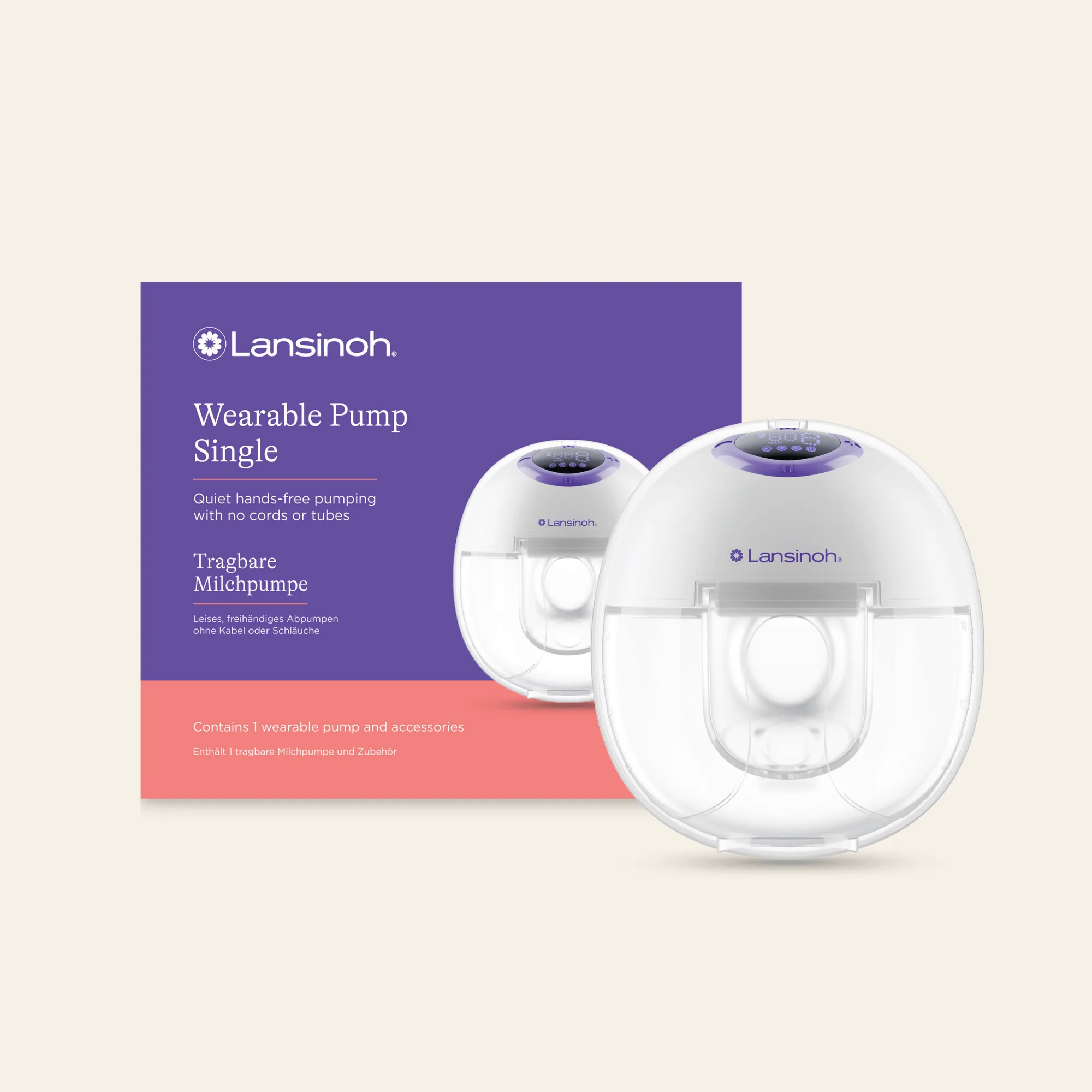
Wearable Pump
-
Compact Single Electric Breast Pump: The Compact Single Electric Breast Pump is lightweight, compact, discreet, and compatible with a micro-USB adapter or mains AC adapter – making it perfect for on-the-go use. It is small enough to carry in a nappy bag and can be powered by a power bank, but it still uses tubing and a pump unit that sits outside your bra.
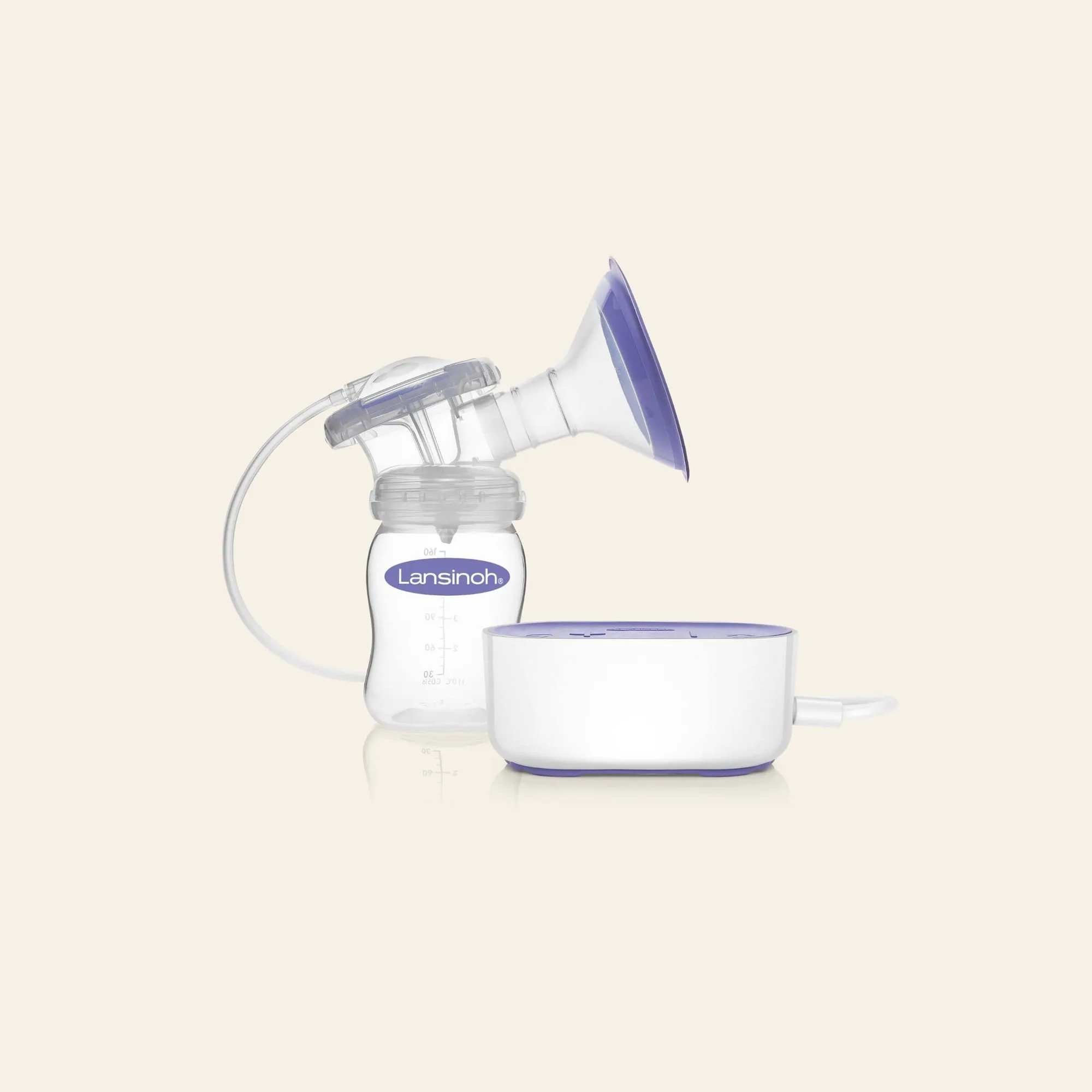
Compact Single Electric Breast Pump
Hands-Free Freedom vs On-the-Go Convenience
The Wearable Pump is the only truly hands-free option here. It fits entirely inside your bra, with no tubes or cords. The supplied record notes it is ultra-quiet and lightweight, with 1.5 hours of battery life. This makes it practical for pumping during a commute, while doing chores, or even during a work meeting. It comes with a 180ml collection cup and a leak-resistant easy-pour spout.
The Compact Single Electric Breast Pump, by contrast, is a traditional electric pump in a small package. It uses a pump unit connected to a breast cushion via tubing. It is not hands-free, but it is compact and runs on a micro-USB adapter or mains AC adapter. You can use it with a power bank, which makes it easy to pump in a car or a café. The trade-off is that you need one hand to hold the pump or a pumping bra to keep it in place.
Pumping Phases and Customisation
The Compact Single Electric Breast Pump mimics a baby’s natural feeding rhythm with two phases: a Let-Down Phase (faster, shorter sucks to stimulate milk flow) and an Expression Phase (slower, deeper sucks) with 5 adjustable suction levels. It automatically switches from let-down to expression after 2 minutes, or you can switch manually.
The Wearable Pump offers 9 hospital-grade suction levels and an easy-to-use LED display with time tracking. The supplied record does not specify whether it has distinct let-down and expression phases, so if that two-phase simulation is important to you, the Compact Single is the clearer choice. The Wearable Pump’s higher number of suction levels may give you more fine-tuning for comfort.
Cleaning and Assembly Time
Cleaning time can be a deciding factor when you are pumping multiple times a day. The Wearable Pump has just 4 dishwasher-safe parts to clean, which is a real time-saver. The Compact Single Electric Breast Pump includes more parts (tubing, valve, breast cushion, collection bottle), and the supplied information does not confirm that all parts are dishwasher-safe. If you want to minimise washing up, the Wearable Pump has a clear edge.
Power and Portability in Practice
Both pumps are portable, but in different ways. The Wearable Pump runs on a rechargeable battery with 1.5 hours of use, charged via USB. That is enough for several pumping sessions before needing a recharge. It is completely cordless, so you can move freely.
The Compact Single Electric Breast Pump can be powered by a micro-USB adapter or mains AC adapter. It does not have a built-in battery, so you need a power source (wall outlet or power bank). This makes it less flexible for truly mobile pumping, but it also means you never have to worry about battery life running out mid-session.
Which One Should You Choose?
Choose the Wearable Pump if you want to pump completely hands-free, need to pump in public or while moving, and value minimal cleaning. It is ideal for mums who pump during a commute, at work, or while caring for other children.
Choose the Compact Single Electric Breast Pump if you prefer a traditional pumping experience with a two-phase rhythm that mimics breastfeeding, want a small pump you can carry in a bag, and don't mind using one hand or a pumping bra. It is a good option if you often have access to a power source and want more control over the pumping phases.
What the Supplied Information Does Not Settle
The supplied records do not confirm whether the Wearable Pump has a distinct let-down phase. They also do not specify the exact noise level in decibels for either pump, so if noise is a concern, you may want to check user reviews or test in person. The battery life of the Compact Single is not stated because it does not have an internal battery. Neither record includes pump speed in cycles per minute, so direct suction pattern comparisons are limited.