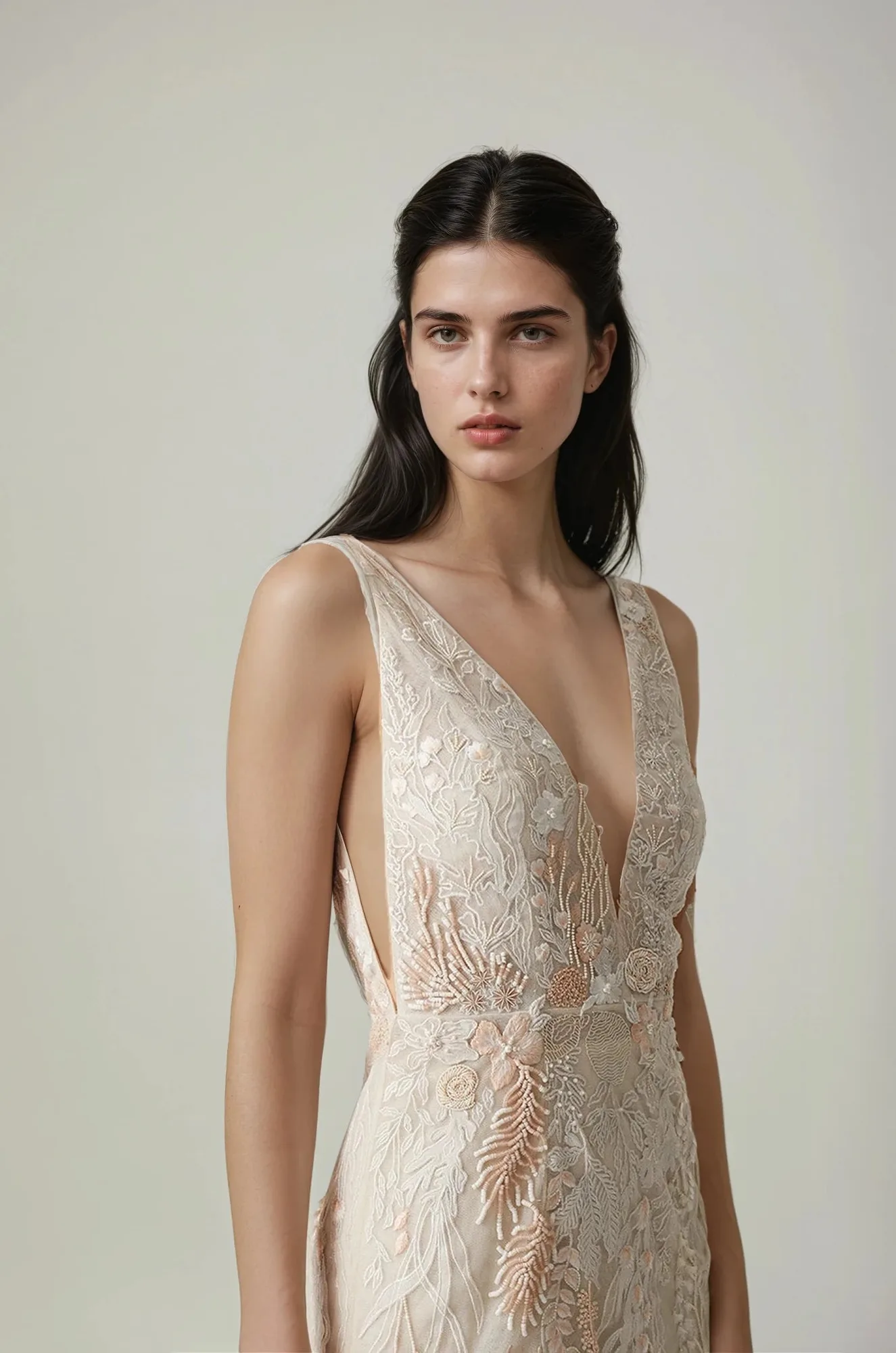
Quick answer
Start alterations 8–12 weeks before the wedding, with a first fitting 10–12 weeks out, a second 4–6 weeks out, and a final pick-up 7–10 days before. If your gown is heavily hand-embroidered or layered, add two weeks to every stage and confirm the atelier's schedule before you buy.
Why the alteration clock starts before your gown arrives
Most brides book the first fitting as soon as the gown is in hand, but the schedule depends on how much handwork sits in the seams. A gown with hand-painted organza and lace overlay, like the Blush Bougainvillea Oasis Gown, needs slower, more careful work than a simple crepe sheath. Ask the atelier for a written alteration window at purchase, not after the gown ships.
How long do dress alterations take?
Plan for two to four fittings over 8–12 weeks. A hem, bust take-in, and strap adjustment usually need one or two sessions. A bodice rebuild, corset change, or sleeve addition can add a third or fourth. Hand-embroidered pieces may need extra time because the atelier must protect the embroidery while adjusting the base layer.
What drives gown alteration cost
Cost factors include the number of layers, whether the bodice is structured or soft, and whether embroidery must be lifted and re-secured. A three-piece set with a pleated tulle bodice and overskirt, like the Archive 'Dreamscape' in 'Cupid's Pink Cloud', involves more fitting points than a single-layer mini. Ask for a written estimate after the first fitting, once the tailor sees the gown on you.
How to prepare for each fitting
Bring the exact undergarments, shoes, and any hair accessory you plan to wear. For a mini dress with illusion tulle, like the Underwater Wildflower Illusion V Front Tulle Mini Dress, the neckline and hem sit close to the body, so the right bra or slip changes the fit. Pin your hair roughly as you will wear it, and bring a trusted friend who can take notes and photos.
Your step-by-step bridal fitting schedule
- Book the alteration window at purchase: Ask the atelier for a written timeline before you pay. Confirm how many weeks they need for your gown's construction and handwork. Common mistake: assuming the boutique and the alterations atelier share the same calendar.
- Schedule the first fitting 10–12 weeks out: Wear the exact shoes and undergarments. The tailor will pin the bodice, hem, and straps, and note any structural changes. Checkpoint: leave with a written list of adjustments and a cost estimate.
- Attend the second fitting 4–6 weeks out: Try the gown on again to check that the pinned changes were sewn correctly. Walk, sit, and raise your arms. Common mistake: skipping this fitting because the first one felt fine.
- Do a final try-on 7–10 days before: Confirm hem length, bust fit, and that no pins remain. Arrange steaming or pressing only if the atelier approves it for your fabric. Checkpoint: take the gown home only when you can move and breathe comfortably.
- Plan a pickup buffer: Leave two to three days between pickup and the wedding for any emergency stitch or steam touch-up. Common mistake: scheduling pickup the day before the wedding.
Couture details that affect your fitting plan
- Minature Rose Bougainvillea Oasis SL Gown | Blush: Hand-painted bougainvillea blossoms and wild Italian grasses are layered over organza and French lace. The atelier must protect hand-painted and lace layers during pinning, so allow extra fitting time and avoid rushing the hem.
- Underwater Wildflower Illusion V Front Tulle Mini Dress | Seashell Blush: Every gown is individually hand-embroidered, making each piece unique. Because the embroidery is unique, any adjustment near the embroidery should be discussed with the atelier before pins go in.
- Archive 'Dreamscape' in 'Cupid’s Pink Cloud' - 3 Piece Set: The set includes a pink tulle pleated bodice and a sheer tulle overskirt. Two-piece dressing means the bodice and overskirt may need separate fitting checks, adding one fitting to the schedule.