Quick answer
Book your first fitting 8 to 12 weeks before the wedding, with a second fitting 4 to 6 weeks out and a final fitting 1 to 2 weeks before. If your gown is heavily hand-beaded or made-to-order, start 12 to 16 weeks ahead. Always confirm your seamstress's lead time when you book.
How far in advance should you book your first fitting?
Your first fitting should happen 8 to 12 weeks before the wedding. This gives your seamstress enough time to assess the gown, pin alterations, and order any matching fabric or notions. For a hand-beaded gown like the Zinnia Gown, with its tulle overlay and glass beads, allow 12 to 16 weeks because beadwork adjustments are slower and require careful handling.
If you are buying off-the-rack or sample sale, book the first fitting as soon as you have the dress in hand, even if the wedding is months away. Early appointments secure your preferred time slot and give you a buffer if the gown needs more work than expected.
What happens at each fitting in the bridal fitting schedule?
At the first fitting, wear the exact undergarments and shoes you plan to wear on the wedding day. Your seamstress will pin the bodice, mark hem length, and discuss any structural changes. Bring photos of your venue and a list of gown alteration questions, such as whether the bustle can be added later or if the straps can be adjusted.
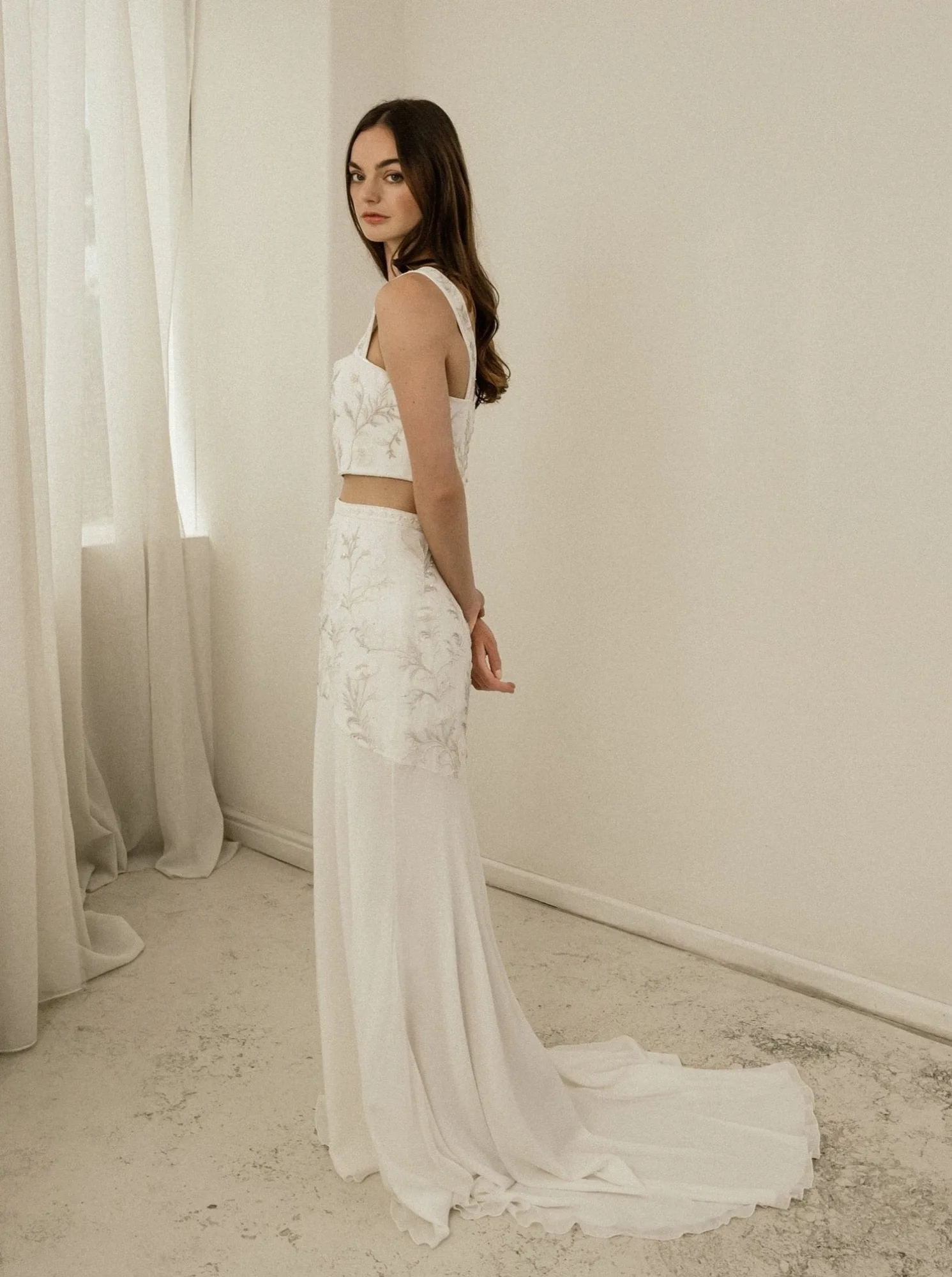
The second fitting, usually 4 to 6 weeks out, is when you try the gown after major alterations are sewn. Check that the bodice lies flat, the waist sits comfortably, and you can move, sit, and raise your arms. For a two-piece like the Poppy Gown | Basque Skirt, verify that the skirt and bodice still align perfectly after any changes. The final fitting, 1 to 2 weeks before, is for last-minute tweaks, steaming, and practicing your bustle.
How long do dress alterations take?
Most simple alterations, like a hem or strap adjustment, take 2 to 3 weeks. Complex work, such as rebuilding a bodice or adjusting hand-embroidered details, can take 6 to 8 weeks. Ask your seamstress for a realistic completion date at your first appointment and get it in writing.
If your gown has delicate embellishments, like the Cybil Gown with its hand-beaded floral motif, plan for extra time. Beading must be removed and reapplied around seams, which is meticulous work. Rushing this process risks damaging the design, so build in a cushion.
What should you ask at each appointment?
Come prepared with a bridal alterations checklist. Ask: What is the cancellation policy? Can I schedule a fitting on a weekend? What is the cost estimate for each alteration? Will you press the gown before pickup? Who handles the bustle, and can you show me how to do it?
Also ask about storage between fittings. If your gown has delicate tulle or chiffon, it should be hung in a breathable bag away from direct sunlight. Confirm whether your seamstress provides this or if you need to bring your own.
Bridal fitting FAQ
Can I book all fittings at once?
Most seamstresses prefer to schedule one fitting at a time because alterations may take longer than expected. However, you can pencil in tentative dates and confirm after each appointment. Ask if you can reserve a backup slot two weeks after each planned fitting.
What if I lose or gain weight after the first fitting?
Tell your seamstress immediately. Significant weight changes may require re-pinning and additional alterations, which can affect your timeline and budget. Maintain a stable weight between fittings to avoid extra costs.
Do I need to bring my shoes and undergarments to every fitting?
Yes, for the first and final fittings, and any fitting where hem or bodice adjustments are checked. Wearing the same shoes and undergarments ensures consistent fit. Keep these items in a dedicated bag so you never forget them.
Gown details that affect your alteration timeline
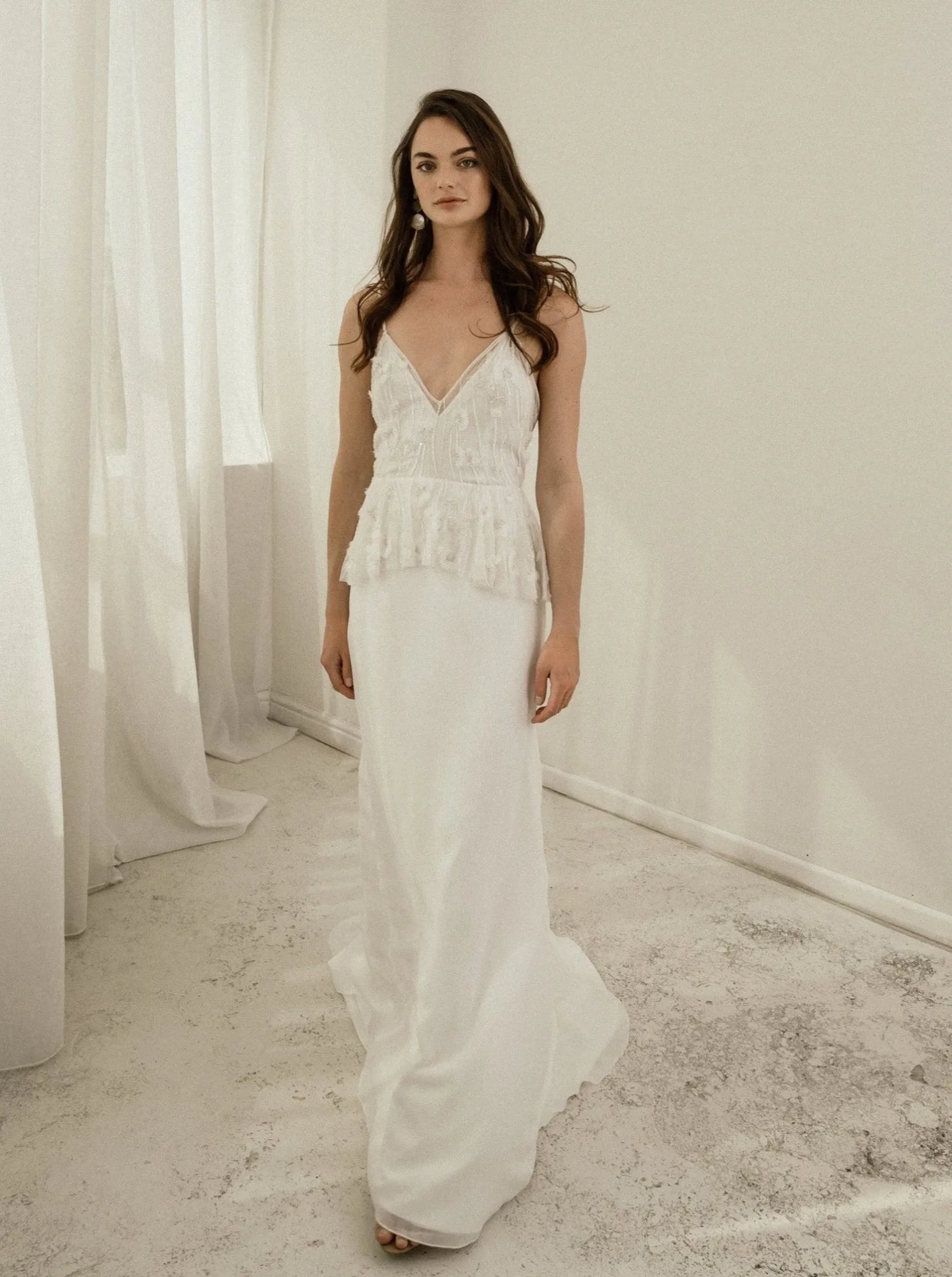
- Zinnia Gown: The Zinnia Gown features a tulle overlay with hand-cut chiffon petals, glass beads, sequins, and faceted crystals. Hand-beaded and appliquéd details require careful handling during alterations, so allow extra time for any resizing or hemming.
- Poppy Gown | Basque Skirt: The Poppy Gown | Basque Skirt is a two-piece couture design with silk chiffon, hand-embroidered poppies, and a Basque waist bodice. Two-piece gowns need both pieces fitted together, so schedule fittings when you can try on both the bodice and skirt at the same time.
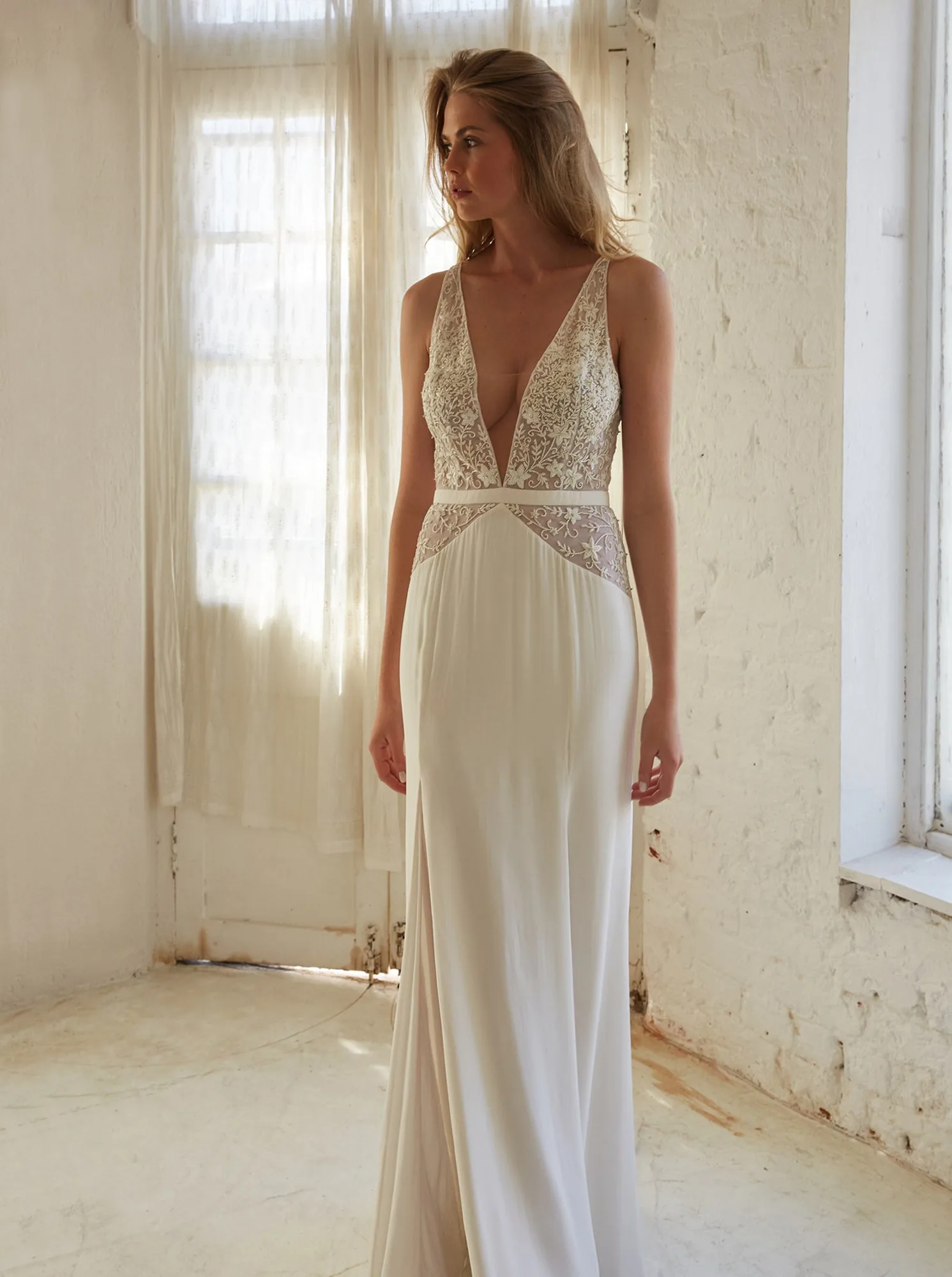
- Cybil Gown: The Cybil Gown has a plunging bodice of sheer chiffon with a tulle inset, entirely hand-beaded with ivory glass beads and sequins. The sheer bodice and heavy beading make strap and bust adjustments complex, so book your first fitting early to allow for multiple sessions.