Quick Answer
A cup that feels wrong is usually a positioning or support problem, not a cup-size problem. Before you ask for a smaller cup, check whether the gown's bust point sits level with your own, whether the bodice is anchored at the waist, and whether you're wearing the bra you'll wear on the day. If the bust point is off by more than about 2 cm, that's an alteration, not a sizing mistake.
Symptom: The Cup Gapes at the Top Edge
Gaping at the top of a molded or padded cup almost always means the cup's apex is higher than your natural bust point. The gown was cut for a longer torso or a higher bust, so the fullest part of the cup sits above where you actually need it. Pulling the dress up at the shoulders makes it worse, because you're lifting the cup further away from your body.
Test it in front of a mirror with the gown fully fastened and your arms down. If you can slide two fingers under the top edge without pressing, the cup is sitting too high. If the gap disappears when you press the cup down with one finger, the fix is repositioning or removing the cup, not sizing down the whole bodice.
Symptom: You're Spilling Over the Top or Sides
Spilling usually means the cup is too shallow, not too small. Many bridal cups are cut for a firm, rounded shape, so a softer or fuller bust gets compressed and pushed upward. If the gown has a plunging neckline, the corset structure behind it may also be pulling the bust inward and up rather than supporting it from below.
Check whether the spill is coming from the cup itself or from the bodice edge. If the fabric edge cuts into you while the cup underneath still has room, the issue is the neckline shape and the internal corset, not the cup size. A bridal fitting cup adjustment here means reshaping the bodice, not swapping a D for a DD.
Symptom: The Cup Sits Too Low or Feels Empty
A cup that sits low leaves empty space at the top and often creates a horizontal crease across your bust. This happens when the gown's waistline is too long for your torso, so the whole bodice drops. It's common in gowns with a defined waistband or inset band, because that band has to land exactly on your natural waist.
If the waistband sits below your natural waist, no cup change will fix the bust. The gown needs to be shortened at the torso or the waistband repositioned. Ask your fitter to pin the waistband on your natural waist first, then look at the cup.
What a Fitter Can Actually Change
Most bridal alterations can remove, replace, or reposition cups, add or reduce padding, and tighten the side seams of the bodice. What they usually cannot do is change the gown's built-in bust point by more than a small amount without rebuilding the bodice. If the bust point is off by more than about 2 cm, expect a more involved alteration or a different gown.
Bring the undergarments you plan to wear to every fitting. A strapless bra, adhesive cups, or no bra at all each change where your bust sits inside the gown. If you switch between them, the cup will feel wrong on the day even if it fit in the fitting room.
When to Stop and Choose Another Gown
Stop pursuing cup fixes when the gown's bust point is more than about 2 cm from yours, when the waistband cannot reach your natural waist without shortening the torso, or when the neckline structure fights your bust shape. At that point you're rebuilding the gown, and the result is rarely better than choosing a silhouette that already matches your proportions.
If you love the fabric and detail but not the bodice, look for the same design in a different neckline or a two-piece construction. A separate bodice and skirt can be sized independently, which solves many bust-fit problems before alterations begin.
Cup Fit Diagnosis
- Gap at the top edge: Cup apex sits higher than your natural bust point. Press the cup down with one finger; if the gap closes, the cup needs repositioning or removal. If the gap closes when pressed, ask for cup repositioning, not a smaller bodice.
- Spilling over the top or sides: Cup is too shallow or the corset is pushing the bust up and inward. Check whether the spill comes from the cup or the bodice edge. If the fabric edge cuts in while the cup has room, reshape the neckline, not the cup size.
- Cup sits low or feels empty: The gown's waistline is too long, so the bodice drops. Pin the waistband on your natural waist and recheck the bust. If the waistband can't reach your natural waist, the torso needs shortening before any cup work.
- Bust point off by more than 2 cm: This is beyond a standard cup swap. Rebuilding the bodice rarely matches the original fit. Stop here and try a different neckline or a two-piece gown instead.
How Real Gowns Handle Bust Structure
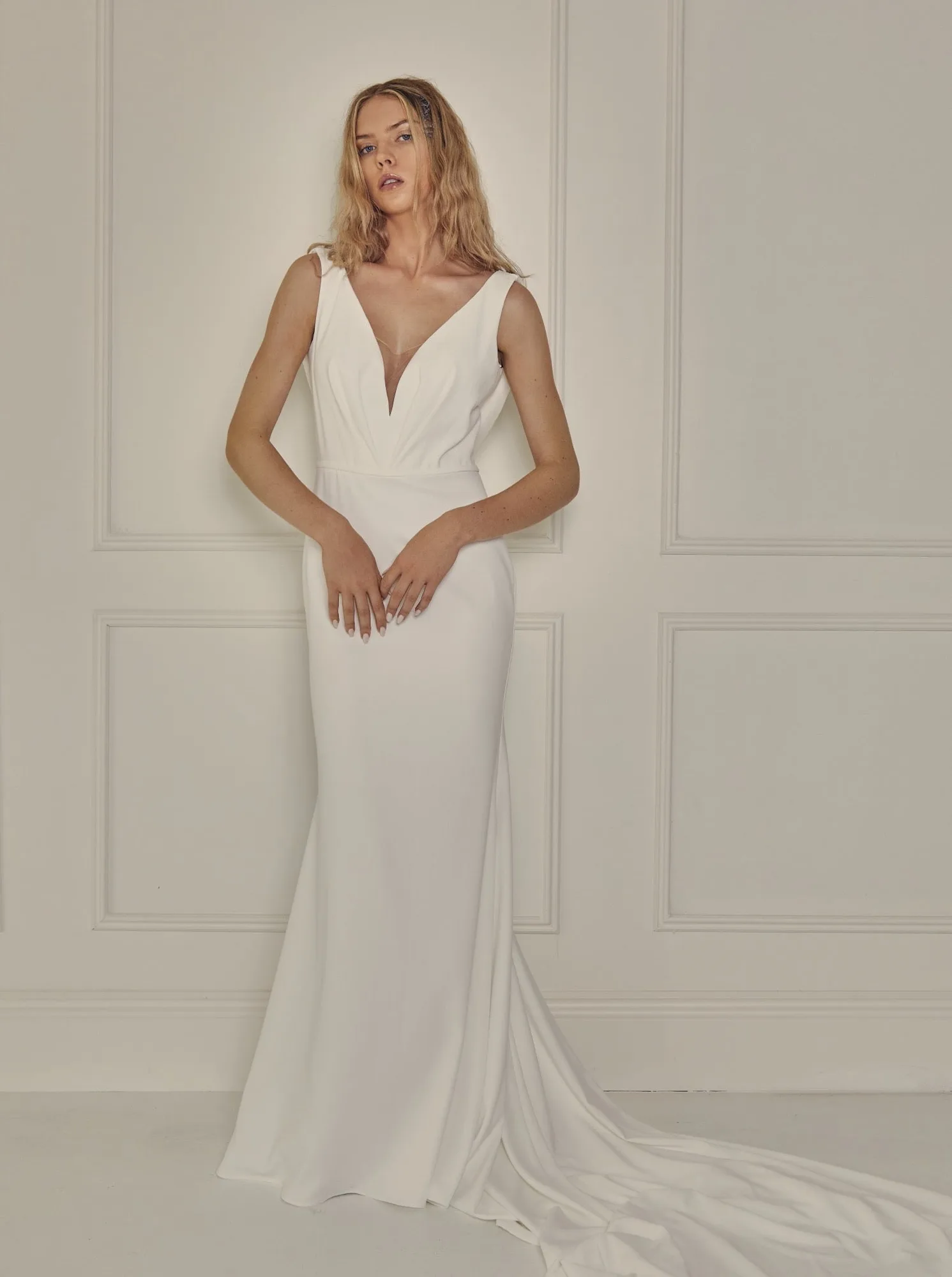
- Ava Gown: The Ava Gown uses an illusion tulle corset to support a plunging neckline, with inverted draped pleats shaping the front bodice. A corseted plunge supports from the sides and back, so cup gaping here is usually a bust-point mismatch rather than a missing cup.
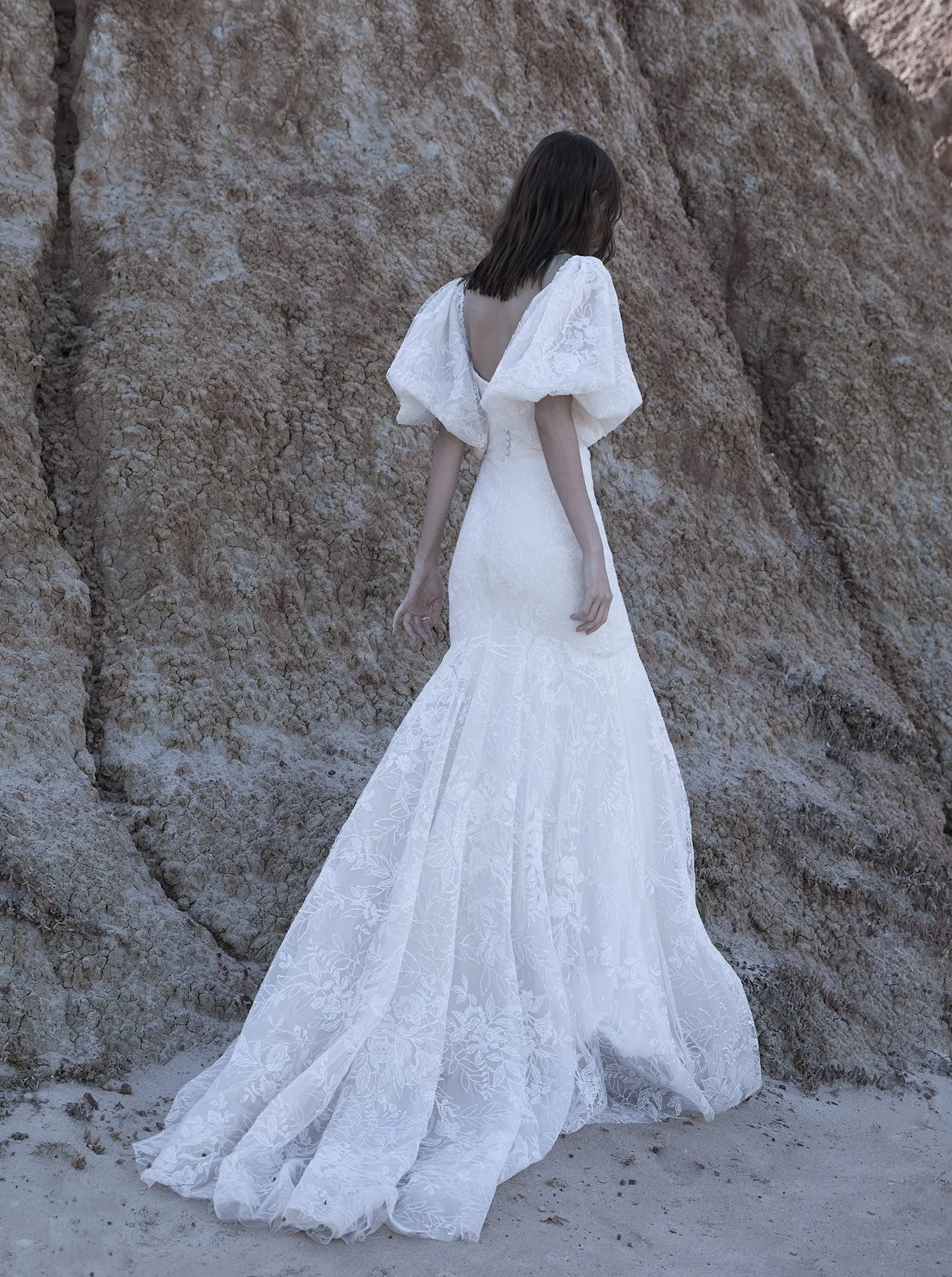
- Ellery Gown: The Ellery Gown has a fully boned corseted bodice with padded cups and a row of small covered buttons at the back. Padded cups in a boned bodice can be removed or swapped, but the boning determines how much the bust point can move.
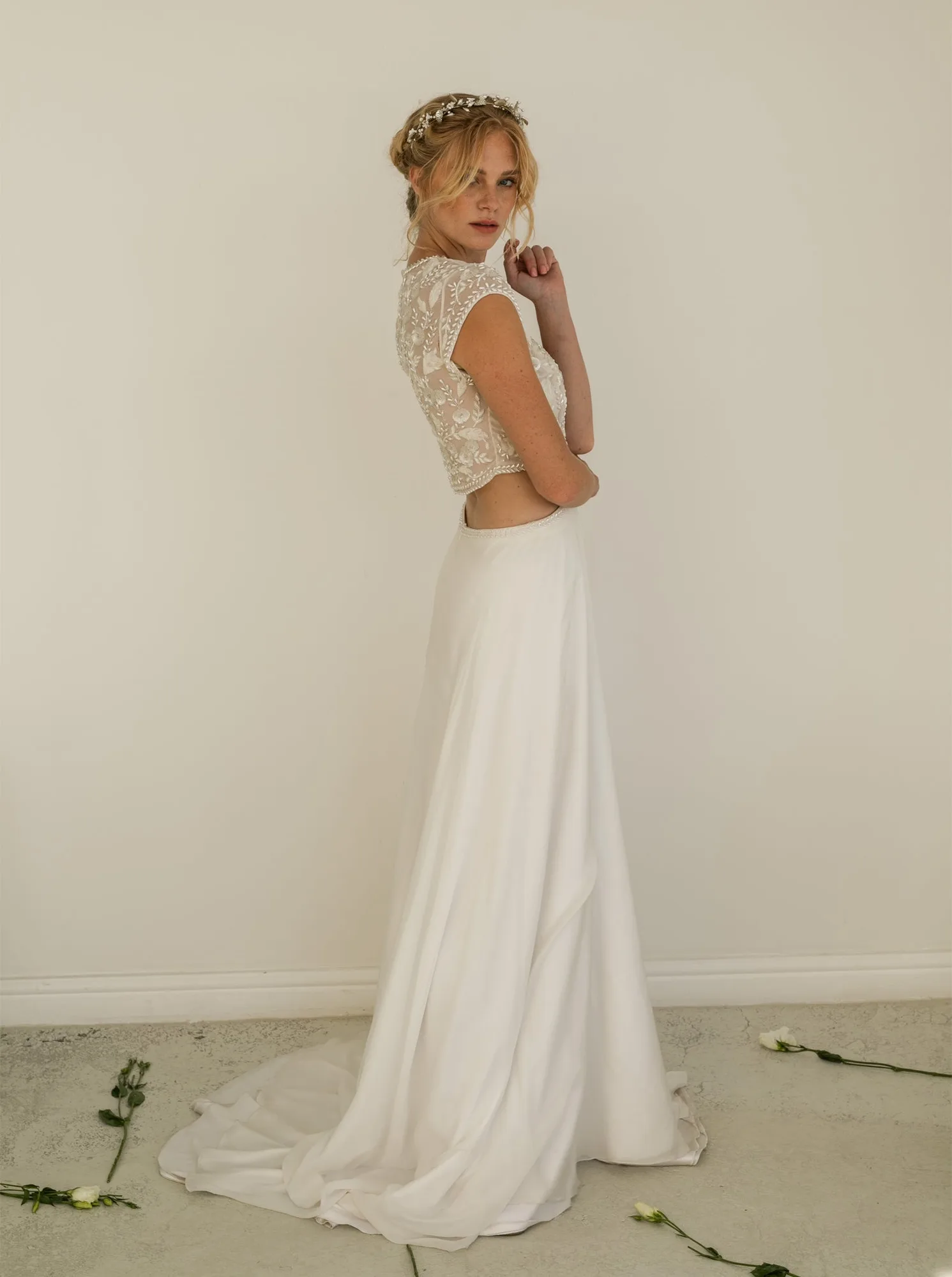
- India Gown: The India Gown is a two-piece design with a fully hand-beaded bodice and a flowing skirt. A two-piece gown lets the bodice and skirt be fitted separately, which often resolves bust support issues without altering the skirt.