Quick Answer
For a polished wedding menu card, list courses in order, use consistent styling for dish names and descriptions, and match the tone to your reception style—formal, rustic, or playful.
Why Wording Matters More Than You Think
Your menu card is one of the first things guests see at the table. Clear, elegant wording sets expectations for the meal and reinforces your wedding's overall feel. A mismatched tone—like overly casual phrasing at a black-tie dinner—can feel jarring, while a well-worded menu adds a layer of thoughtfulness.
The structure is simple: list the courses in the order they are served, include a brief description for each dish, and note any dietary icons or symbols if needed. Keep descriptions concise—one or two lines per item is plenty.
Tone and Style: Matching Your Menu to Your Theme
Formal weddings call for traditional phrasing like "First Course" and "Palate Cleanser," while rustic or garden parties can use "To Start" and "Something Sweet." For a modern or minimalist look, skip descriptions entirely and list only the dish names. If your reception has a plated dinner, include the plating style (e.g., "Pan-seared salmon with lemon beurre blanc") so guests know what to expect.
Step-by-Step: How to Write Your Wedding Menu Card
- List Courses in Order: Start with the first course served (e.g., Appetizer, Soup, Salad) and follow with the main course, then dessert. If you have a cocktail hour, list passed hors d'oeuvres separately or include a "Cocktail Hour" heading. Common mistake: listing courses out of order or skipping the course name entirely. Guests appreciate knowing what comes next.
- Write Dish Names Clearly: Use the full dish name as it appears on the catering invoice. For plated dinners, include the protein and cooking method (e.g., "Herb-crusted chicken breast"). For buffet or family-style, list each dish separately. Checkpoint: avoid abbreviations or chef jargon. "Braised short rib" is clear; "Short rib, demi-glace" may confuse guests.
- Add Brief Descriptions (Optional): If your dishes have unusual ingredients or preparations, add a one-line description. For example, "Roasted beet salad with goat cheese and candied walnuts." Keep it under 15 words per item. Common mistake: over-describing. "Heirloom tomato and fresh mozzarella caprese with balsamic reduction, basil chiffonade, and extra-virgin olive oil" is too long. Simplify.
- Indicate Dietary Needs: Use small icons or abbreviations (GF, V, VG) next to dish names to flag gluten-free, vegetarian, or vegan options. Place a legend at the bottom of the card. Checkpoint: don't assume guests know the symbols. Always include a key, even if it's small.
- Proofread and Match Your Design: Read the final wording aloud to catch awkward phrasing. Then review it on your chosen menu card design—adjust font size or spacing if the text looks cramped. Common mistake: forgetting to update the wording after a menu change. Double-check with your caterer one week before printing.
Menu Design That Complements Your Wording
-
Wedding Menu Design | The Isabella: The Isabella wedding menu design features refined, classic styling that pairs well with formal or semi-formal wording. Choosing a design that matches your wording style—like The Isabella for elegant, traditional menus—creates a cohesive look across your stationery suite.
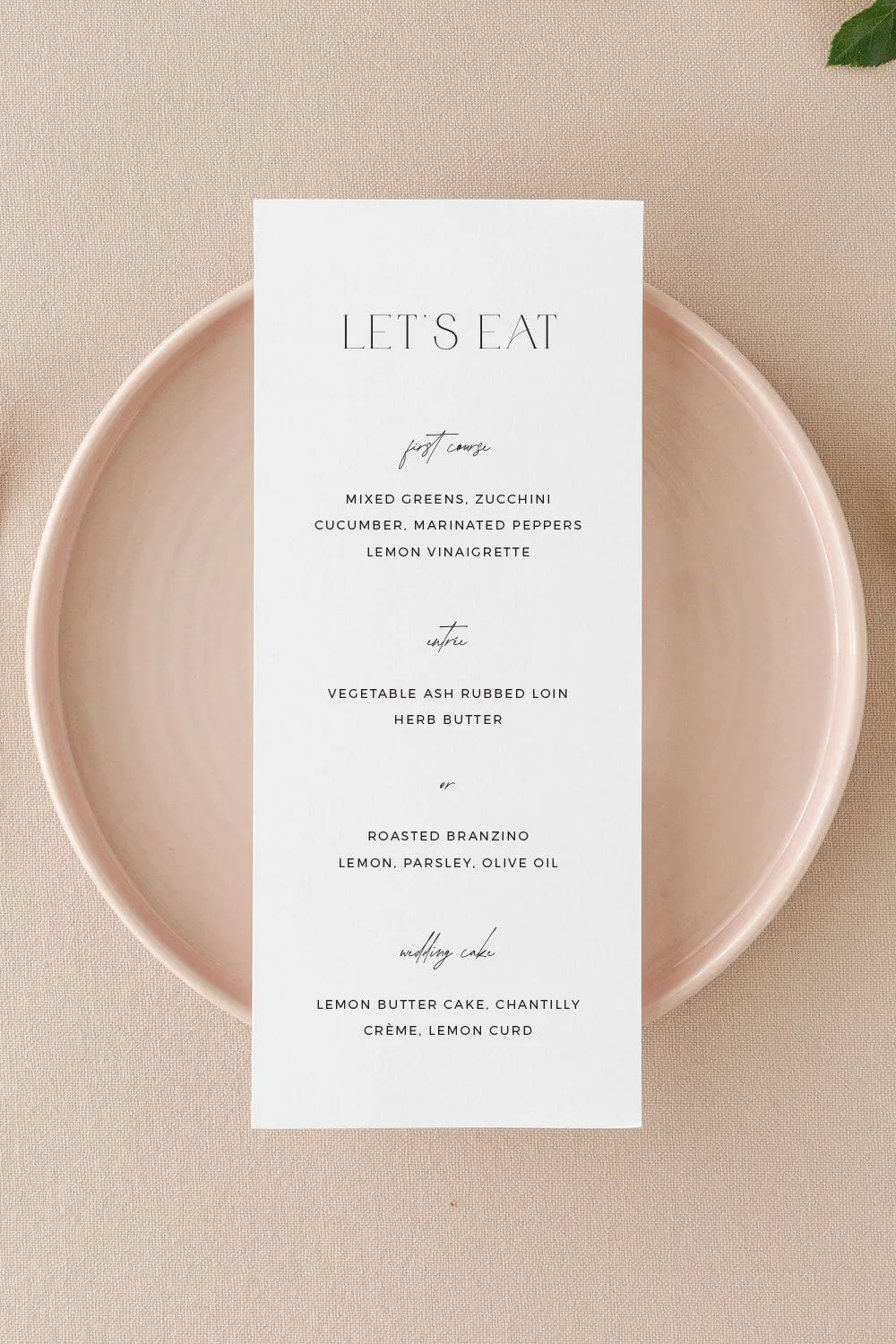
Wedding Menu Design | The Isabella