Quick answer
Order save the dates 6–8 months before the wedding, invitations 3–4 months before, and day-of paper goods 4–6 weeks before. Build your wedding paper goods list in this order: save the dates, invitations, RSVP cards, ceremony programs, menus or place cards, and thank-you cards. If your guest list is mostly local and your date is flexible, you can compress the timeline, but never mail invitations later than 8 weeks out.
Wedding stationery is one of the few planning tasks with a hard deadline: if invitations arrive late, guests cannot book travel, request time off, or RSVP in time for your caterer. The fix is not a bigger budget, it is a clear order of operations. This wedding stationery checklist walks through every piece you likely need, the order to buy it in, and the decision rules that keep you from over-ordering or rushing a reprint.
You do not need every item on a traditional wedding paper goods list. Some couples skip save the dates, some skip programs, and some combine the RSVP into a details card. The goal is to match the paper goods to your guest count, your formality, and how far people are traveling. Use the timeline and decision rules below to choose only the pieces that do real work for your wedding.
Save the date vs invitation: what each piece actually does
A save the date is a heads-up, not a formal summons. It tells guests to block the date and book travel before you have final details like the ceremony time or registry. An invitation is the formal document that requests attendance and includes the RSVP. Because they do different jobs, you can send a simple save the date with just names, date, city, and a website, then follow with a fuller invitation once logistics are locked.
If most guests are local and your date is not in a peak travel window, you can skip save the dates and send invitations earlier instead. If you have many out-of-town guests or a holiday weekend wedding, save the dates are the piece that prevents no-shows and expensive last-minute changes.
- Send save the dates 6–8 months out; 9–12 months for destination or holiday-weekend weddings.
- Send invitations 3–4 months out; 8 weeks is the absolute latest for a standard wedding.
- If you skip save the dates, send invitations 4–5 months out so guests can plan travel.
Your wedding paper goods list, in order of purchase
Buy in the order guests experience the pieces. First save the dates, then invitations with RSVP and details cards, then day-of items like programs, menus, place cards, and table numbers, then thank-you cards. This sequence matters because your invitation wording often depends on details you finalize later, and day-of pieces depend on your final guest count and menu.
For a small wedding under 50 guests, you can combine the RSVP and details onto one card and skip programs entirely. For a larger or more formal wedding, separate RSVP cards make it easier to track responses and meal choices. If you are unsure, count how many questions you need guests to answer; more than two questions usually justifies a separate RSVP card.
- Save the dates: 6–8 months before.
- Invitations, RSVP, details cards: 3–4 months before.
- Programs, menus, place cards: 4–6 weeks before, after final headcount.
- Thank-you cards: order with invitations so you have them ready.
When to order wedding invitations (and what can go wrong)
Order invitations 4–5 months before the wedding if you want a comfortable buffer for proofing, printing, and addressing. Most delays come from three places: waiting on final guest list details, slow proof approval, and hand-addressing. If you are handwriting envelopes, add two to three weeks. If you are using a calligrapher, add four to six weeks and book them early.
A practical rule: place your invitation order at least one month before you plan to mail them. That gives you time to check spelling, confirm the RSVP deadline, and reprint a small batch if something is wrong. If you are ordering pre-made cards rather than custom printing, you can compress this to two to three weeks, but you still need time to address and stamp envelopes.
- Proofread names, dates, and venue spelling twice before approving.
- Set your RSVP deadline 3–4 weeks before the wedding so you can chase late replies.
- Order 10–15 extra invitations for last-minute guests and keepsakes.
Wedding card wording: what to include and what to leave out
Invitation wording should answer who, what, when, where, and how to respond. Include the hosts' names, the couple's names, the date and time, the venue with city and state, dress code if it matters, and the RSVP deadline. Leave out registry details on the invitation itself; put them on a details card or your wedding website. This keeps the invitation formal and avoids implying gifts are expected.
For save the dates, keep it short: names, date, city, and a website or 'formal invitation to follow.' For RSVP cards, include a deadline and a line for meal choice if your venue offers options. If you are using a prompted guest book rather than a traditional blank one, you do not need to print instructions on the invitation; guests will understand the prompts when they arrive.
- Include the RSVP deadline on both the RSVP card and your website.
- Put registry and hotel details on a separate details card, not the invitation.
- Use the same names and spelling across every piece to avoid confusion.
How many of each piece to order
Order one invitation per household or couple, not per guest. Add 10–15 extras for last-minute additions, keepsakes, and mistakes. RSVP cards follow the same household count. Programs are usually one per guest, but you can order 75% of your guest count because not everyone takes one. Menus and place cards are one per guest, and place cards are one per seated guest.
If you are ordering a boxed guest book, one is enough for the whole wedding. For thank-you cards, order enough for every gift you expect to receive, plus 20 extra. A common mistake is ordering thank-you cards after the wedding and then rushing to write them; ordering them with your invitations keeps the task manageable.
- Invitations: one per household plus 10–15 extras.
- Programs: about 75% of guest count.
- Menus and place cards: one per guest.
- Thank-you cards: one per gift plus 20 extras.
Decision rules for your wedding stationery order
- If most guests are out of town: Send save the dates 9–12 months out and invitations 4–5 months out. Out-of-town guests need more lead time for flights, hotels, and time off. Book save the dates first; they are the piece that protects your guest count.
- If your guest list is under 50: Combine the RSVP and details onto one card and skip programs. Smaller weddings rarely need separate pieces for every function. Fewer pieces means fewer printing minimums and less addressing.
- If you are ordering custom printed invitations: Place the order 4–5 months before the wedding and approve the proof within one week. Custom printing has the longest lead time and the least flexibility for reprints. Set a calendar reminder to approve the proof; delays here push everything else.
- If you are ordering pre-made cards: You can order 2–3 weeks before mailing, but still allow time for hand-addressing and stamps. Pre-made cards remove printing delays, not addressing delays. Buy stamps before you address envelopes so you know the correct postage.
- If you want a keepsake guest book: Choose a prompted or boxed guest book rather than a blank notebook. Prompts give guests direction, and a boxed format protects the book after the wedding. Order the guest book with your invitations so it arrives before the wedding.
Paper goods that fit this checklist
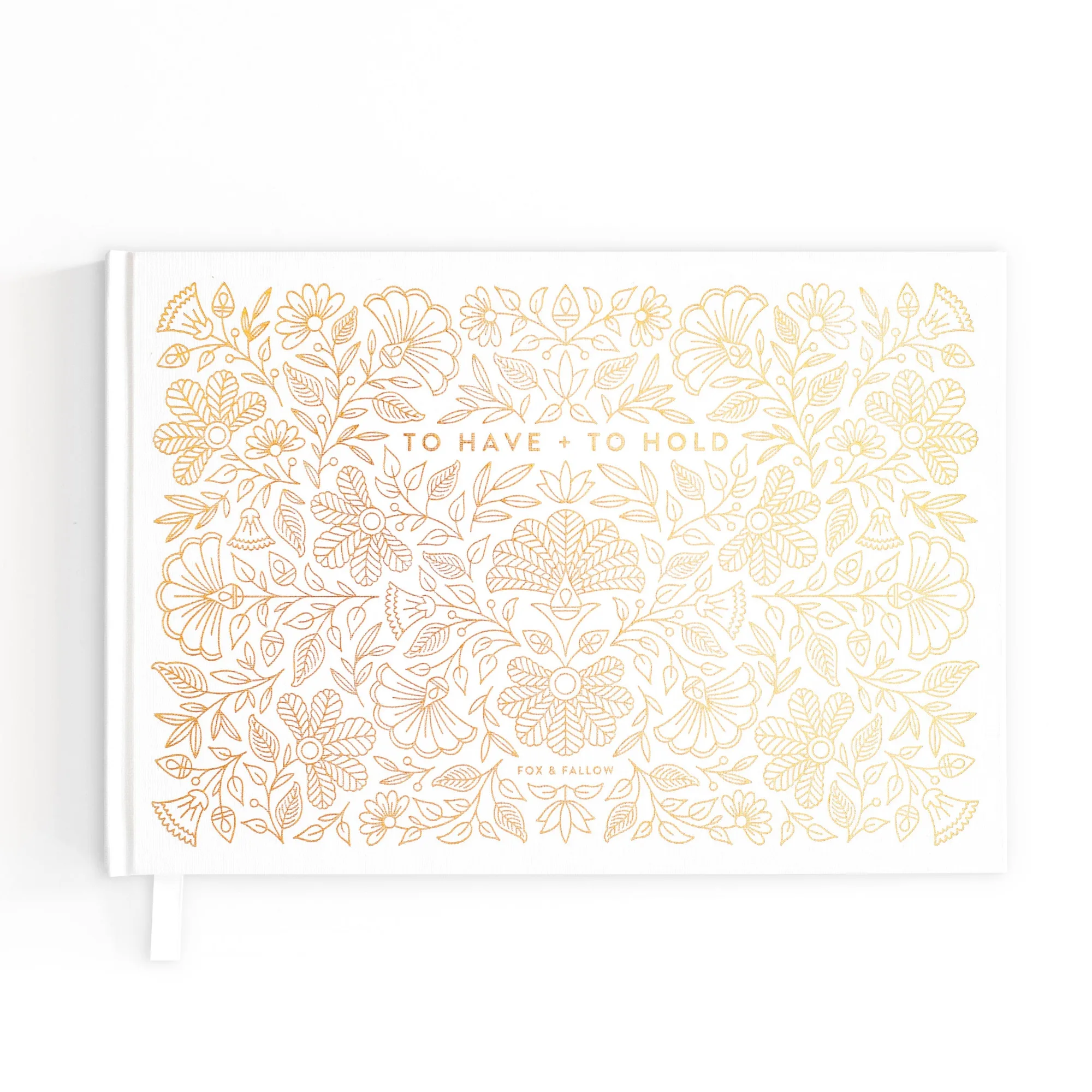
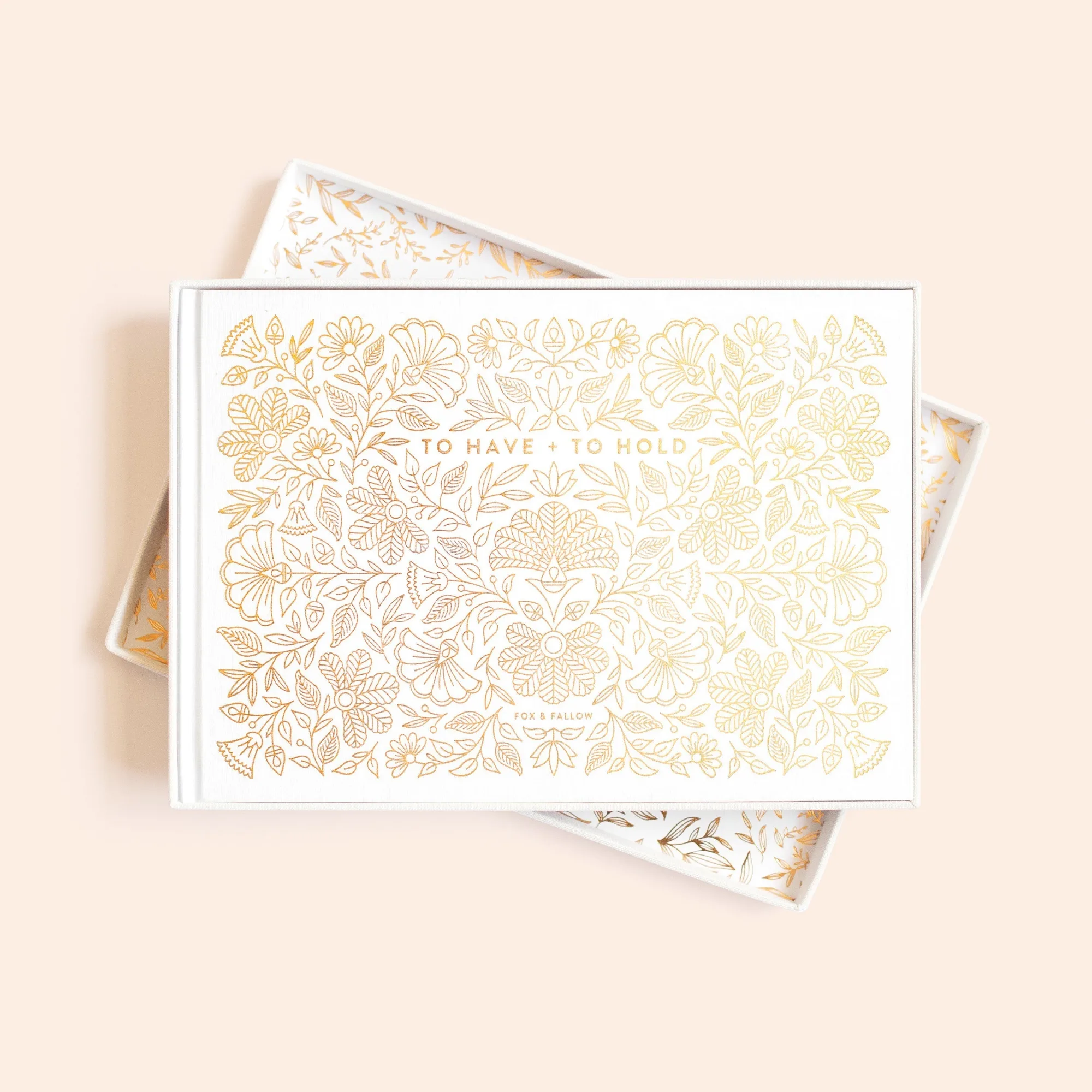
- Forever & Always Prompted https://foxandfallows.com/products/wedding-guest-book-boxed-a4d0e3450c7767d99976d7ee-2620955Wedding Guest Book Boxed: A prompted wedding guest book with quirky questions on every other page, alternating with blank photo pages, gilded edges, and a boxed ivory linen cover with gold foil patterned interior. A prompted guest book gives guests something to write without needing a blank-page prompt, and the boxed linen format doubles as a keepsake you can store safely after the wedding.
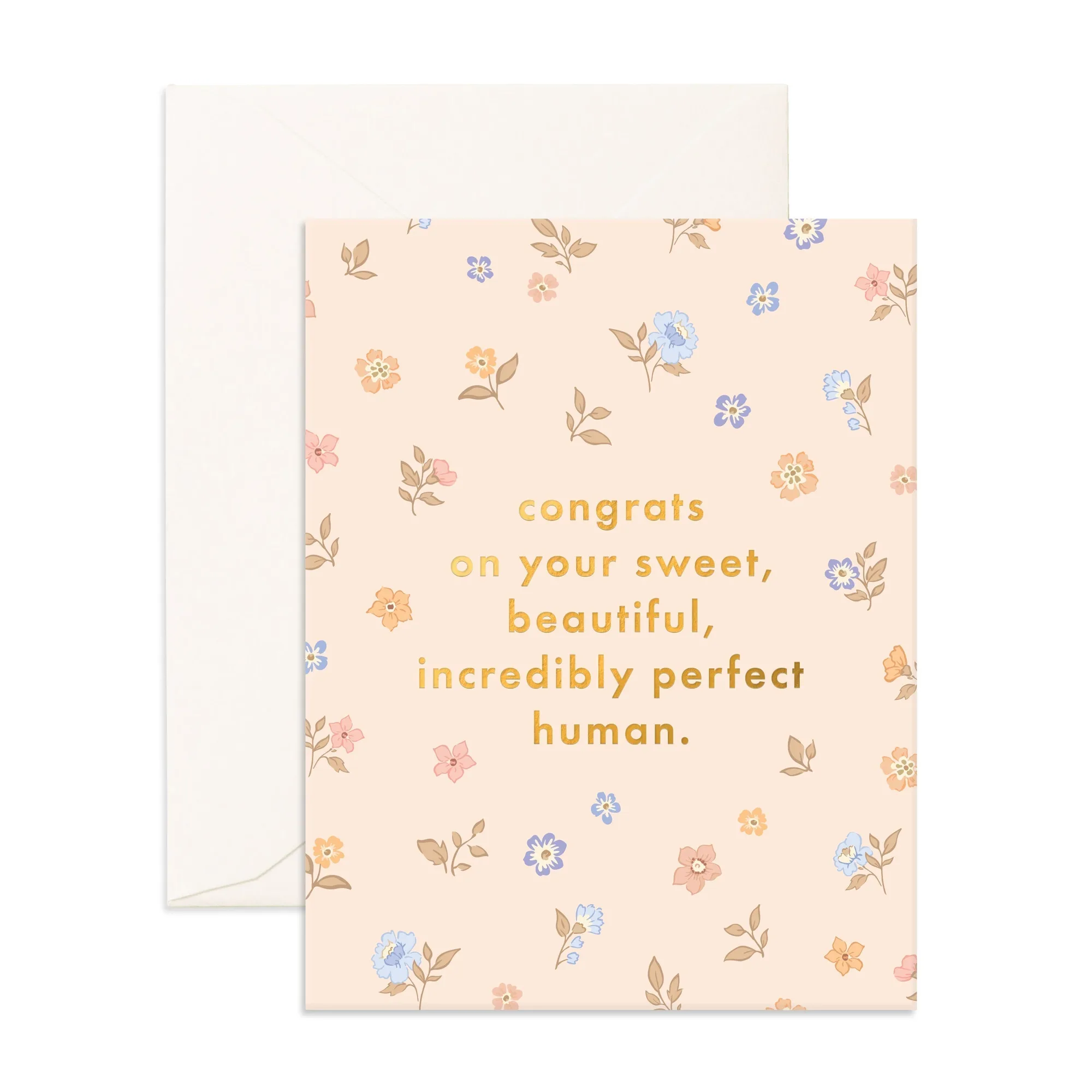
- Congrats Sweet Human Greeting Card - PRE-ORDER (SEPTEMBER): 108 x 140mm / 4.25 x 5.5 inch uncoated card stock with full-color printing, gold metallic foil, blank interior, and a cream envelope, made in Australia. A blank interior lets you write a personal note for engagement congratulations or a thank-you, and the foil finish makes it appropriate for a formal wedding-related message.
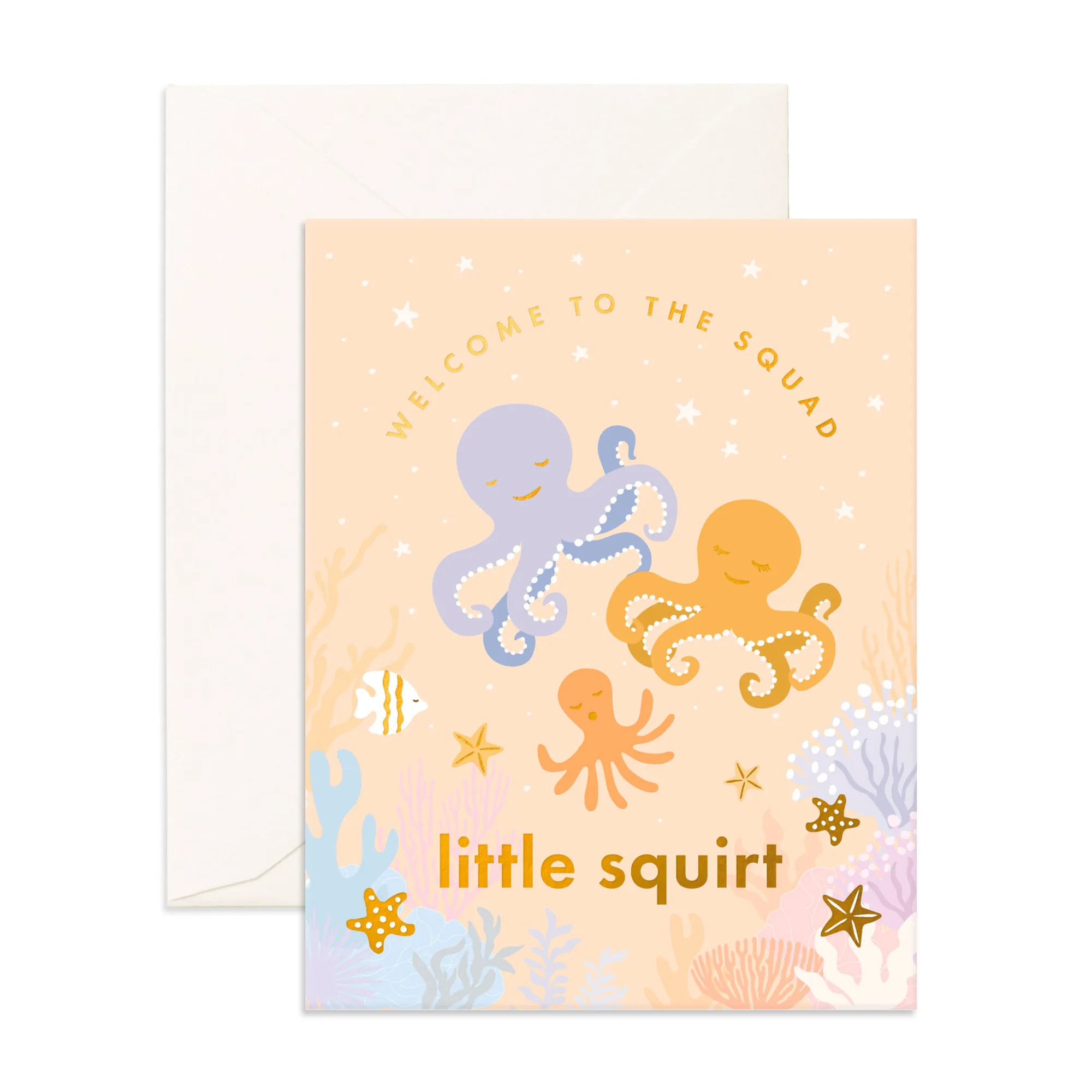
- Welcome Little Squirt Greeting Card: 108 x 140mm / 4.25 x 5.5 inch uncoated card stock with full-color printing, gold metallic foil, blank interior, and a cream envelope, made in Australia. Useful as a small add-on card for wedding-related events like a baby shower or a new baby in the wedding party, and the blank interior keeps it flexible for your own wording.
Who this checklist fits
Best for
- Couples planning a wedding with a mix of local and out-of-town guests
- Anyone who wants a clear order of purchase rather than buying pieces randomly
- Couples who need wording guidance for invitations, RSVP cards, and save the dates
Not for
- Couples who have already ordered and mailed their invitations
- Elopements or micro-weddings with no separate stationery needs
- Anyone looking for custom design services rather than a buying and timing guide
Build your wedding stationery order in the order guests experience it: save the dates first, invitations second, day-of paper goods last. Use the decision rules above to match the pieces to your guest list and formality, and order thank-you cards at the same time as your invitations so you are not scrambling after the wedding. A simple checklist and a realistic timeline will save you more stress than any upgrade.