Quick answer
Build your thread palette around three groups: icy blues for the cold atmosphere, cool neutrals for snow and shadows, and one or two warm accents to keep the scene from turning flat. Test each thread against the painted canvas before you commit.
Why a limited winter palette works better than a full blue set
A winter scene can easily become a wash of similar blues. Instead of collecting every blue you like, choose a light, a medium, and a dark icy blue, then let cool grays and soft whites do the supporting work. This keeps the stitched version readable from a distance and preserves the contrast the designer painted into the canvas.
Warm accents are the exception that proves the rule. A small amount of gold, soft coral, or warm cream can suggest light or character without overpowering the cold palette. Use them sparingly and only where the canvas already signals warmth.
Match thread sheen to the role of each area
Shiny threads catch light and can make snow or ice look wet or metallic, while matte threads absorb light and read as soft snow. For a winter scene, consider matte or low-sheen threads for large snow areas and reserve any higher-sheen thread for small highlights. This is a design choice, not a rule, so stitch a small sample on the edge of the canvas if you are unsure.
Plan for the canvas size before you buy threads
The Welcome to Arendelle canvas is 8.25" x 5.25" on 13 mesh, a compact design. Smaller areas mean you need less thread per color, but they also punish bulky threads that cannot cover the mesh neatly. If a thread feels too thick for 13 mesh, try a strand or ply adjustment rather than forcing it through.
Step-by-step thread selection for the Welcome to Arendelle canvas
- Photograph the canvas in daylight: Take a clear photo of the painted canvas in natural light and print it or keep it on a tablet. Use it to identify the main color zones: sky, snow, shadows, and any warm accents. Common mistake: judging colors under warm indoor lighting, which makes icy blues look grayer than they are. Check the photo against the actual canvas once more before you shop for threads.
- Pick three icy blues in light, medium, and dark: Choose one light icy blue, one medium, and one dark. Lay them side by side on the canvas to confirm they step clearly from one to the next. If two blues look nearly identical, replace one. Checkpoint: you should be able to tell them apart at arm's length.
- Add cool neutrals for snow and shadow: Select a soft white or off-white for snow and one or two cool grays for shadows. Avoid warm creams in shadow areas unless the canvas shows warmth there. Common mistake: using pure white everywhere, which flattens the scene and removes depth. Hold the neutrals next to the blues to make sure they do not clash.
- Limit warm accents to one or two threads: Choose a single warm thread, such as a soft gold or muted coral, for any area that should feel warm or lit. Test it on the canvas to confirm it reads as an accent, not a second main color. Checkpoint: if the warm thread draws your eye first, it is too strong.
- Test thread thickness on the 13 mesh canvas: Stitch a few stitches of each candidate thread in a corner or on a scrap of 13 mesh canvas. The thread should cover the mesh without distorting it. If it looks crowded, separate plies or choose a finer thread. Common mistake: assuming all stranded cotton is the same thickness. Keep a note of how many plies or strands you used for each thread so you can repeat it.
- Stitch a small color sample before starting: Work a 1-inch square of your main blues and neutrals next to each other. Step back and check that the contrast holds. If the sample looks muddy, swap the weakest color before you begin the full canvas. Checkpoint: the sample should look like the winter scene you pictured, not a single blue block.
Canvas details that affect thread choice
-
Welcome to Arendelle: 13 mesh canvas, design size 8.25" x 5.25", canvas only. The small design and 13 mesh count mean you need threads that cover the mesh without bulk, and you can plan a compact palette rather than buying large quantities of every color.
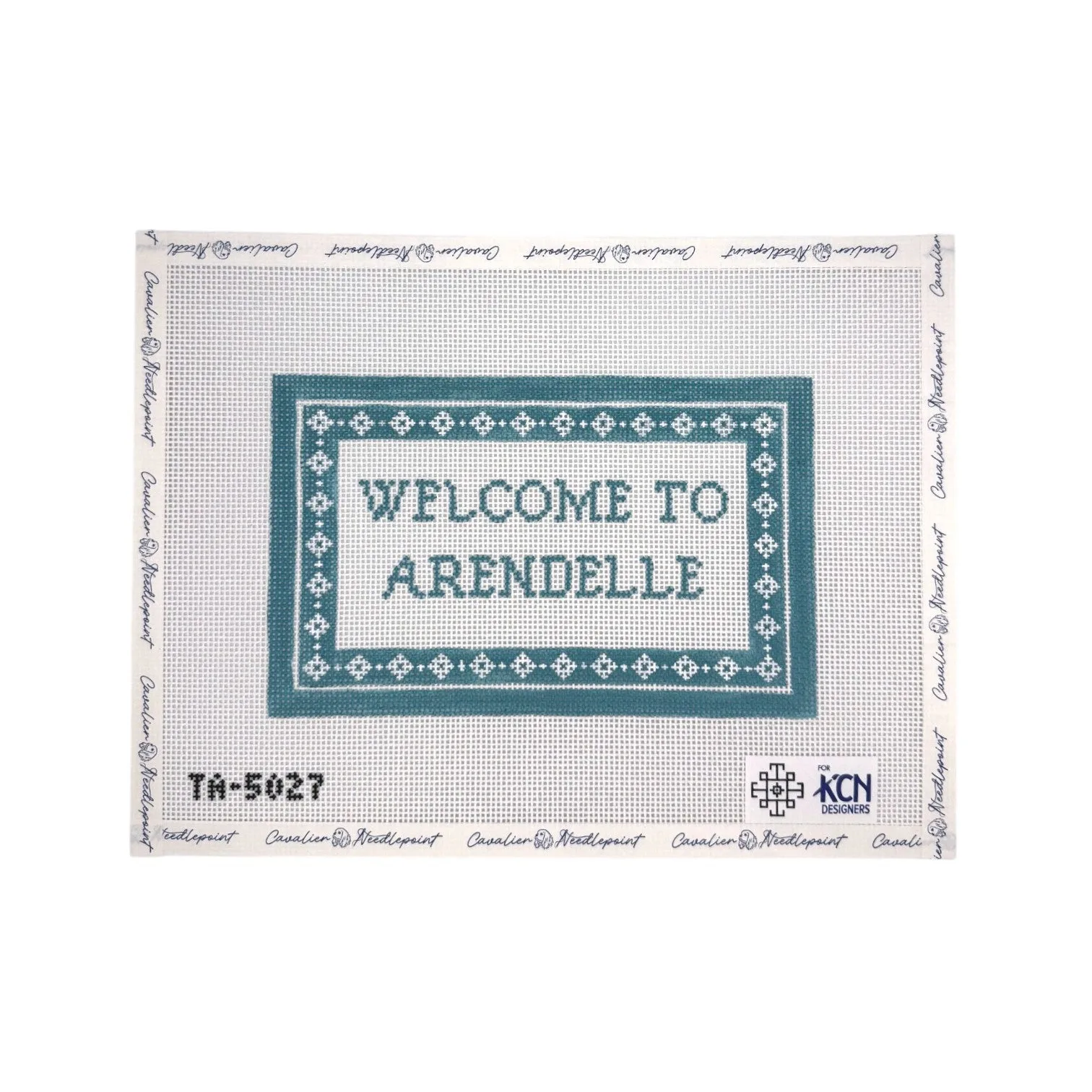
Welcome to Arendelle