Quick answer
Wemos D1 Mini shields are plug-on boards that add specific hardware functions like buttons, battery charging, or SD card slots to your ESP8266 board. Choose the shield that matches the feature you need for your project.
Why use a shield instead of wiring components separately?
Shields save you time and reduce wiring errors. They stack directly onto the D1 Mini's headers, so you don't need to solder or breadboard individual parts. The trade-off is that each shield adds a little height and weight to your project, and you may not be able to stack all shields together depending on pin conflicts.
Can you stack multiple shields on one D1 Mini?
Yes, many shields are designed to stack, but check pin usage. For example, the Button Shield uses digital pins for each button, while the Micro SD Shield uses SPI pins. They can share the same SPI bus if configured correctly, but you need to manage chip-select lines. The Battery Shield uses different pins (charging and voltage monitoring), so it usually does not conflict. Always check the pinout diagrams before stacking.
Frequently asked questions
What does the Wemos D1 Mini Button Shield do?
It adds three user-programmable buttons and a reset button. Each button connects to a separate digital pin, so you can read them in your code. It is useful for adding physical controls to a project without extra wiring.
What does the Wemos D1 Mini Battery Shield do?
It charges a lithium battery (like a 18650 or LiPo) via the USB port and provides power to the D1 Mini from that battery. Version V1.2.0 includes a charging status LED and a voltage monitoring pin. Use it for portable projects that need to run without a USB cable.
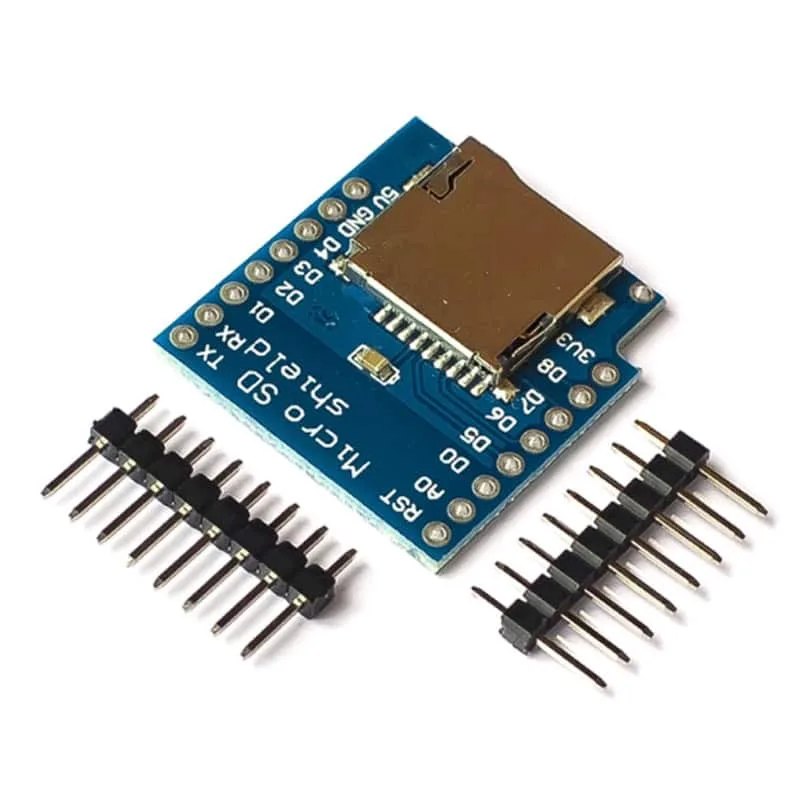
What does the Wemos D1 Mini Micro SD Shield do?
It adds a microSD card slot that communicates over SPI. You can log sensor data, store configuration files, or even serve web pages from the card. It is a straightforward way to add non-volatile storage to your ESP8266 projects.
Which shield should I buy first?
Start with the shield that solves your most immediate problem. If you need user input, get the Button Shield. If you want battery portability, get the Battery Shield. If you need data logging or file storage, get the Micro SD Shield. All three are low-cost add-ons that expand your D1 Mini's capabilities significantly. Consider your project's primary need before buying multiple shields at once.
Product facts
-
Wemos D1 mini/Pro Button Shield: Wemos D1 mini/Pro Button Shield Adds three tactile buttons and a reset button without soldering. Great for user input in menu-driven projects or simple controls.
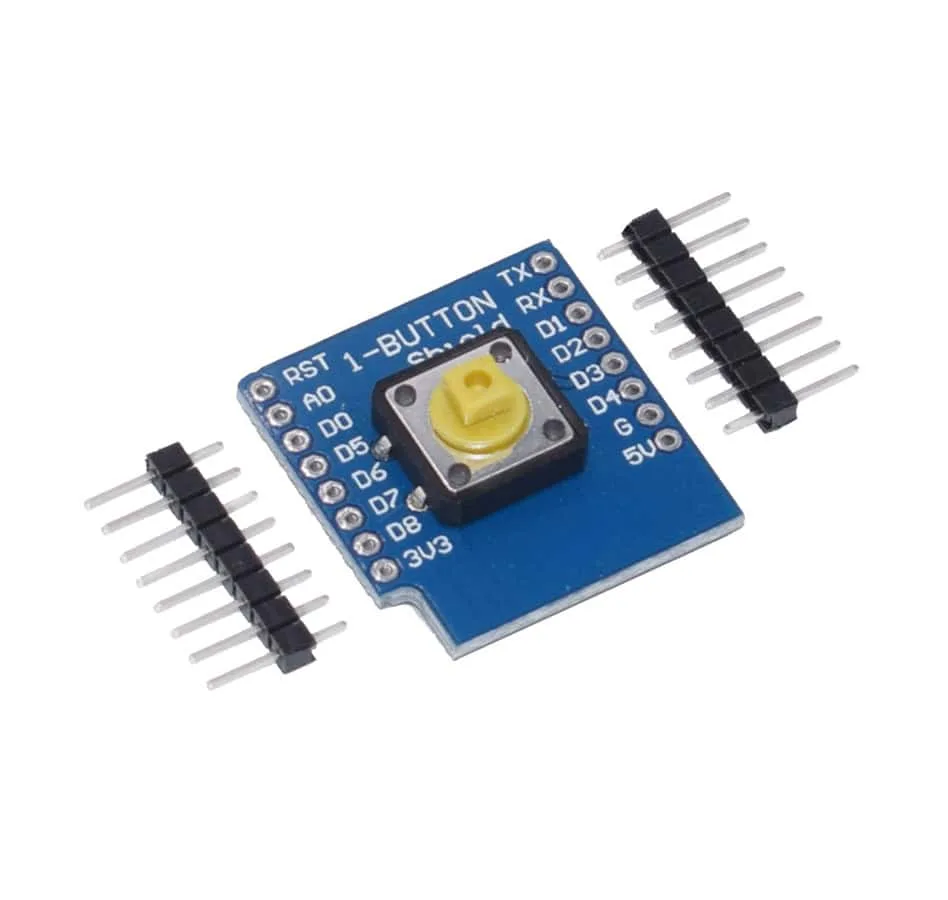
Wemos D1 mini/Pro Button Shield
-
Wemos D1 mini/Pro Shield Lithium Battery Charging Board V1.2.0: Wemos D1 mini/Pro Shield Lithium Battery Charging Board V1.2.0 Lets you power your D1 Mini from a lithium battery and charge it via USB. Perfect for portable or battery-powered ESP8266 projects.
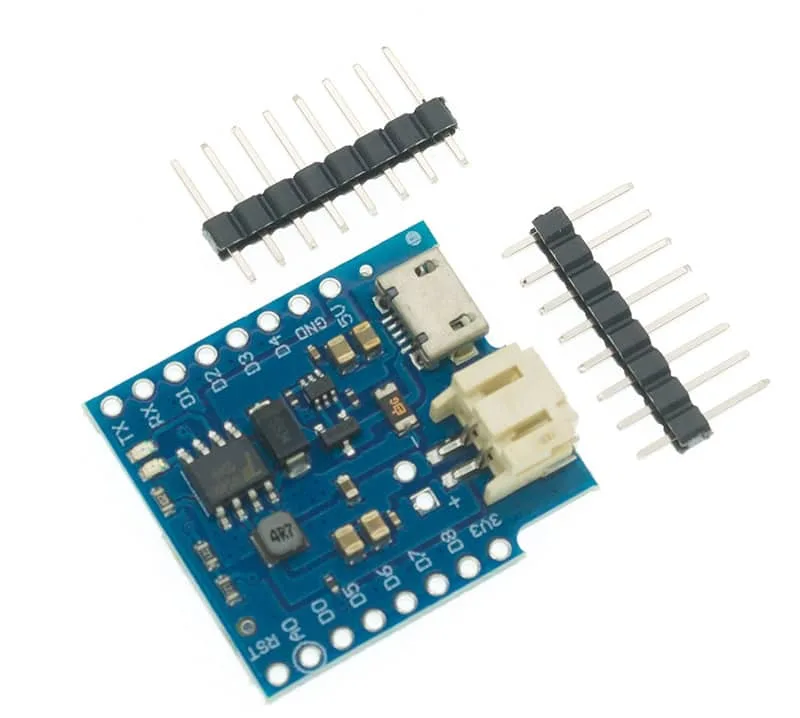
Wemos D1 mini/Pro Shield Lithium Battery Charging Board V1.2.0
-
Wemos D1 mini Micro SD Shield TF Card Module: Wemos D1 mini Micro SD Shield TF Card Module Adds a microSD card slot for data logging, file storage, or firmware updates. Ideal for projects that need to store sensor readings or configuration files locally.