Two Expansion Bases, One Decision
If you are building an IoT prototype with a Wemos D1 Mini, an expansion base makes wiring sensors and modules cleaner and more reliable. The two most common options from Kunkune are the Triple Base and the Dual Base. Both are compact PCB adapters designed for the same development board, but they differ in layout, assembly method, and included parts. This comparison helps you choose the one that matches your project style.
What Each Base Offers Out of the Box
-
Wemos D1 mini Triple Base: Compatible specifically with Wemos D1 Mini modules. Provides a triple‑row layout for easy connection of additional components. Includes six mounting pins for secure soldering. Comes as a single triple base unit ready for immediate use. Facilitates organized prototyping by separating signal lines. The triple‑row layout gives you more physical separation between connections, which helps when you are working with multiple sensors or actuators. The six mounting pins require soldering, so this base is better if you have a soldering iron and want a permanent, secure attachment.
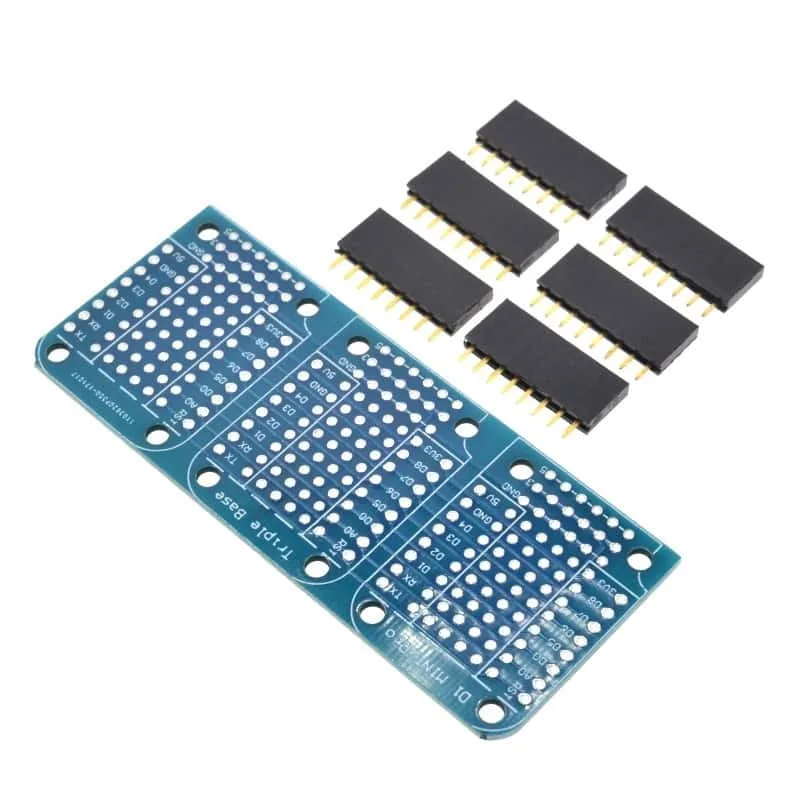
Wemos D1 mini Triple Base
-
Dual Base for Wemos D1 mini: Fully compatible with the Wemos D1 Mini, making it ideal for IoT prototypes. Provides two rows of compatible sockets for easy wiring of sensors and modules. Simple plug‑and‑play installation without soldering required. Includes one dual‑base board and four short female pins for immediate use. The dual‑row layout is more compact, which can be advantageous for smaller enclosures. The plug‑and‑play installation means you can start wiring immediately without soldering, making it the better choice for quick prototyping or if you prefer to avoid permanent modifications.
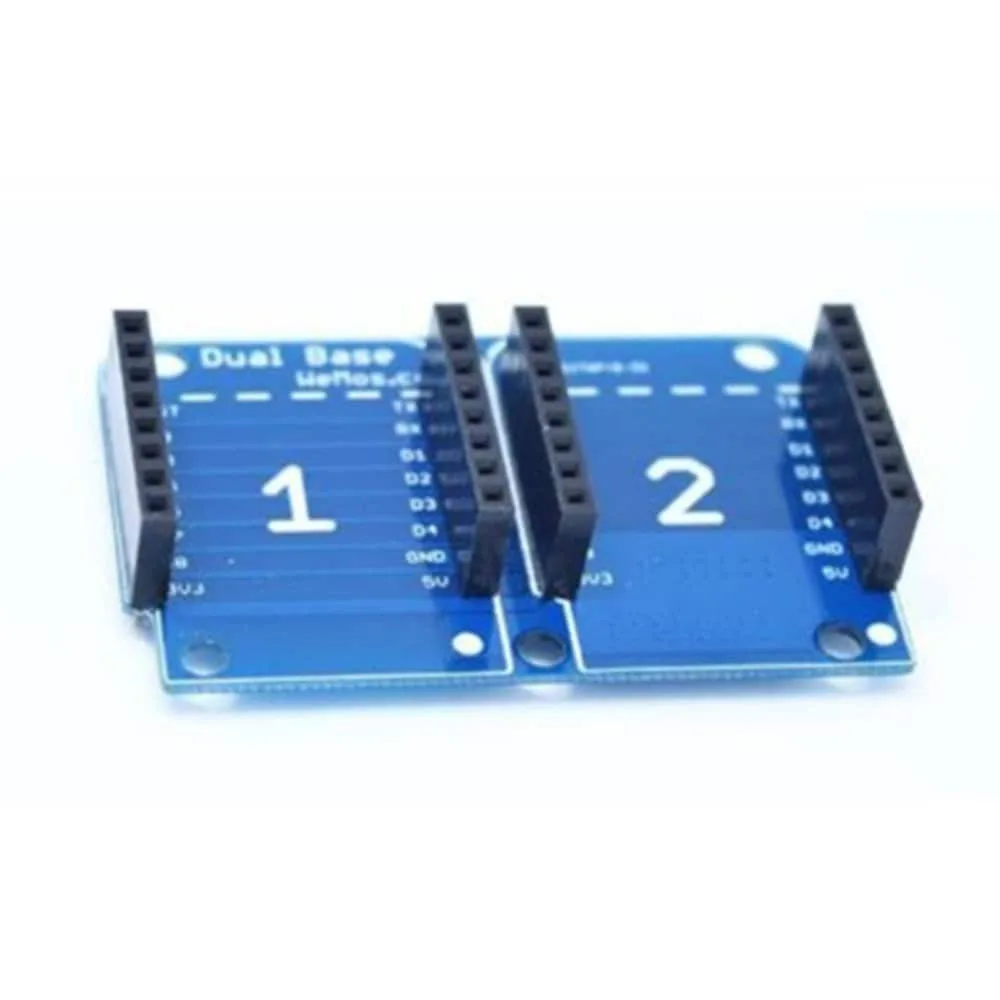
Dual Base for Wemos D1 mini
Triple Base vs Dual Base: Key Differences
The table below summarizes the main differences to help you decide.
- Row layout: Triple Base has three rows of connection points; Dual Base has two rows.
- Assembly method: Triple Base requires soldering (six mounting pins included). Dual Base is plug‑and‑play with no soldering needed.
- Included parts: Triple Base comes as a single board with six pins. Dual Base includes one board and four short female pins.
- Best for: Triple Base suits permanent, organized builds with many connections. Dual Base suits quick prototypes and users who want to avoid soldering.
Which One Should You Choose?
Your choice depends on how you work and what your project needs. If you are building a long‑term installation or a project with many sensors, the Triple Base gives you more room to separate signal lines and a more secure soldered connection. If you are experimenting, testing different configurations, or simply prefer not to solder, the Dual Base lets you start wiring in minutes with no permanent commitment.
Both bases are fully compatible with the Wemos D1 Mini, so you are not locked out of any features. The only real trade‑off is between layout density and assembly effort. Pick the one that fits your soldering comfort and the physical space of your project enclosure.