Quick answer
Before you rely on a jump starter, charge it fully, confirm the clamp cables and ports are undamaged, and store it where you can reach it with the battery in your car. When your battery dies, connect the clamps in the correct order, start the engine, and remove the clamps in reverse. Recharge the jump starter soon after every use so it is ready for the next dead battery.
Why a jump starter fails when you need it most
Most jump starter failures are not sudden. They come from a pack that sat unused for months, clamps that corroded in a trunk, or a user who connected the clamps in the wrong order. A portable jump starter is a small battery, and like any battery it loses charge over time and reacts badly to heat and cold.
The fix is a short routine: check the charge level, inspect the cables, and practice the connection order before an emergency. That turns a stressful dead-battery jump start into a two-minute job.
What to check before you trust your jump starter
Run this check once a month and before any long trip. It takes less time than finding a stranger with cables.
If the jump starter has a charge indicator, top it up until it shows full. If it has no indicator, charge it on schedule rather than waiting for a sign. Store it out of direct sun and away from extreme cold, because both shorten battery life. Keep the clamps clean and dry; dirt or corrosion on the metal contacts weakens the connection.
- Charge the pack to full and note the date you charged it.
- Inspect clamp teeth and cable insulation for damage or corrosion.
- Confirm the power button and any boost override work.
- Store the pack where you can reach it without moving cargo.
- Keep the manual or a printed connection-order card with the pack.
How to jump start a car with a portable jump starter
Park the running vehicle close enough that cables reach, or work with the jump starter alone if it is a self-contained pack. Turn off the engine, radio, lights, and any accessories in the dead car. Set the parking brake and put the transmission in park or neutral.
Connect the red clamp to the positive battery terminal first, then the black clamp to a solid metal ground on the engine block or chassis, not to the negative battery terminal. This order reduces spark risk near battery gases. Turn on the jump starter if it has a power switch, then start the car. If it does not start within a few seconds, stop and wait a minute before trying again.
Once the engine runs, remove the black clamp first, then the red clamp. Keep the engine running or drive for at least 15 to 20 minutes so the alternator can recharge the battery. Recharge the jump starter itself within a day or two.
Common jump starter mistakes and how to avoid them
Reversing the clamps is the most damaging mistake. If you touch red to negative or black to positive, you can blow a fuse or damage the jump starter and the car's electronics. Check the labels twice before you connect anything.
Another common error is clipping the black clamp to the negative battery terminal. That can create a spark near hydrogen gas. Use an unpainted metal ground on the engine instead. Finally, do not crank the engine for more than a few seconds at a time. Long cranking overheats cables and drains the pack without starting the car.
Keeping a jump starter ready between emergencies
Recharge the pack every one to three months, or sooner if the manufacturer specifies. Store it in a cool, dry place inside the car, not in a hot trunk in summer or a freezing cargo area in winter. Heat and cold both reduce how much charge the pack holds.
Inspect the clamps and cables each time you recharge. Look for green or white corrosion, frayed insulation, or loose clamp jaws. Clean corrosion with a dry cloth or a small wire brush, and replace cables that are cracked or exposed.
If the pack will sit for months, charge it to about half and check it periodically. A fully drained lithium pack can lose the ability to recharge. Keep a note in your phone or on the pack itself so you remember the last charge date.
When to replace your jump starter
Replace the jump starter if the clamps are damaged, the cables are frayed, or the pack no longer holds a charge after a full recharge. A pack that swells, gets hot during charging, or smells unusual should be retired immediately and recycled properly.
If your car needs a jump start more than once a month, the jump starter is not the real problem. Have the battery and charging system tested. A jump starter is a rescue tool, not a fix for a failing battery or alternator.
Jump starter readiness steps
- Charge the pack to full: Plug the jump starter into a wall outlet or a 12V car socket until the charge indicator shows full. Do this once a month and before any long drive. A half-charged pack may not turn over a cold engine.
- Inspect clamps and cables: Check for corrosion, frayed insulation, or loose clamp jaws. Clean dirty contacts with a dry cloth or small wire brush. Damaged cables can fail or spark when you connect them.
- Store it where you can reach it: Keep the jump starter in a cool, dry spot inside the car, not buried under cargo. Avoid hot trunks and freezing compartments. If you cannot reach it quickly, it will not help in an emergency.
- Connect red first, then black to ground: Clamp the red lead to the positive battery terminal. Clamp the black lead to an unpainted metal ground on the engine block or chassis, not the negative battery terminal. This order reduces the risk of sparks near battery gases.
- Start the engine and remove clamps in reverse: Turn on the jump starter, start the car, then remove the black clamp first and the red clamp second. Drive for at least 15 to 20 minutes. Recharge the jump starter within a day or two so it is ready next time.
Car power gear that supports a jump starter routine
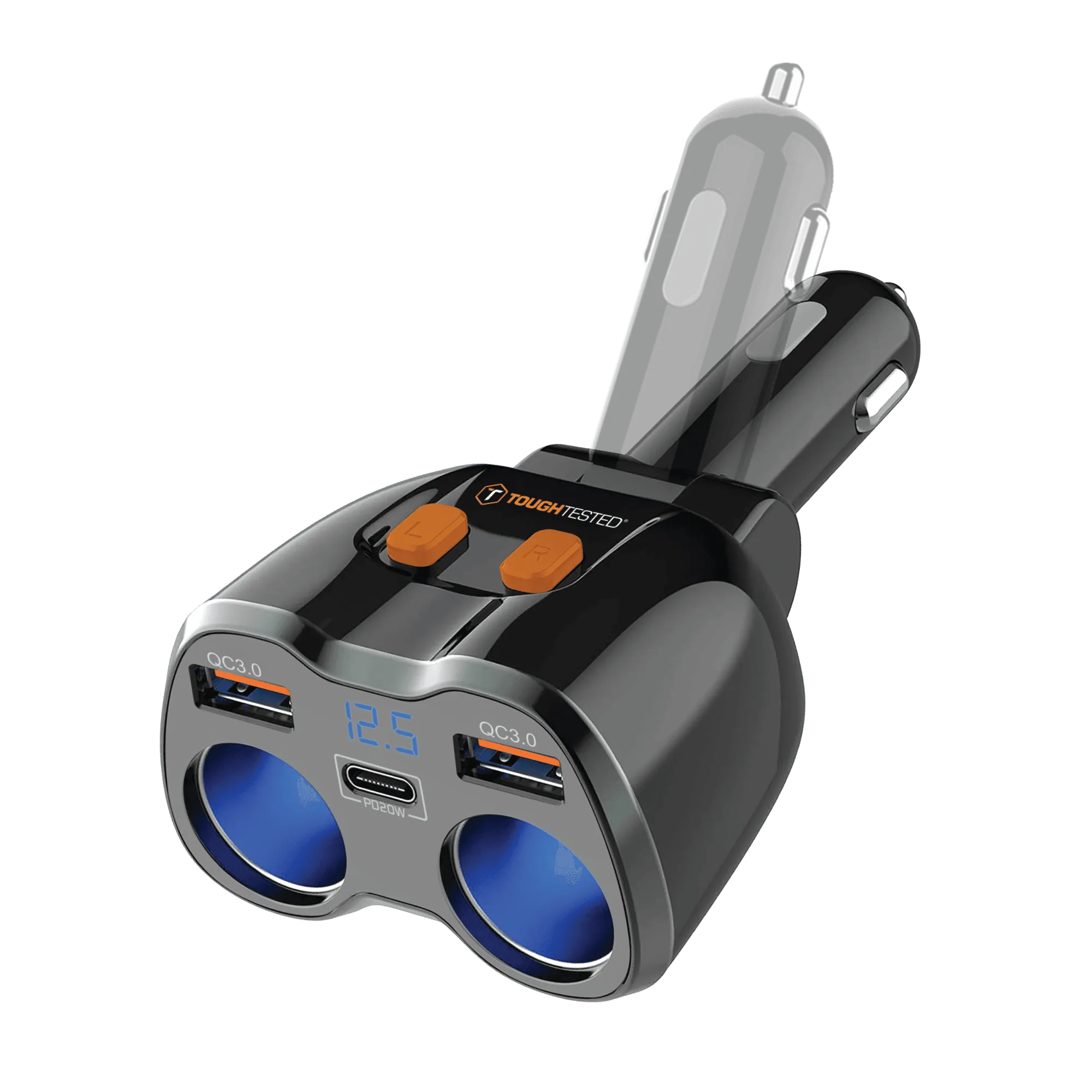
- ToughTested Dual 12V Vehicle Power Adapter with USB-C and USB, 150W: Dual 12V outlets for expanded in-vehicle power, plus USB-C and USB charging ports, in a 150W design. Lets you power or charge a portable jump starter from your car's 12V socket on the road, so it is topped up before you need it.
- ToughTested MagTough Dash MagSafe Car Mount: MagSafe dashboard phone mount with N52 grip and a non-slip tray for small items. Keeps your phone visible and secure while you follow jump-start instructions or call for help, and holds keys or cards you might need during a roadside stop.