Quick answer
Marked playing cards have subtle, coded markings on the back design that let a magician or card worker identify a card's suit and value without seeing the face. They're a staple in close-up magic and mentalism because they look ordinary to everyone else.
How the markings stay hidden
The secret is in the pattern. Every card in a marked deck has the same back design, but tiny variations—like a slightly thicker line, a dot that's off-center, or a shape that's rotated—encode the card's identity. To the spectator, the back looks uniform. Only the person who knows the code can read the markings at a glance.
Why magicians choose marked decks over sleight of hand
Marked cards remove the need for difficult moves like palming or switching. You can let the spectator shuffle, cut, and even hold the deck, yet you still know exactly what card they're holding. This makes routines feel more impossible and frees you to focus on presentation.
Trade-offs you should know
Not all marked decks are created equal. The most common trade-off is between durability and subtlety. Cheaper decks may have markings that are too obvious or wear off quickly. A quality deck like the Cohort Casino uses USPCC stock so the cards feel broken-in from the start, and the markings stay crisp through heavy use.
How to choose your first marked deck
- What's your primary use?: If you perform close-up or table-hopping magic, choose a deck with a subtle back pattern and high-contrast markings (like the Cohort Casino). For stage work, a bolder back can still read well from a short distance. Match the deck's subtlety to your performance distance.
- How much handling will it get?: If you practice daily or perform multiple shows, invest in a deck printed on casino-grade card stock. The markings last longer and the cards maintain their snap and feel. Budget decks may warp or fade. Durability matters for regular performers.
- Do you need to shuffle and let spectators handle the deck?: Yes, that's the whole point. Marked decks are designed to survive shuffling, cuts, and even table spills. The Cohort Casino deck's crushed stock resists dog-earing and stays playable. A good marked deck must handle real-world abuse.
Product facts
-
Cohort Casino Marked Playing Cards: Cohort Casino Marked Playing Cards use crushed USPCC stock for a broken-in feel straight out of the box, with a darker, richer red back and a new tuck box design. The pre-broken-in stock means you don't have to break the deck in yourself, and the bold back design helps the markings blend in seamlessly during performance.
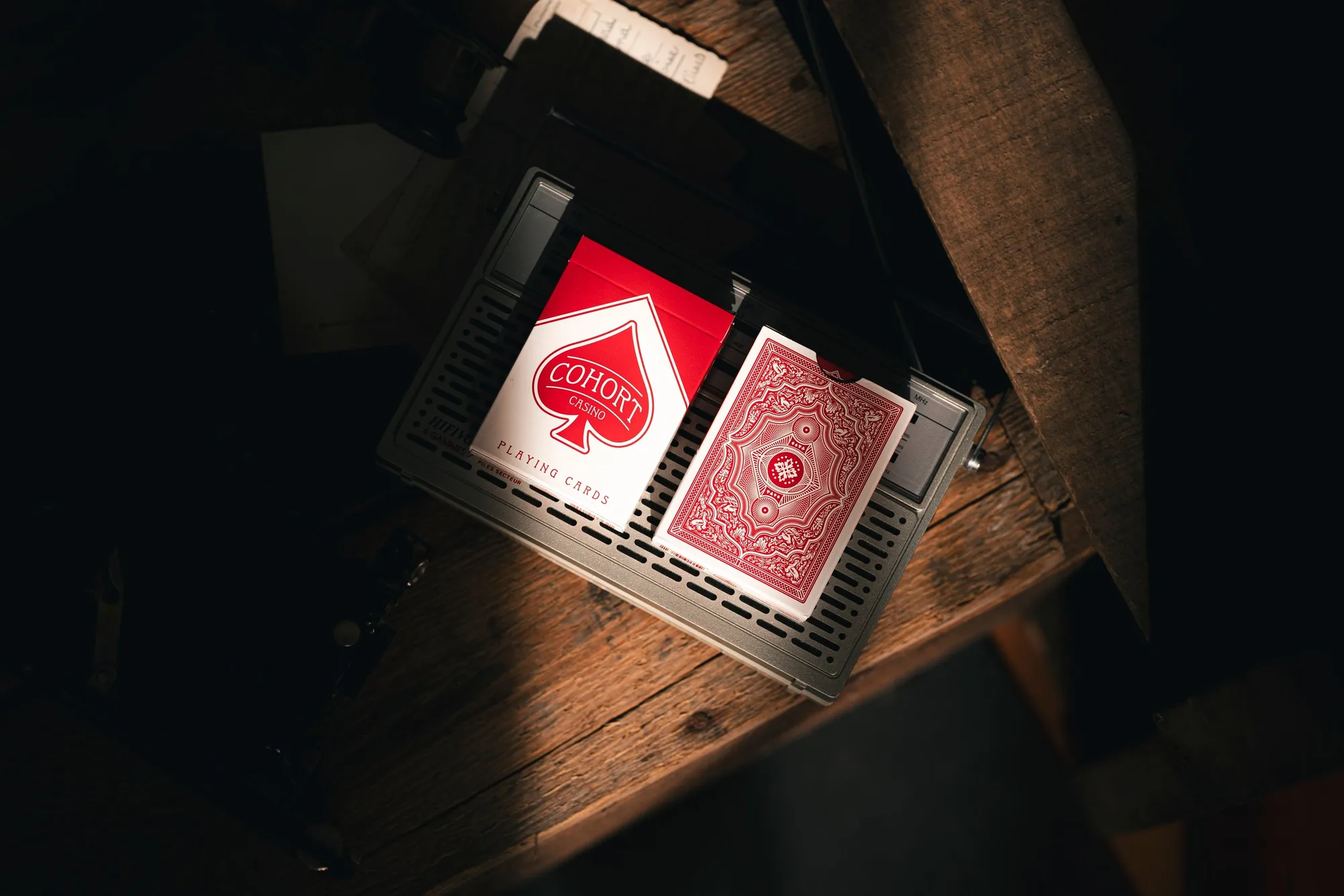
Cohort Casino Marked Playing Cards
Who should buy marked playing cards?
Best for
- Magicians who want to perform card tricks without sleight of hand
- Mentalists who need to secretly identify a chosen card
- Card workers who perform close-up or walk-around magic
Not for
- Magicians who rely exclusively on sleight of hand and don't want any gimmicked cards
- Collectors who only want standard, unmarked decks for cardistry or games