Quick answer
Pack your Savotta S-IFAK around the emergencies you are most likely to face, not around filling every pocket. Start with bleeding control and airway basics, keep the contents in one repeatable order, and use a small external pouch only for items you need to reach without opening the main kit. If your required contents no longer fit or you cannot retrieve them one-handed, move up to a larger pouch.
A personal first aid kit is only useful if you can find what you need under pressure. The Savotta S-IFAK is a compact pouch, so the real problem is not what you could carry but what you should carry, and in what order.
This walkthrough treats your S-IFAK as a working system: what goes inside, what stays outside, and how to tell when the pouch itself has become the limiting factor. The same logic applies whether you are building a first aid kit for hiking, range days, or everyday carry.
Start with the job, not the gear list
Before you buy anything, decide what the kit is for. A day hike kit and a range kit have different priorities, and a kit that tries to do both usually ends up disorganized. Write down the three most likely injuries for your activity, then build the contents around those scenarios.
The S-IFAK format rewards this discipline because space is limited. If you cannot name the scenario an item is for, it probably belongs in a larger bag or a vehicle kit rather than in your personal pouch.
- Choose one primary scenario and one secondary scenario, then stop adding.
- Keep a written inventory card inside the pouch so you can check contents without emptying everything.
Core contents that earn their space
Most personal first aid kit loadouts share a common core: gloves, a pressure dressing, gauze, tape, and a compact airway or barrier item. These cover the immediate priorities of bleeding control and basic protection while you decide on next steps.
Add a tourniquet only if you have trained with it and your activity justifies it. A tourniquet that you cannot apply correctly is worse than no tourniquet, because it takes space and creates false confidence. If you do carry one, keep it accessible rather than buried at the bottom.
- Flat-pack items first, bulky items last, so the pouch closes without strain.
- Replace anything you use immediately, even if it was just a pair of gloves.
Organizing the pouch so you can work one-handed
The most common failure in an ifak pouch setup is not missing gear, it is gear you cannot reach. Practice opening the pouch and retrieving your most critical item with one hand, in gloves, without looking. If that takes more than a few seconds, reorganize.
Group items by function rather than by size. Bleeding control together, airway items together, and small loose items such as tape or shears secured so they do not migrate. Elastic loops and internal flat compartments help here, but only if you actually use them consistently.
- Put the item you would reach for first on top or in the most accessible pocket.
- Rehearse the retrieval sequence once per season, not once per year.
What to keep outside the S-IFAK
Not everything belongs inside the main pouch. A tourniquet is often better carried in a dedicated external pouch so it stays visible and reachable, and so the main kit stays closed until you need it. This is where a small pouch such as the Tourniquet pouch earns its place on a belt or PALS panel.
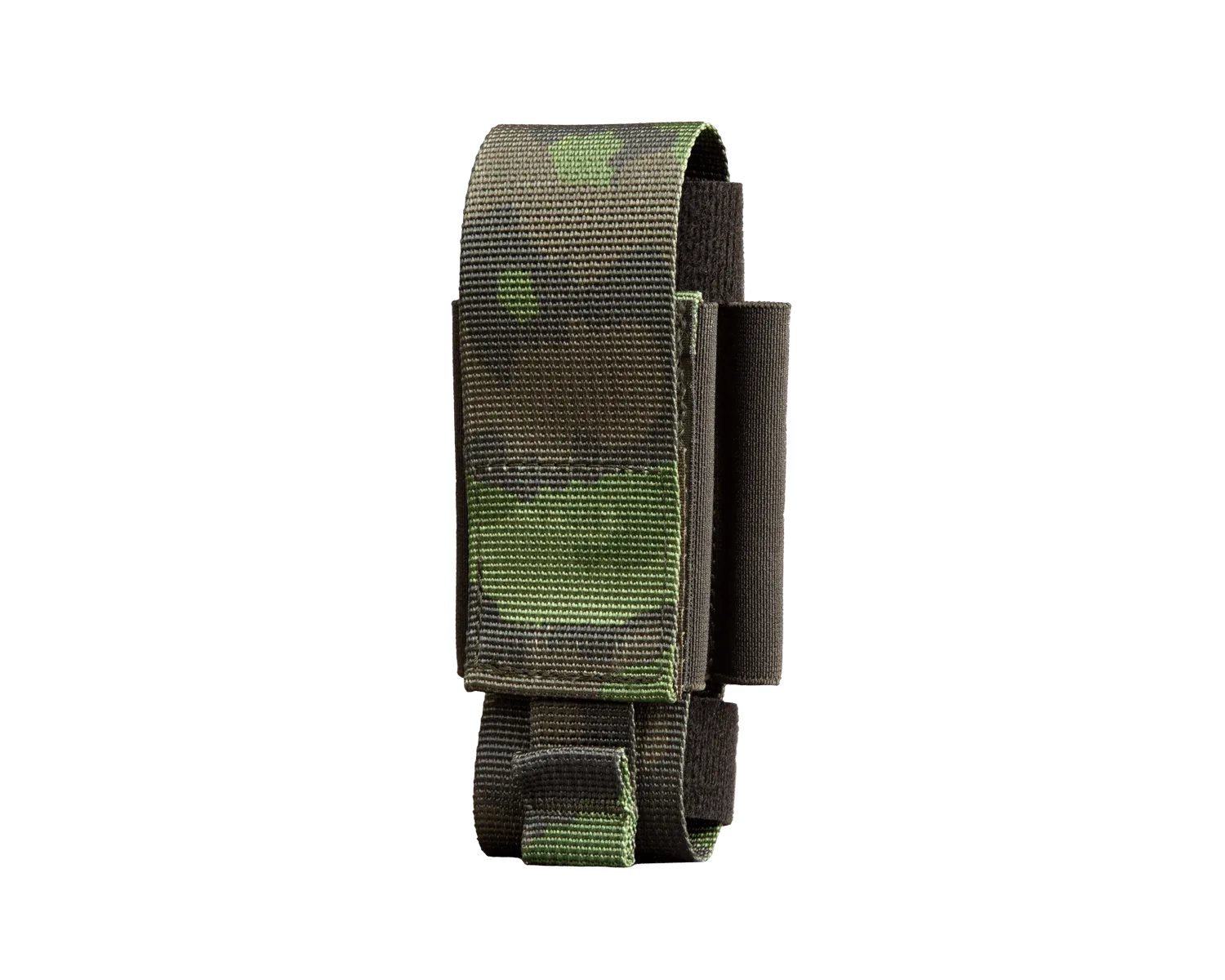
Tourniquet pouch
The same logic applies to general utility items that are not medical. If you find yourself opening your first aid kit for tape, batteries, or a spare buckle, those items belong somewhere else.
- Keep medical and non-medical contents strictly separate.
- Label the outside of the pouch so others can identify it without opening it.
When the S-IFAK is the wrong choice
If your required contents no longer fit, or if you have to remove items to close the pouch, you have outgrown the format. That is not a failure of the pouch; it is a sign that your kit has become a group or vehicle kit rather than a personal one.
At that point, move up to a larger general purpose pouch and keep the S-IFAK as a smaller companion kit. The Zipped GP pouch 3x4 offers a taller zipper closure, an internal flat compartment, elastic loops, and a tie-down point, with PALS and belt compatible attachment. That extra organization is useful when your contents list grows beyond the essentials.
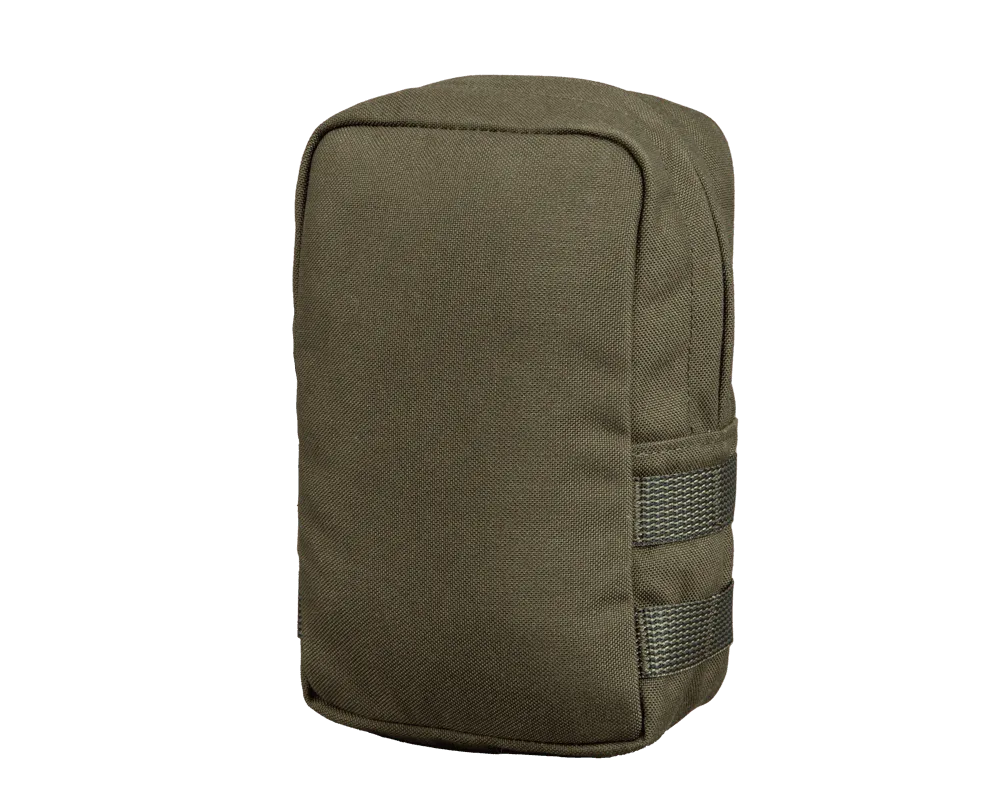
Zipped GP pouch 3x4
- If retrieval takes more than a few seconds, the pouch is too full or too disorganized.
- If the kit serves more than one person, it is no longer a personal S-IFAK.
Maintenance and restocking habits
A first aid kit is consumable, and the most common cause of a useless kit is a missing item discovered at the wrong moment. Check the pouch after every trip, replace what you used, and verify that seals, packaging, and closures are still intact.
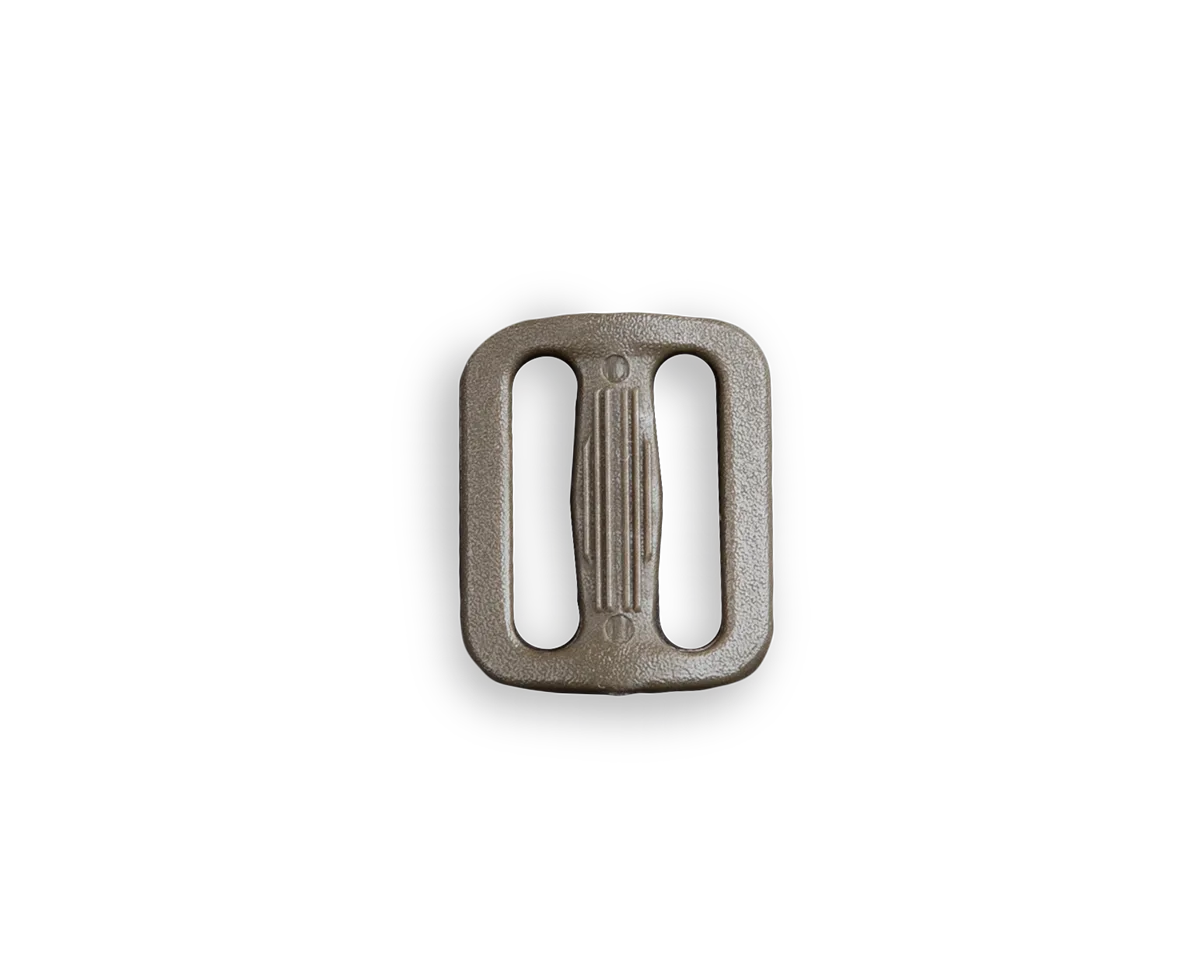
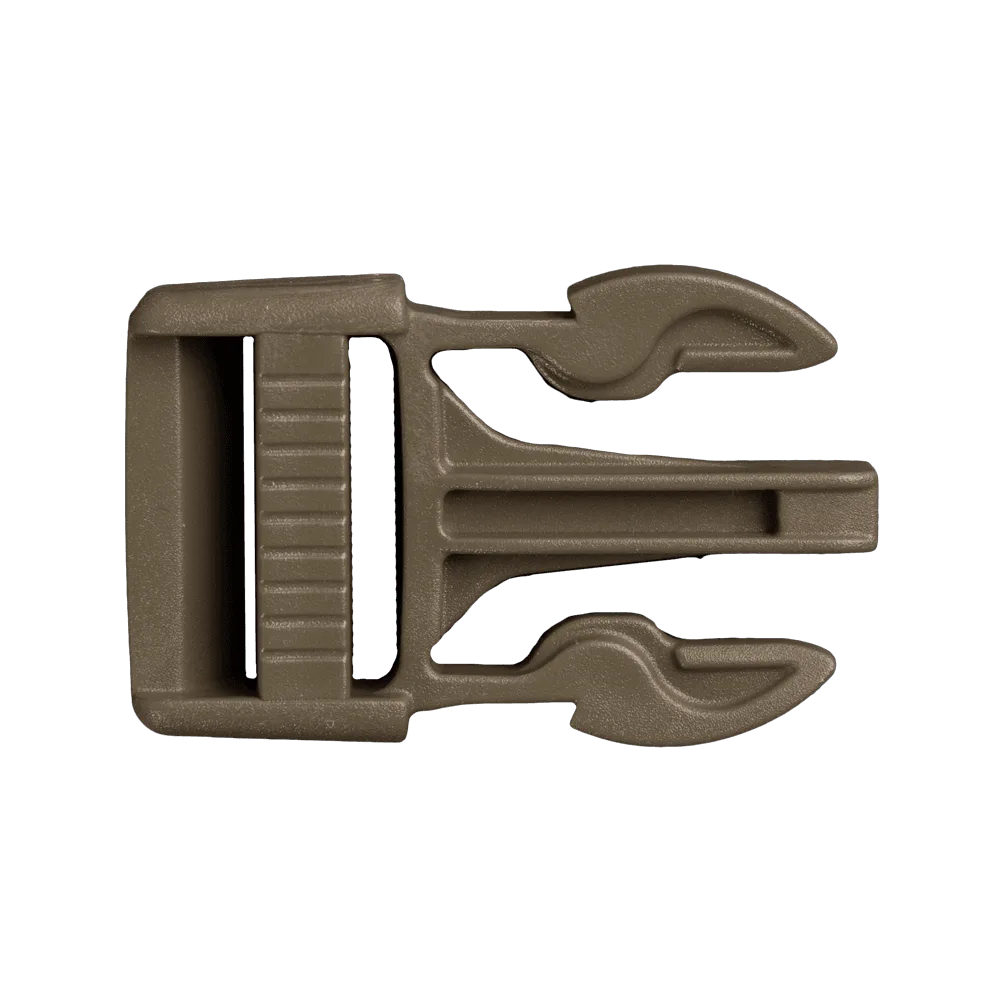
Keep a small repair capability nearby as well. A couple of spare buckles and a triglide in your general kit let you fix a strap or closure without improvising. The ITW Classic TG is a simple triglide for repairs or DIY projects, and the 2M WB SR adjustable, 25 mm, male is an adjustable side release male buckle for the same purpose.
- Set a recurring reminder to inspect the kit, not just after trips.
- Store the pouch somewhere dry and out of direct sun.
Diagnosing a kit that does not work
- Symptom: the pouch will not close cleanly: Cause: you are carrying more than the format supports. Corrective action: remove anything that is not tied to your primary or secondary scenario, or move the kit to a larger pouch. If it still will not close after removing non-essentials, stop and choose a larger pouch.
- Symptom: you cannot find the critical item quickly: Cause: contents are grouped by size or packed without a repeatable order. Corrective action: regroup by function, put the first-reach item on top, and rehearse one-handed retrieval. If retrieval is still slow after reorganizing, the pouch is too full for your content list.
- Symptom: the kit keeps getting opened for non-medical items: Cause: general utility items have been mixed into the medical kit. Corrective action: move tape, batteries, and spare hardware into a separate general purpose pouch. Keep medical and non-medical contents separate, or the kit will not stay stocked.
- Symptom: the kit serves more than one person: Cause: the contents list has grown into a group or vehicle kit. Corrective action: split the kit so each person carries a personal S-IFAK and keep the larger kit in a bag or vehicle. When the kit is shared, it is no longer a personal kit and should be reorganized as one.
Products that support this setup
- Tourniquet pouch: Fits most common tourniquets from SOFTT-W to CAT Gen 7, with vertical PALS and belt and horizontal belt attachment options. Keeping a tourniquet outside the main S-IFAK makes it faster to reach and keeps the medical kit closed until needed.
- Zipped GP pouch 3x4: Taller zipper closure general purpose utility pouch with internal flat compartment, elastic loops and tie-down point for various trinkets and stuff, with PALS and belt compatible attachment. A practical step up when your contents list outgrows a compact personal kit and you need more internal organization.
- ITW Classic TG: ITW Nexus Classic Triglide buckle, for repairs or DIY projects. A small spare that lets you repair a strap or closure on your pouch or belt instead of replacing the whole item.
- 2M WB SR adjustable, 25 mm, male: 2M Warrior Buckle series side release male buckle, adjustable. Useful as a spare closure component when you are building or maintaining the carry system around your kit.
Build your Savotta S-IFAK around named scenarios, keep the contents in a repeatable order, and treat anything you cannot retrieve one-handed as a sign to reorganize or move up to a larger pouch. The pouch works best when it stays a personal kit, not a shared one.