Quick answer
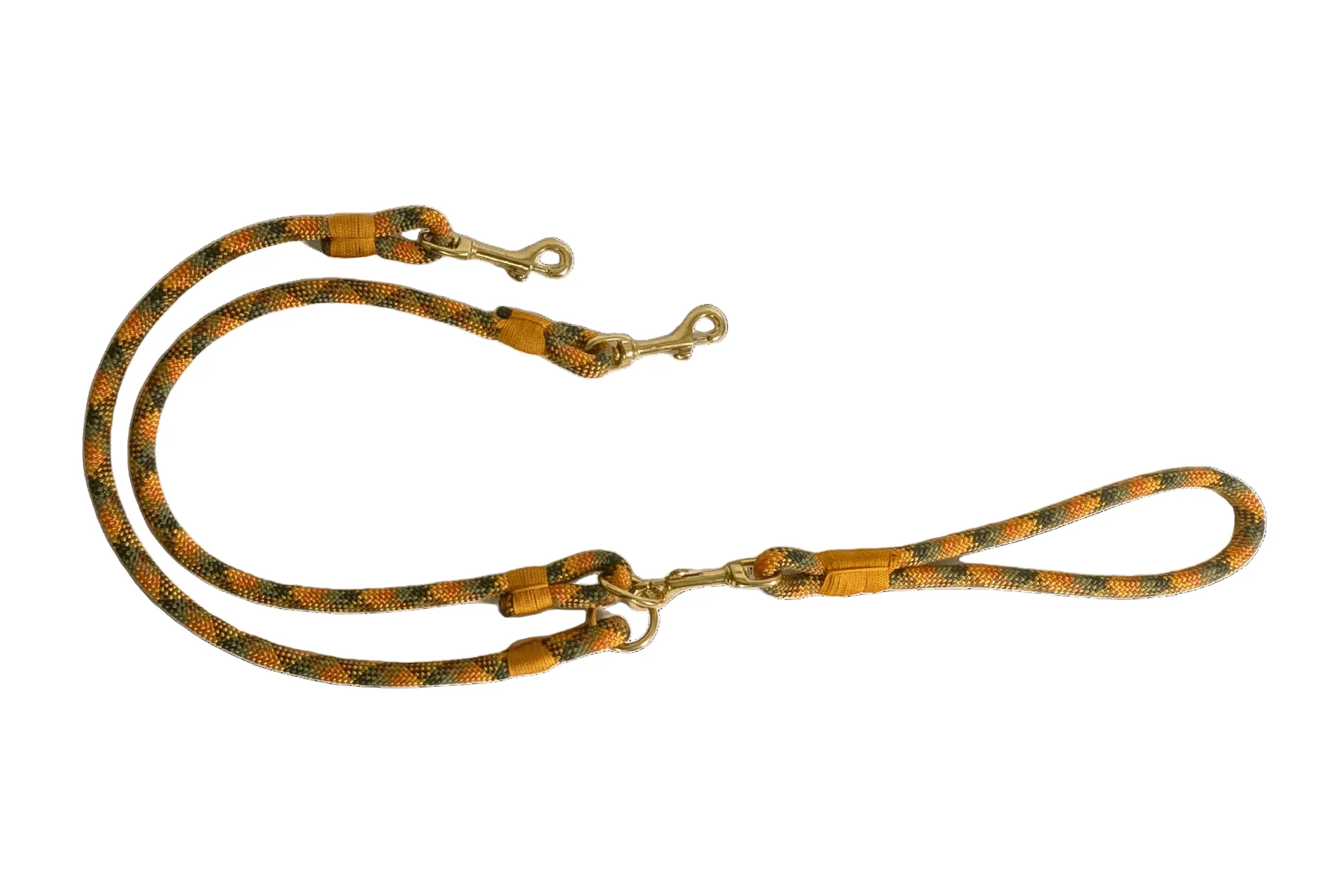
A dog split lead is one handle with two arms that attach to two dogs, so you walk both on a single lead. Choose one when your dogs walk calmly side by side and you want one hand free; stick with two separate leads if either dog pulls hard, lunges, or needs its own space.
What a split lead actually changes on a walk
A split lead moves the point of control from two hands to one. Instead of managing two handles, you hold a single grip and the two arms spread the dogs apart. That frees a hand for treats, a phone, or a gate latch, and it removes the crossed-lead tangle that happens when two separate leads wrap around each other.
The trade-off is shared control. If one dog surges, the movement travels through the handle to your hand, and the other dog feels it too. A split lead suits dogs of similar walking style; it is not a training tool for two dogs that pull in opposite directions.
When one lead for two dogs works, and when it does not
Walking two dogs on one lead works best when both dogs already walk loosely and accept being close together. It is a convenience for the routine walk, not a fix for pulling.
It is a poor fit when one dog is reactive, much larger, or much faster than the other. In those cases two separate leads let you shorten one without affecting the other, and let you step apart when a dog needs distance.
Why material matters more than colour
A split lead lives outdoors, so wet weather decides how pleasant it is to hold. Biothane is a coated webbing: it does not soak up water like fabric or rope, and it wipes clean after muddy walks. That matters most in autumn and winter, when a wet lead stays wet for hours.
Check the grip and arm lengths before you buy. A longer grip gives more room for a gloved hand; shorter arms keep dogs closer and reduce the chance of one dog swinging wide. If a listing does not state these measurements, treat that as a reason to ask before ordering rather than guessing.
Decision rules for buying a split lead
- Both dogs walk loosely: Choose a split lead if both dogs already walk without pulling and are comfortable side by side. If either dog pulls, train on separate leads first. Test the pair on a short, quiet route before relying on a split lead for every walk.
- Similar size and pace: Pick a split lead when the dogs are close in size and walking speed. If one is much larger or faster, use two separate leads so you can adjust each dog independently.
- Wet-weather routine: Choose a waterproof Biothane split lead if your walks involve rain, mud, or river dips. Wipe it down after use and it is ready for the next walk.
- Check the measurements: Compare the grip length with your hand size and the arm length with how close you want the dogs. Ask the seller if a measurement is missing.
Product facts
-
Navy Waterproof / Biothane Dog Split Lead: The Navy Waterproof Biothane Split Lead has a 35cm grip and 60cm dual arms, handmade in Yorkshire. The 35cm grip leaves room for a gloved hand, and the 60cm arms keep two dogs close without crossing paths on a shared walk.
Navy Waterproof / Biothane Dog Split Lead
Navy Waterproof / Biothane Dog Split Lead
Is a split lead right for you?
Best for
- Owners of two calm dogs of similar size who want one hand free
- Routine walks where the dogs already walk side by side without tangling
- Wet-weather walkers who want a lead that wipes clean
Not for
- Dogs that pull hard or lunge, which need independent control
- Pairs with a large size or pace difference
- Reactive dogs that need space from each other