Quick answer
A shifter cable adapter bracket is a rigid mount that anchors the shifter cable to the transmission so the cable's outer housing cannot flex or move when you shift. Without it, the cable housing shifts under load, and the motion that should move the shift fork gets lost. You need one whenever you install an aftermarket shifter or cable whose housing does not match the OEM mounting points.
If you have ever installed an aftermarket shifter and found the cables no longer bolt to the transmission the way they did before, the missing piece is usually a shifter cable adapter bracket. It is a small part, but it decides whether your new shifter feels precise or vague.
This guide answers the questions people actually ask about cable adapter brackets: what they do, when one is required, how to tell if yours is the right fit, and what to check before you buy.
What does a shifter cable adapter bracket actually do?
A shifter cable has two parts: an inner cable that moves and an outer housing that must stay still. The bracket clamps or bolts that outer housing to a fixed point on the transmission. When you pull the shifter, the inner cable moves the shift mechanism instead of pushing the housing around.
That sounds simple, but the effect is large. If the housing can flex even a few millimeters, some of your shifter's travel is wasted moving the cable instead of the transmission. A rigid adapter bracket removes that lost motion, so the effort you apply at the knob goes into the shift fork.
- Think of the bracket as the anchor, not the moving part.
- Any flex in the housing shows up as vagueness at the knob.
When do you need a shifter cable adapter bracket?
You need one when the cable housing you are using does not line up with the factory mounting location on the transmission. This commonly happens with aftermarket shifters, replacement cables, or engine swaps where the transmission and chassis come from different cars.
You may also need one if the factory bracket is worn, cracked, or made of soft material that flexes. A worn bracket lets the cable housing move under load, which feels like a shifter that will not stay in gear or that changes feel between hot and cold.
- Aftermarket shifter with different cable routing
- Replacement cable with a different housing end
- Swapped transmission or engine combination
- Cracked or flexing factory bracket
How do you know if your bracket fits?
Fit comes down to three things: the cable housing diameter, the mounting bolt pattern on the transmission, and the angle the cable exits the bracket. If any of those is wrong, the cable will bind, sit at an odd angle, or not clamp securely.
Measure the housing where it passes through the bracket and compare it to the bracket opening. Then check the bolt spacing and thread pitch against your transmission case. If you are unsure, ask the seller for the exact cable and transmission the bracket was designed around.
- Check housing diameter before bolt pattern.
- A bracket that forces the cable into a sharp bend will wear the cable.
What is a cable adapter, and how is it different from a bracket?
The terms get used loosely, but they describe different jobs. A cable adapter usually refers to the piece that changes the cable end or housing interface so it connects to a different shifter or transmission. A bracket is the mount that holds that assembly in place.
Some products combine both functions in one part. When shopping, look at what the part actually contacts: if it clamps the housing to the chassis or transmission, it is a bracket. If it changes the shape or size of the connection, it is an adapter.
- Adapter changes the connection; bracket holds it steady.
- Many kits include both in a single piece.
Does a cable bracket really change shift feel?
Yes, and it is one of the most noticeable small upgrades you can make. A rigid bracket removes compliance from the cable path, so the shifter feels more direct and the centering action stays consistent. It also helps the transmission select gears more cleanly because the cable is not losing travel.
On cars with soft rubber factory mounts, the difference is obvious. The shifter stops feeling rubbery and starts feeling mechanical. That is why bracket and bushing upgrades are often paired together.
- Pair a bracket with stiffer bushings for the biggest gain.
- Expect a firmer, more direct feel, not a softer one.
Cable bracket quick checks
Cable housing diameter
Measure the housing where it passes through the bracket and compare it to the bracket opening. A loose clamp lets the housing move under load. If it does not clamp firmly, it will not fix shift feel.
Mounting bolt pattern and thread pitch
Confirm the bolt spacing and thread pitch match your transmission case before ordering. Adapter brackets are often specific to one transmission family. Test-fit the bracket before installing the cable.
Cable exit angle
The cable should leave the bracket in a smooth arc, not a sharp bend. A kinked cable wears quickly and can bind mid-shift. Adjust routing before tightening the final bolt.
Bracket material and rigidity
A bracket that flexes under hand pressure will flex more under shifting load. Steel or thick aluminum resists deflection better than thin stamped parts. If it bends by hand, it is too soft for the job.
Parts that address cable and shifter compliance
- 4-Way Adjustable Performance Shifter for the RHD 11th Gen Civic: Gear throw can be adjusted between 50% shorter and 20% longer than stock, gate spacing between 35% narrower and 50% wider, and shift knob height within a 75mm range, with centering made decisive by a 50% increase in spring force over stock. A shifter with this much adjustment range depends on a rigid cable path to deliver the settings you choose; a flexing bracket can blur the difference between them.
- 1914 Shifter Base Bushings: Replaces OEM rubber base bushings with solid aluminum and includes four upper bushings, four lower bushings, and four class 12.9 M6 mounting bolts. If your base bushings are still soft rubber, stiffening the base and the cable mount together removes the two main sources of shifter compliance.
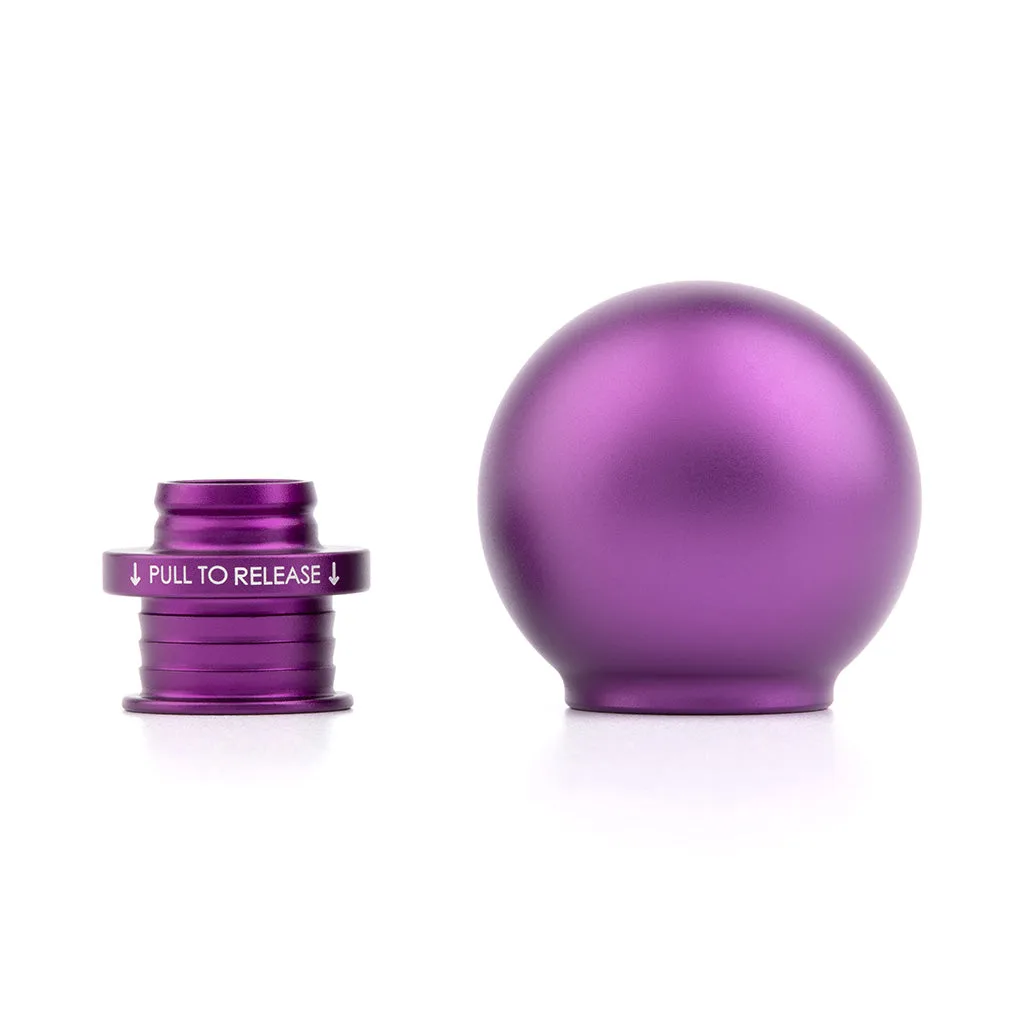
- POCO Low-Profile Shift Knob in Satin Purple Finish (M10X1.5): Sits only 3-4mm above the top of the threaded shift lever and typically offers 5%-10% less throw than a stock knob, with a built-in shift boot collar. A lower knob shortens the lever arm, so any remaining cable or bracket flex becomes easier to feel through the shifter.
A shifter cable adapter bracket is not glamorous, but it is the part that keeps your cable housing still so your shifter can do its job. Confirm the housing diameter, bolt pattern, and cable angle before you buy, and pair it with stiff base bushings if you want the most direct feel. Get those details right and the rest of your shifter setup will finally feel like it was worth the money.