Quick Answer
An oxygen sensor bung plug is a threaded cap that seals an unused O2 sensor port in your exhaust. You need one when you remove a sensor, add a bung you do not use, or build a custom exhaust with extra ports. It prevents exhaust leaks and keeps the check engine light off by maintaining a sealed system.
If you have ever removed an oxygen sensor or added an extra bung to a custom exhaust, you have probably seen a threaded hole left behind. That hole needs to be sealed, and that is where an oxygen sensor bung plug comes in.
This guide answers common questions about bung plugs: what they do, how to match the right size, how they differ from defoulers, and how to install one so it does not leak or trigger a check engine light.
What does an oxygen sensor bung plug do?
An oxygen sensor bung plug is a short, threaded plug that screws into an O2 sensor bung. Its main job is to seal the exhaust system when no sensor is installed. Exhaust systems operate under pressure and heat, so any open hole can leak exhaust gases, create noise, and allow outside air to enter the stream. That air can confuse the engine computer and trigger a check engine light.
Plugs are typically made from stainless steel or mild steel and often include a crush washer or sealant to ensure a gas-tight fit. They are common in custom exhaust builds, when upgrading to a different sensor layout, or when removing a rear O2 sensor after a tune.
- Use a plug whenever you remove a sensor and do not plan to reinstall it immediately.
- Always check for leaks after installation by listening for hissing or feeling for escaping exhaust pulses.
What size bung plug do I need?
Most oxygen sensors use an M18 x 1.5 thread, so the matching bung plug is also M18 x 1.5. That is the size you will find on the majority of cars and trucks. Some older or specialty vehicles use M12 x 1.25, and a few use 1/2-20 or 3/8-24 NPT threads. If you are unsure, measure the sensor or the bung opening with a thread pitch gauge.
When ordering, confirm the thread size and pitch. A plug that is close but not exact will either cross-thread or leak. If you have a MagnaFlow exhaust with an extra bung, check the product details or contact the manufacturer to confirm the thread.
- M18 x 1.5 is the most common size for O2 sensor bungs.
- M12 x 1.25 is found on some smaller engines and older models.
- Never force a plug; hand-thread it first to avoid damaging the bung.
Defouler vs bung plug: what is the difference?
A bung plug simply seals a hole. A defouler, on the other hand, is a spacer that moves the oxygen sensor out of the direct exhaust stream. Defoulers are often used to reduce the signal from a rear O2 sensor after removing a catalytic converter, which can help avoid a check engine light. They are not a substitute for a plug because they still allow a sensor to be installed.
If you have removed a sensor and want to seal the port, use a plug. If you want to keep a sensor but alter its reading, use a defouler. Some defoulers are adjustable and include a small catalytic material, but they are not legal for street use in many areas. Always check local emissions laws before modifying sensor behavior.
- Plug = seal the hole; defouler = space the sensor out.
- Defoulers may not be emissions-legal; plugs are legal when used to seal an unused port.
- Do not use a defouler to hide a failed sensor; fix the underlying issue first.
How do I install an exhaust bung plug?
Start with a cool exhaust. Clean the threads of the bung with a wire brush and apply a high-temperature anti-seize compound to the plug threads. Hand-thread the plug into the bung, then tighten it with a wrench. Do not overtighten; you can strip the threads or crack the bung. If the plug uses a crush washer, tighten until the washer compresses.
After installation, start the engine and let it idle. Listen for a ticking or hissing sound around the plug. If you hear a leak, tighten slightly more or remove and reseal. For a permanent seal, you can also have a welder close the bung, but a plug is removable and easier for most DIYers.
- Use anti-seize to prevent the plug from seizing in the bung.
- Check for leaks at idle and after a short drive.
- If the bung is damaged, a plug may not seal; you may need to weld in a new bung.
Will a bung plug keep the check engine light off?
A plug itself does not generate a signal, so if your engine computer expects an oxygen sensor in that location, it will still set a check engine light. The plug only prevents exhaust leaks and unmetered air from entering. If you remove a sensor that the ECU monitors, you will need a tune or a simulator to turn off the light. In some cases, the rear O2 sensor can be disabled with a handheld tuner.
If you are sealing a bung that was never used by the factory, a plug is all you need. The check engine light should stay off because the ECU never expected a sensor there. Always scan for codes after any exhaust work to confirm everything is in order.
- Plug seals the hole; it does not replace a sensor signal.
- If the ECU expects a sensor, you need a tune or simulator to avoid a CEL.
- Scan for codes after installation to catch any issues early.
Bung Plug Quick Reference
Common thread size
M18 x 1.5 is the standard for most oxygen sensors. M12 x 1.25 is used on some smaller engines. Measure your bung or sensor before ordering to avoid returns.
When to use a plug
Use a plug when you remove a sensor and leave the bung unused, or when a custom exhaust has an extra port. A plug prevents leaks and unmetered air that can trigger a check engine light.
Installation tip
Apply high-temp anti-seize to the plug threads and tighten snugly. Do not overtighten. Check for leaks at idle; if you hear hissing, tighten a bit more or reseal.
MagnaFlow Parts That Use O2 Sensor Bungs
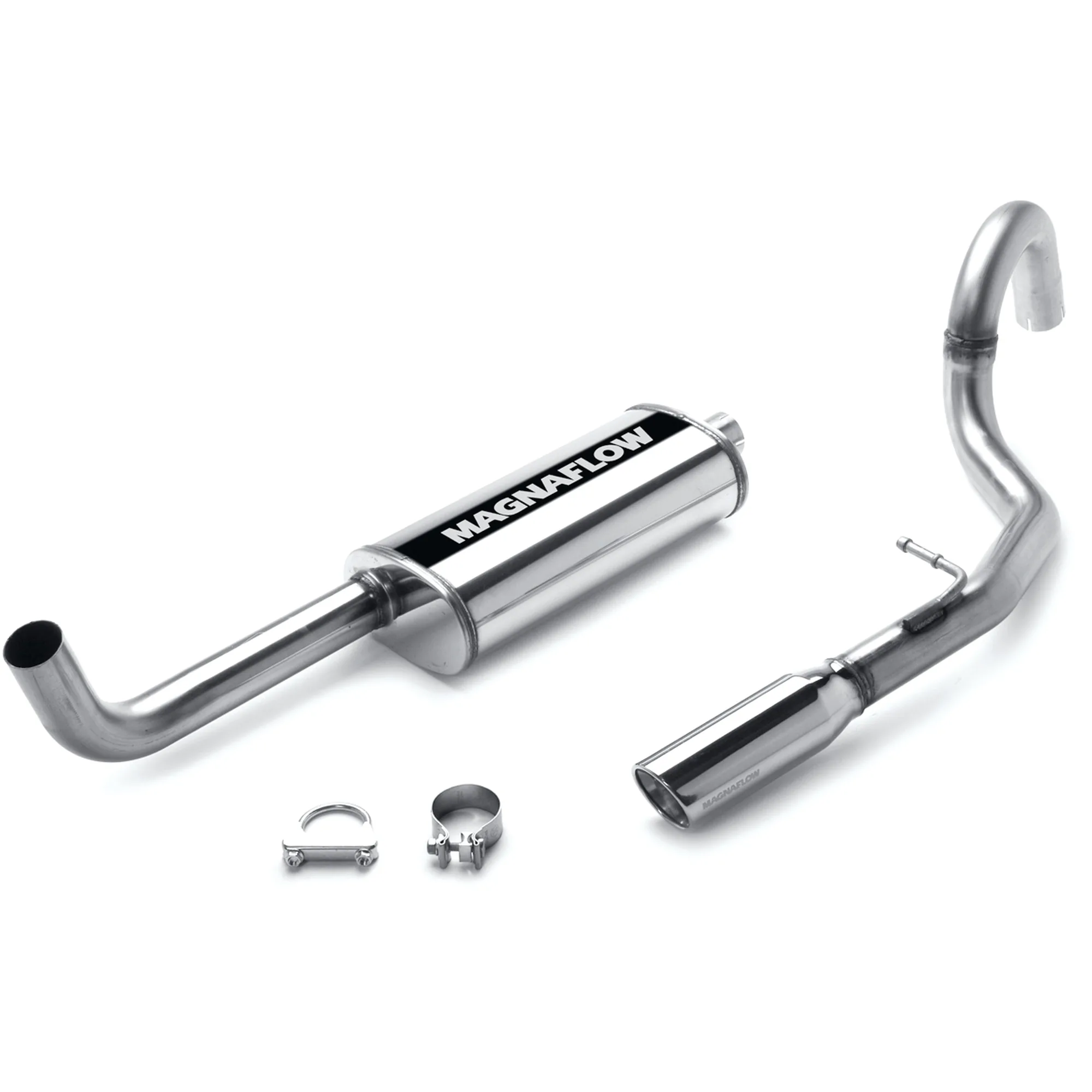
- MagnaFlow 1998 Jeep Grand Cherokee 5.9L / 1998 Jeep Grand Cherokee 5.2L Street Series Cat-Back Performance Exhaust System 15858: This system features fast-flowing, mandrel bent 2.5in. main piping and a Single Straight Passenger Side Rear exit with a 3.5in. polished welded-on double wall tip. If you add an extra O2 bung for a wideband sensor, you will need a plug to seal it when not in use. The stainless construction also means you should use anti-seize on any plug to prevent galling.
- MagnaFlow D-Fit Series Performance Exhaust Muffler Replacement Kit Direct-Fit without Muffler 19476: This kit replaces the restrictive factory muffler with mandrel bent 2.75in. tubing while maintaining the OEM piping and tailpipe, and is produced using CNC precision robotic manufacturing techniques. When replacing a muffler, you may find an unused bung or need to add one for a sensor. A plug ensures the system stays sealed and leak-free.
An oxygen sensor bung plug is a small but important part of any exhaust system. Whether you are sealing an unused port on a MagnaFlow exhaust or building a custom setup, matching the thread size and installing it correctly will keep your exhaust sealed and your check engine light off. Always verify the thread size and use anti-seize for a trouble-free install.