Quick answer
A good social story is a short, personalized narrative that describes a situation from the child's perspective, using positive language and clear expectations. Carol Gray's 15th Anniversary Edition of The New Social Story Book offers over 150 ready-to-use examples and a proven framework for writing your own.
Why the 15th Anniversary Edition stands out
This revised and expanded edition includes more than 150 social stories, reflecting two decades of updates since Carol Gray first developed the approach in 1991. The stories are designed to be practical and adaptable, making them a standard resource for teachers and parents worldwide. While the book provides a strong foundation, it is not a script—you still need to individualize each story for the child's specific needs and context.
When a social story may not be the best fit
Social stories work best for children who can understand simple language and benefit from visual or textual supports. If a child is in crisis or has limited comprehension, other strategies like visual schedules or immediate environmental adjustments may be more effective. Also, social stories are not a quick fix; they require consistent use and should be paired with positive reinforcement and patience.
Frequently asked questions about social stories
What is a social story?
A social story is a short descriptive narrative that explains a social situation, skill, or concept in a way that is accurate, meaningful, and safe for the child. It typically includes descriptive sentences (what happens), perspective sentences (how others feel), and directive sentences (what the child can do).
How do I write a social story?
Start by identifying the situation and the child's perspective. Use positive, literal language and avoid absolutes like 'always' or 'never.' Aim for a ratio of at least three descriptive or perspective sentences for every directive sentence. Keep it short—usually 5 to 10 sentences—and include visual supports if helpful. Write in first person from the child's point of view when possible.
When should I use social stories?
Use social stories to prepare for new or challenging situations, teach routines, or address specific behaviors. They are most effective when introduced before the situation occurs and reviewed regularly. Avoid using them as a punishment or in the middle of a meltdown. Introduce the story during a calm moment and practice before the event.
Can I use the stories in The New Social Story Book as-is?
Yes, the book provides over 150 ready-to-use stories covering common topics like transitions, emotions, and social skills. However, for best results, personalize the language and details to match the child's age, abilities, and specific context. Adapt the stories to reflect the child's name, setting, and preferences.
Are social stories evidence-based?
Social stories are widely used and considered a promising practice, but research results are mixed. They are most effective when used as part of a comprehensive approach that includes positive behavior support and individualized instruction. Monitor the child's response and adjust the story or strategy as needed.
Product facts
-
The NEW Social Story Book 15th ANNIVERSARY Ed (Revised & Expanded) - Over 150 Social Stories! by Carol Gray..: Revised and Expanded 10th Anniversary Edition with over 150 social stories. Provides a large library of examples to inspire your own stories and address common situations.
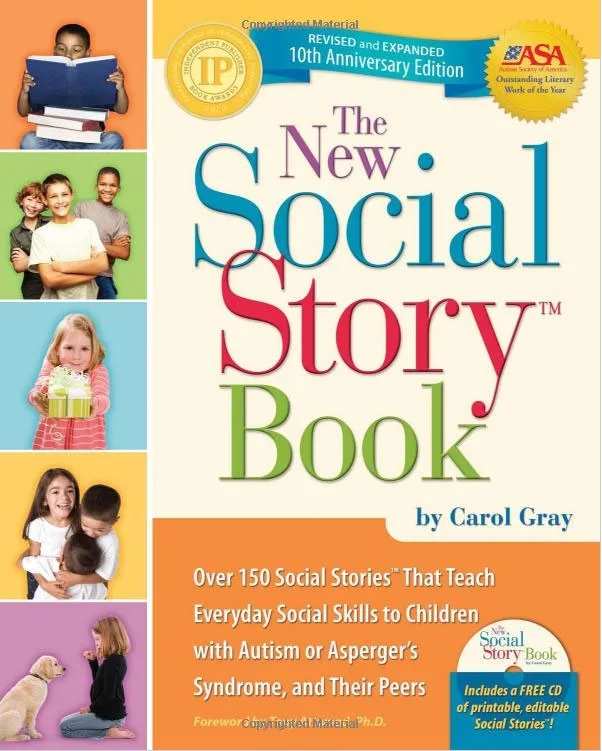
The NEW Social Story Book 15th ANNIVERSARY Ed (Revised & Expanded) - Over 150 Social Stories! by Carol Gray..