Quick answer
Offer a teether when your baby is actively gnawing, drooling, or fussy from teething pressure, usually from around four to six months. Choose one-piece, non-toxic silicone with no loose parts, clean it with warm soapy water, and inspect it often for cracks or tears. If a teether is damaged, replace it.
Teething brings a lot of questions, and most of them come up at 2 a.m. when your baby is chewing on their fist and nothing seems to help. The answers below cover the teether questions parents ask most, in short form so you can get back to your baby.
None of this replaces your pediatrician's advice, especially if your baby has a fever, is refusing feeds, or seems unwell. For everyday teething, though, these are the practical points that matter when you are choosing or using a teether.
When should you start using a teether?
Most babies start showing teething signs between four and six months, though some begin earlier and some later. The signals to watch for are increased drooling, chewing on hands or toys, and general fussiness around the mouth. That is usually the point where a teether helps more than it frustrates.
There is no rule that says you must wait for a first tooth. If your baby is mouthing everything and seems uncomfortable, a soft silicone teether gives them a safer target than a finger, a blanket, or the nearest hard toy.
- Offer a teether during fussy windows rather than all day, so it stays a tool and not a pacifier replacement.
- If your baby rejects it, try again in a few days. Teething pressure comes and goes.
Are teethers safe for babies?
A teether is safe when it is made from a non-toxic, food-grade material, has no small parts that can detach, and is the right size for your baby's mouth. Silicone is a common choice because it is soft on gums and easy to clean. Check the label for BPA-free and phthalate-free claims before you buy.
The bigger safety risks are wear and tear, and size. A teether that has been chewed into a crack can shed pieces, and one that is small enough to fit entirely in the mouth is a choking hazard. Inspect the teether every few days and replace anything that looks damaged.
- Never tie a teether around your baby's neck or attach it with a long cord.
- Skip teethers with beads, buttons, or parts that can be pulled off.
- If you are unsure whether a specific teether is safe for your baby, ask your pediatrician.
How do you clean a teether?
Warm water with a little mild dish soap is enough for daily cleaning. Rinse well and let it air dry. Most silicone teethers can also go on the top rack of a dishwasher, but check the manufacturer's instructions first, because heat and harsh detergents can shorten the life of the material.
Skip the boiling water unless the brand says it is safe. Very high heat can degrade silicone over time. If your baby has been sick, a more thorough clean is reasonable, but regular soap and water does the job for everyday use.
- Clean teethers more often during cold and flu season or when your baby is drooling heavily.
- Do not use bleach or abrasive scrubbers on silicone.
Which teether shape is best?
The best shape is the one your baby can hold and reach their mouth with. Younger babies often do better with a small, lightweight teether that fits in a tiny fist. Older babies who are chewing harder may prefer something with more surface area or a textured back for extra sensory input.
Shape also affects where the pressure lands. A rounded ring works well for front gums, while a shape with bumps or ridges can reach molars that are coming through later. If your baby keeps dropping the teether, look for one that is easy to grip rather than one that is simply cute.
- Let your baby try more than one shape. Preferences change as their grip develops.
- A teether with a tactile back can double as a sensory tool for older babies.
How often should you replace a teether?
Replace a teether as soon as you see cracks, tears, sticky spots, or a change in texture. There is no fixed timeline, because it depends on how hard your baby chews and how often the teether is cleaned. A teether that was fine last week can become unsafe quickly.
A good habit is a quick squeeze and stretch test every few days. If the material feels different or you can see any separation, retire it. Keeping a spare on hand means you are not caught out when one wears out.
- Check teethers after every dishwasher cycle, since heat can speed up wear.
- Write the purchase date on the package if you want a rough reminder, but trust your eyes more than the calendar.
Teether questions at a glance
When to start
Offer a teether when your baby is drooling, gnawing, and fussy, usually around four to six months. No need to wait for a first tooth.
Safety check
Look for non-toxic silicone, no detachable parts, and a size that cannot fit entirely in the mouth. Inspect for cracks or tears every few days.
Cleaning routine
Wash with warm water and mild soap, rinse well, and air dry. Dishwasher only if the brand allows it. Skip boiling unless the instructions say otherwise.
When to replace
Replace at the first sign of cracks, tears, sticky spots, or texture changes. Keep a spare so you are not caught without one.
Teethers that match common questions
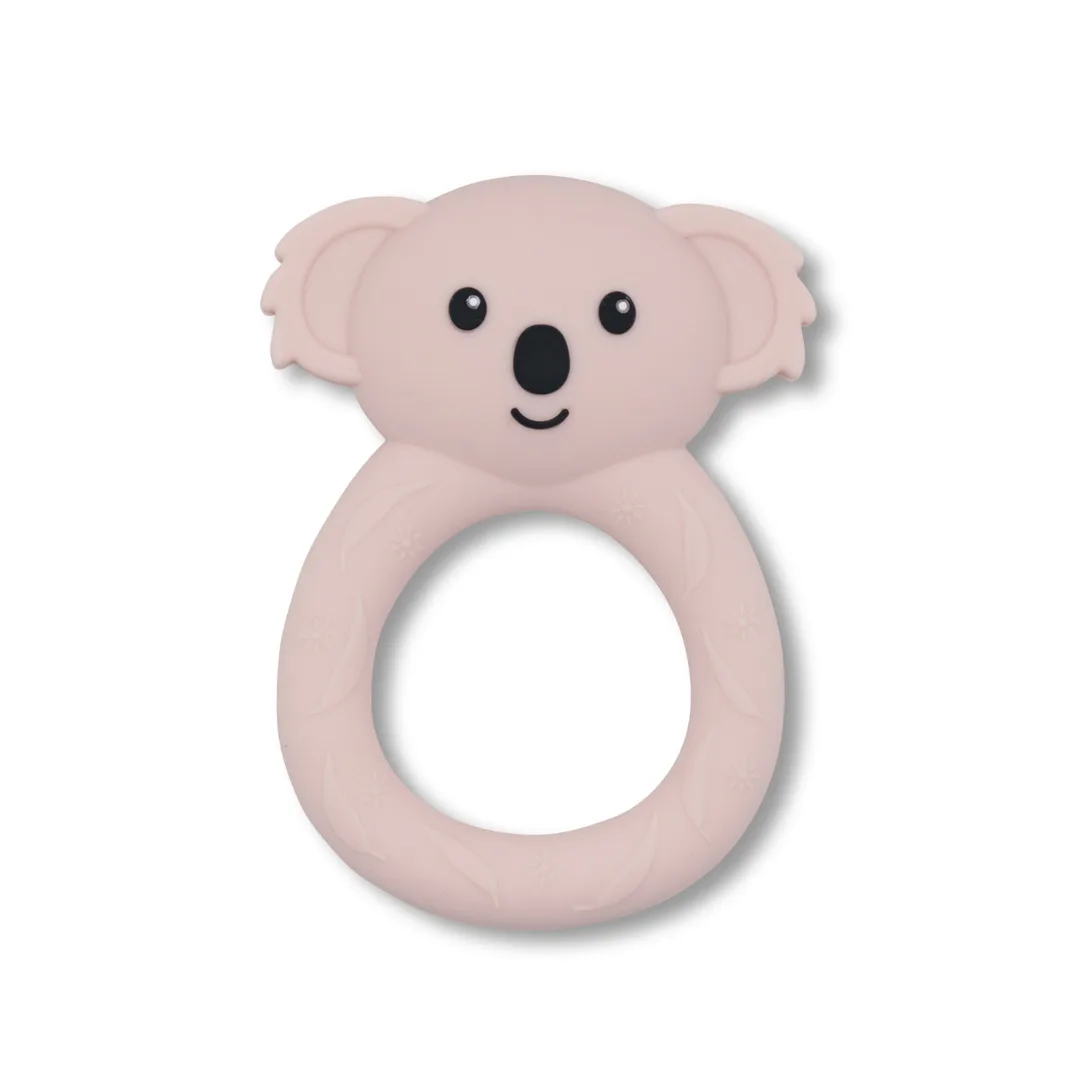
- Koala Teether: Made from non-toxic silicone, BPA-free, phthalate-free, and non-toxic, with tactile elements on the back for added sensory fun. Available in Pink Salt and Eucalyptus. The soft silicone is gentle on gums, and the textured back gives extra sensory input for babies who want more than a smooth surface.
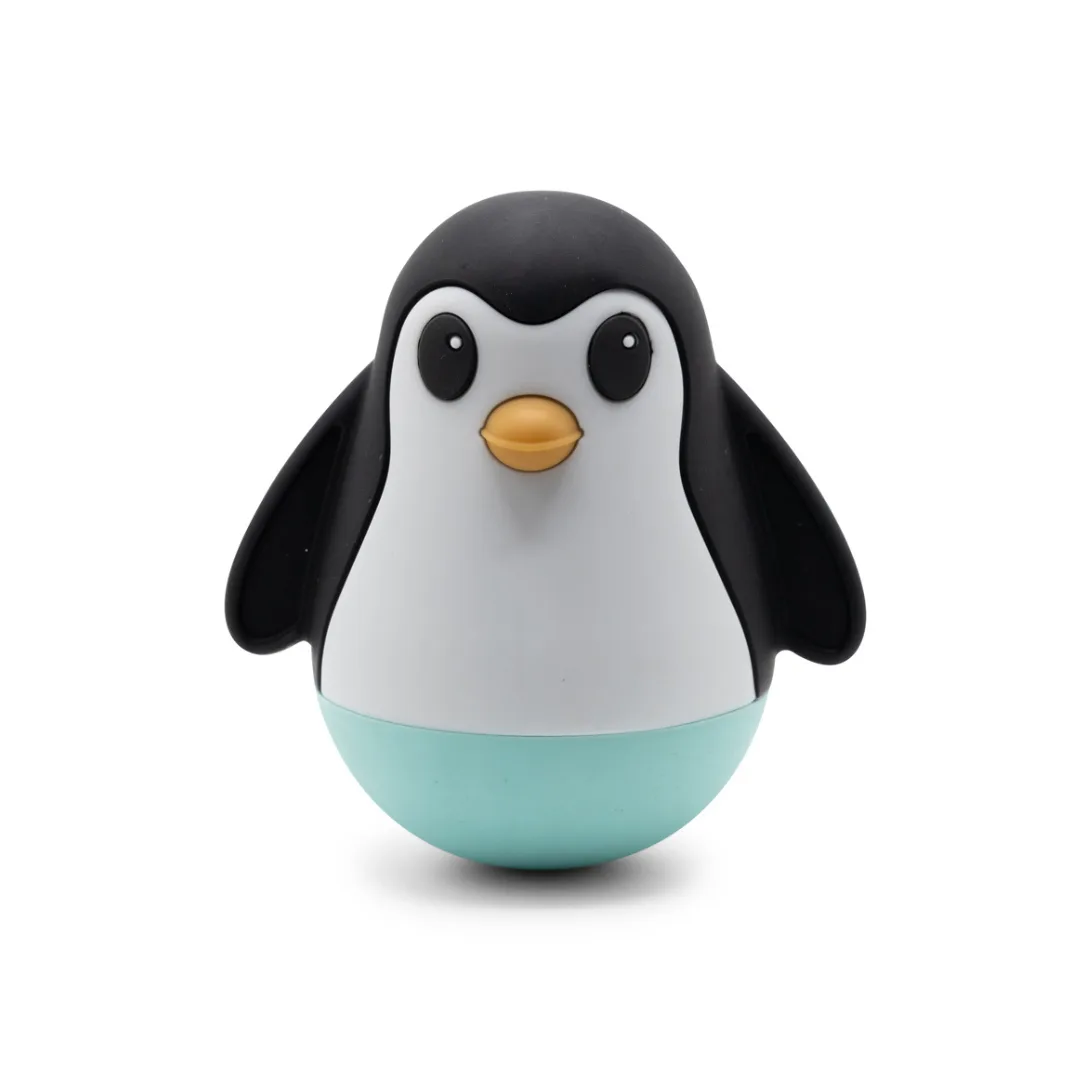
- Penguin Wobble: Designed with a weighted base so it wobbles back upright, intended for tummy time or learning to crawl. It works as a teether and a movement toy, which can help babies who are starting to reach and bat at objects.
Teething is a phase, and the right teether makes it easier for both of you. Start with a safe silicone option, clean it regularly, and replace it when it shows wear. If your baby's symptoms seem more serious than everyday teething, check with your pediatrician.