Quick Answer
The circuit breaker size for your car audio amplifier depends on the total current draw of your system. Calculate the total RMS power, divide by your system voltage (typically 13.8V), and add a safety margin of 20-25%. For most high-power systems, a 140-amp breaker is a common choice, but always verify with your amplifier's fuse rating.
When installing a car audio amplifier, one of the most critical decisions is choosing the correct circuit breaker size. A breaker that is too small will trip constantly, while one that is too large may not protect your equipment from electrical faults. This guide will walk you through the factors to consider and help you select the right breaker for your setup.
We'll cover how to calculate your system's current draw, the importance of matching the breaker to your amplifier's fuse rating, and the specific breaker sizes available from Rockford Fosgate. By the end, you'll know exactly what size circuit breaker you need for a safe and reliable installation.
Understanding Circuit Breakers in Car Audio
A circuit breaker is a safety device that protects your car's electrical system and your audio equipment from damage caused by overcurrent or short circuits. Unlike a fuse, which must be replaced after it blows, a circuit breaker can be reset, making it a convenient option for troubleshooting and temporary installations.
In car audio systems, circuit breakers are typically installed on the main power wire from the battery to the amplifier. They are rated in amperes (amps), and selecting the correct rating is essential to prevent overheating, fires, and equipment failure.
- Circuit breakers are available in various amperage ratings, from small 30-amp units to high-current 300-amp models.
- The breaker should be installed as close to the battery as possible to protect the entire power wire.
How to Calculate the Right Circuit Breaker Size
To determine the correct circuit breaker size, you need to calculate the maximum current your amplifier will draw. The formula is: Current (Amps) = Total RMS Power (Watts) / System Voltage (Volts). For most vehicles, the system voltage is around 13.8V when the engine is running.
For example, if you have a mono amplifier that produces 300 watts RMS, the current draw would be approximately 300 / 13.8 = 21.7 amps. However, this is a simplified calculation. For Class A/B amplifiers, efficiency is around 50-60%, so the actual current draw can be higher. For Class D amplifiers, efficiency is typically 80-90%, so the current draw is lower.
A safer approach is to use the amplifier's fuse rating as a guide. The circuit breaker should be rated at or slightly above the total fuse rating of all amplifiers on that circuit. This ensures that the breaker will trip before the wiring or equipment is damaged.
- Always check the amplifier's manual for the recommended fuse rating.
- Consider the total RMS power of all amplifiers connected to the same power wire.
Common Circuit Breaker Sizes and Their Applications
Car audio systems often use circuit breakers in the 60-amp to 200-amp range. A 60-amp breaker is suitable for smaller systems with a single amplifier that has a fuse rating around 50-60 amps. For more powerful systems, such as those with a 300-watt mono amplifier, a 100-amp breaker might be appropriate, but you need to verify the actual current draw.
For very large systems with multiple amplifiers or high-powered subwoofers, a 140-amp breaker is a common choice. This size can handle systems that draw up to 140 amps, which is typical for amplifiers with a total fuse rating of 120-140 amps. However, it's crucial to match the breaker to the wire gauge you are using; for example, a 140-amp breaker typically requires 1/0 AWG power wire.
Rockford Fosgate offers a range of maxi fuses that are often used in place of circuit breakers, but they also provide circuit breakers for specific applications. When selecting a breaker, consider the future expansion of your system. It's better to choose a slightly larger breaker if you plan to add more amplifiers later.
- 60-amp breaker: suitable for systems with a total fuse rating up to 60 amps.
- 100-amp breaker: good for mid-sized systems with total fuse rating around 80-100 amps.
- 140-amp breaker: ideal for high-power systems with total fuse rating up to 140 amps.
Why Matching the Breaker to Your Amplifier's Fuse Rating Matters
The circuit breaker should be rated to handle the maximum current your amplifier can draw without tripping during normal operation, but it should also trip before the wiring or amplifier is damaged. If the breaker is too large, it may not protect the amplifier from a short circuit, leading to potential fire hazards.
For example, the Rockford Fosgate Punch 300 Watt Full-Range Mono Amplifier has a built-in fuse rating. To protect this amplifier, you would need a circuit breaker that matches or slightly exceeds that rating. Using a breaker that is too small will cause nuisance tripping, while a breaker that is too large could allow excessive current to flow, damaging the amplifier.
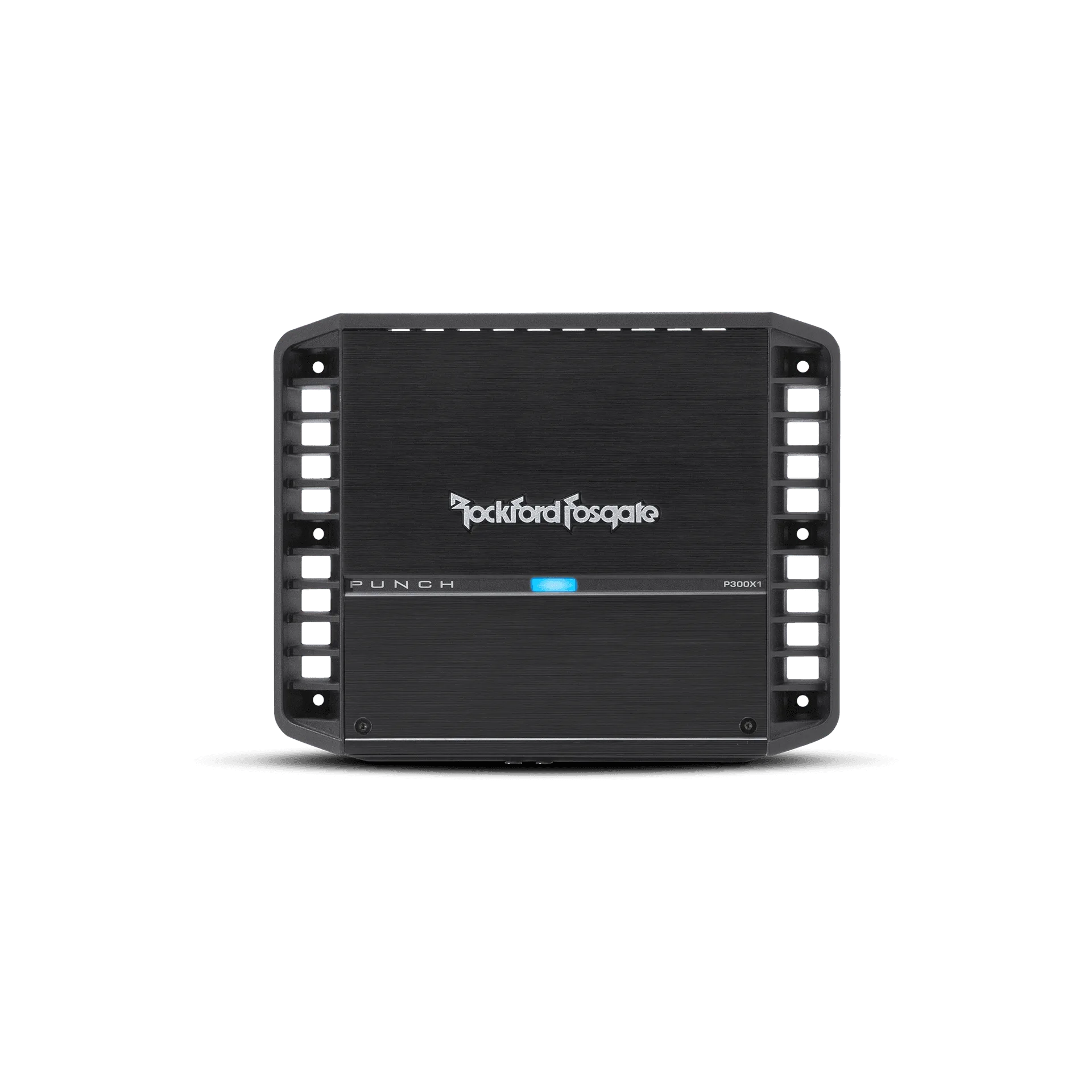
Punch 300 Watt Full-Range Mono Amplifier
- Always use a breaker that is rated for the same or slightly higher amperage than the amplifier's fuse rating.
- If you have multiple amplifiers, sum their fuse ratings to determine the total current requirement.
Diagnosing Your Circuit Breaker Needs
- Symptom: Your amplifier cuts out during loud music or you notice the power wire getting hot. This indicates the circuit breaker may be undersized or the wiring is insufficient.
- Likely Cause: The circuit breaker is tripping due to overcurrent, or the wire gauge is too small for the current draw. Check the amplifier's fuse rating and calculate the total current draw.
- Corrective Action: Replace the circuit breaker with one that matches the amplifier's fuse rating or the calculated current draw, and ensure the power wire is the correct gauge. If the issue persists, consider upgrading to a higher-rated breaker like the 140-amp model, but only if the wiring supports it.
- Stop or Choose Another Option: If you are unsure about the electrical load or wiring, consult a professional installer. Do not exceed the breaker's rating or use a breaker that is too large for the wire. Safety first: always use a breaker that is appropriately sized for your system and wiring.
Rockford Fosgate Protection Products
- 60 Amp Maxi Fuse: The Rockford Fosgate 60 Amp Maxi Fuse is designed to protect your audio system's power circuit with a 60-amp rating. This is the right choice for systems with a total current draw up to 60 amps, ensuring your equipment operates safely without nuisance trips.
- 100 Amp Maxi Fuse: The Rockford Fosgate 100 Amp Maxi Fuse is a reliable replacement fuse designed for use in automotive audio systems, rated at 100 amps. For mid-sized systems that require up to 100 amps, this fuse provides robust protection and is compatible with standard maxi fuse holders.
Choosing the right circuit breaker size is essential for the safety and performance of your car audio system. By calculating your current draw and matching the breaker to your amplifier's fuse rating, you can prevent electrical issues and enjoy your music with peace of mind. For reliable protection, consider the Rockford Fosgate 100 Amp Maxi Fuse for your high-current needs.