Quick answer
For most workplaces, an 8 cubic foot breast milk refrigerator is sufficient for up to 15 daily pumping employees, while a 12 cubic foot model is better for larger teams or those needing extra capacity for daycare or multi-shift storage.
Why size matters for compliance and convenience
A properly sized lactation room refrigerator ensures you meet the storage requirements of Section 4207 of the Patient Protection and Affordable Care Act, which mandates reasonable break time and a private space for nursing mothers. An undersized fridge can lead to overcrowding and temperature fluctuations, potentially compromising milk safety.
The CDC recommends storing breast milk at a stable temperature range. Hospital-grade units, like those from Healthy Horizons, are laboratory-tested to stay within this range, whereas dorm-style refrigerators often cannot maintain consistent temperatures.
Trade-offs: capacity vs. space and cost
An 8 cubic foot refrigerator is more compact and costs less upfront, making it ideal for small to medium offices. However, if your team grows or you need to store milk for multiple shifts, you may quickly outgrow it.
A 12 cubic foot unit offers greater capacity and interior lockers for individual storage, which can reduce cross-contamination risks. The trade-off is a larger footprint and higher initial investment.
How to choose the right size
- Count your daily pumping employees: Estimate the number of employees who will use the fridge each day. A good rule of thumb: 8 cubic feet serves up to 15 daily users, while 12 cubic feet supports 20 or more. If you have more than 15 daily users, start with the 12 cubic foot model.
- Consider storage per session: Each pumping session typically yields 2-4 bags or bottles. Multiply by the number of sessions per day to estimate total volume. The 8 cubic foot unit handles about 80-100 average storage containers; the 12 cubic foot unit handles 130-160.
- Plan for growth and multi-shift use: If your company is growing or you have multiple shifts storing milk simultaneously, choose the 12 cubic foot model to avoid future capacity issues. A larger fridge now can save you from needing an upgrade later.
Product facts at a glance
-
8 Cubic Foot Lactation Room Breast Milk Refrigerator: This 8 cubic foot refrigerator is a hospital-grade unit designed for mother's milk storage and is laboratory-tested to stay within the CDC's recommended temperature range. It provides reliable temperature control for smaller teams without the extra space or cost of a larger model.
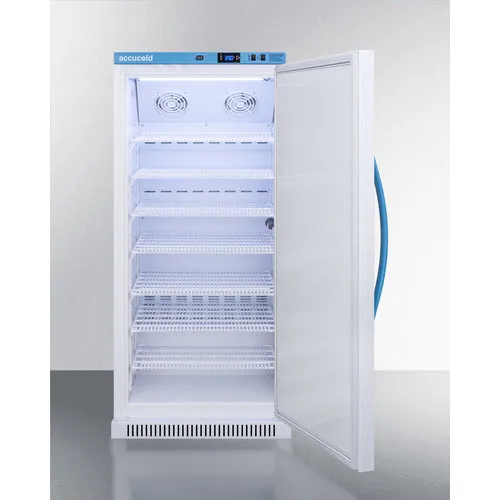
8 Cubic Foot Lactation Room Breast Milk Refrigerator
-
12 Cubic Foot Lactation Room Breast Milk Refrigerator With Interior Lockers: This 12 cubic foot refrigerator includes interior lockers for individual storage and is also hospital-grade, staying within the CDC temperature range. The lockers help organize milk for multiple users, making it ideal for larger workplaces or daycare centers with higher storage demands.
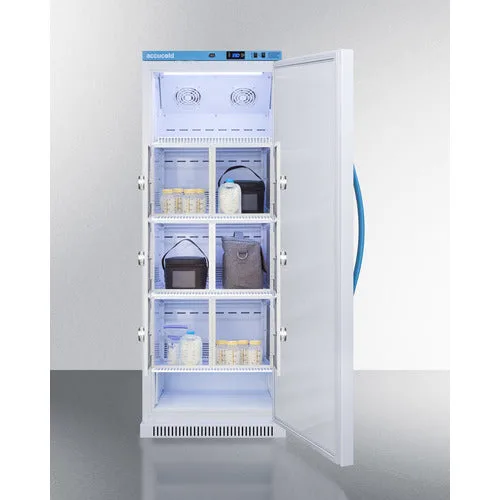
12 Cubic Foot Lactation Room Breast Milk Refrigerator With Interior Lockers
Which model fits your workplace?
Best for
- Small to medium offices with up to 15 pumping employees
- Workplaces with limited floor space and budget
Not ideal for
- Large offices or daycare centers with over 20 daily users
- Environments requiring individual locker storage for each employee