Quick Answer
For most armchairs, choose an ottoman that is roughly the same width as the seat and no taller than the seat height. For sofas, pick a larger piece that leaves at least 12 inches of clearance on each side.
Why Size Matters More Than You Think
An ottoman that's too small looks lost next to a generous armchair, while one that's too large can overwhelm the space and make the room feel cramped. Getting the size right affects both comfort and how the room comes together.
The ideal ottoman should feel like a natural extension of your seating. When you sit, your feet should rest comfortably on the surface without you having to stretch or tuck your legs awkwardly.
Measure Your Space and Seating
Before you shop, measure the width and height of your chair or sofa seat. Also measure the floor space where the ottoman will live, leaving room to walk around it.
A good rule is to keep about 12 inches of clearance on each side of a sofa. For an armchair, the ottoman can be closer, but it should never be wider than the chair's arms.
Small Ottoman vs Large: What's the Trade-Off?
A small ottoman is versatile: it can tuck under a console, double as a side table, or be moved around easily. A large ottoman offers more surface area for lounging or as a coffee table alternative, but it takes up more visual and physical space.
If you have a compact living room, a small ottoman keeps the space open. In a larger room, a big ottoman can anchor the seating area and add a sense of luxury.
Decision Rules for Choosing the Right Ottoman Size
- Match the seat width: For an armchair, choose an ottoman that is about the same width as the seat cushion. This ensures your feet rest comfortably and the proportions look balanced. Measure your chair's seat width before shopping.
- Keep the height at or below seat level: The ottoman's top should be no higher than the seat of your chair or sofa. A slightly lower height is fine and often more comfortable for resting your feet. Aim for the ottoman top to be 1-2 inches lower than the seat.
- Consider the room and layout: In a small room, a small ottoman keeps the space open. In a large room, a larger ottoman can anchor the seating area. Always leave at least 12 inches of clearance around a sofa. Use painter's tape to outline the ottoman's footprint on the floor before buying.
A Footstool That Fits Most Armchairs
-
Edmund Footstool, Small, Natural Linen: The Edmund Footstool, Small, Natural Linen features a sustainably sourced hardwood frame and delicately turned legs in an aged oak finish. Its compact size and timeless finish make it a versatile choice that pairs with most armchairs without overpowering them.
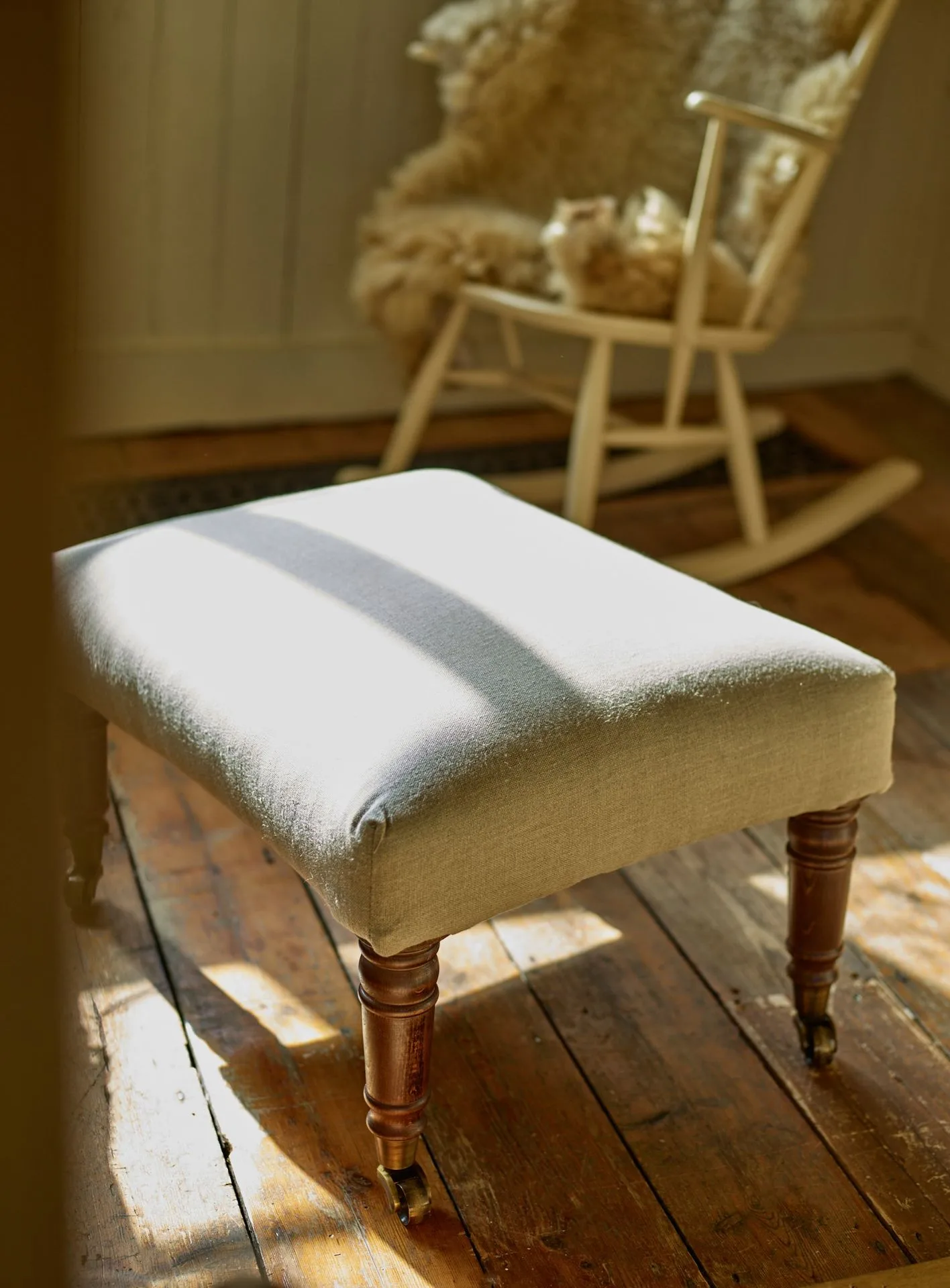
Edmund Footstool, Small, Natural Linen
Who Should Choose What
Best for
- Small ottomans are best for compact living rooms, reading nooks, or as a flexible extra seat.
- Large ottomans suit spacious living areas where you want a statement piece or a coffee table alternative.
Not for
- Very large ottomans are not for small rooms or tight seating arrangements, as they can overwhelm the space.