Quick answer
For most rooms, a heater needs about 10 watts per square foot. A 1,500-watt whole-room heater comfortably covers up to 150 square feet, while larger spaces may need additional units or a higher-output model.
Why square footage is the real starting point
Heater wattage and BTUs are directly tied to the room's floor area, not its volume or window count. A simple rule: multiply the room's square footage by 10 to get the minimum wattage needed. For example, a 120 sq ft bedroom needs at least 1,200 watts. This formula assumes average 8-foot ceilings and moderate insulation. If your room has vaulted ceilings, large windows, or is drafty, add 10-20% more wattage.
BTU (British Thermal Unit) is another common rating. One watt equals roughly 3.41 BTUs, so a 1,500-watt heater delivers about 5,115 BTUs. That's enough for a small to medium room, but not a large open-plan area or a basement workshop.
The trade-off between coverage and energy use
A larger heater doesn't always mean better heating. Oversizing a heater for a small room can cause short cycling, where the unit turns on and off too frequently, wasting energy and wearing out components. Undersizing means the heater runs continuously without reaching the set temperature. The sweet spot is matching the heater's rated coverage to the room size within 10-20%.
Whole-room heaters, like those using vortex circulation, spread heat evenly, so you can set the thermostat lower and still feel comfortable. That efficiency can offset the higher wattage compared to a personal heater.
Decision rules for choosing by room size
- Measure the room in square feet: Multiply length by width. For irregular rooms, break into rectangles and add the areas. Do not include closets or hallways that can be closed off. A 10x10 room is 100 sq ft. A 12x12 room is 144 sq ft.
- Match wattage to square footage: Use 10 watts per square foot as your baseline. A 1,500-watt heater works for rooms up to 150 sq ft. For a 200 sq ft room, you need at least 2,000 watts (two 1,500-watt units or a single higher-output model). Never exceed the heater's rated coverage—it's a safety and efficiency limit.
- Adjust for ceiling height and insulation: For ceilings above 8 feet, add 10% wattage per extra foot. For drafty rooms or large windows, add another 10-20%. If the room is well-insulated and on an interior wall, you can subtract 10%. When in doubt, round up to the next heater size or add a second unit.
- Check the circuit capacity: Most standard household circuits are 15 amps (1,800 watts max). A 1,500-watt heater uses 12.5 amps. Do not plug another high-wattage appliance into the same circuit. If you need two heaters, place them on separate circuits. Use a dedicated outlet for the heater and avoid extension cords.
Product facts
-
AVH2 Advanced Whole Room Heater with Auto Climate: The AVH2 Advanced Whole Room Heater uses electronic auto climate temperature control to eliminate hot and cold cycles while using less energy. This means you can set it and forget it—the heater adjusts power to hold the temperature steady, which is especially useful if your room is close to the 150 sq ft limit.
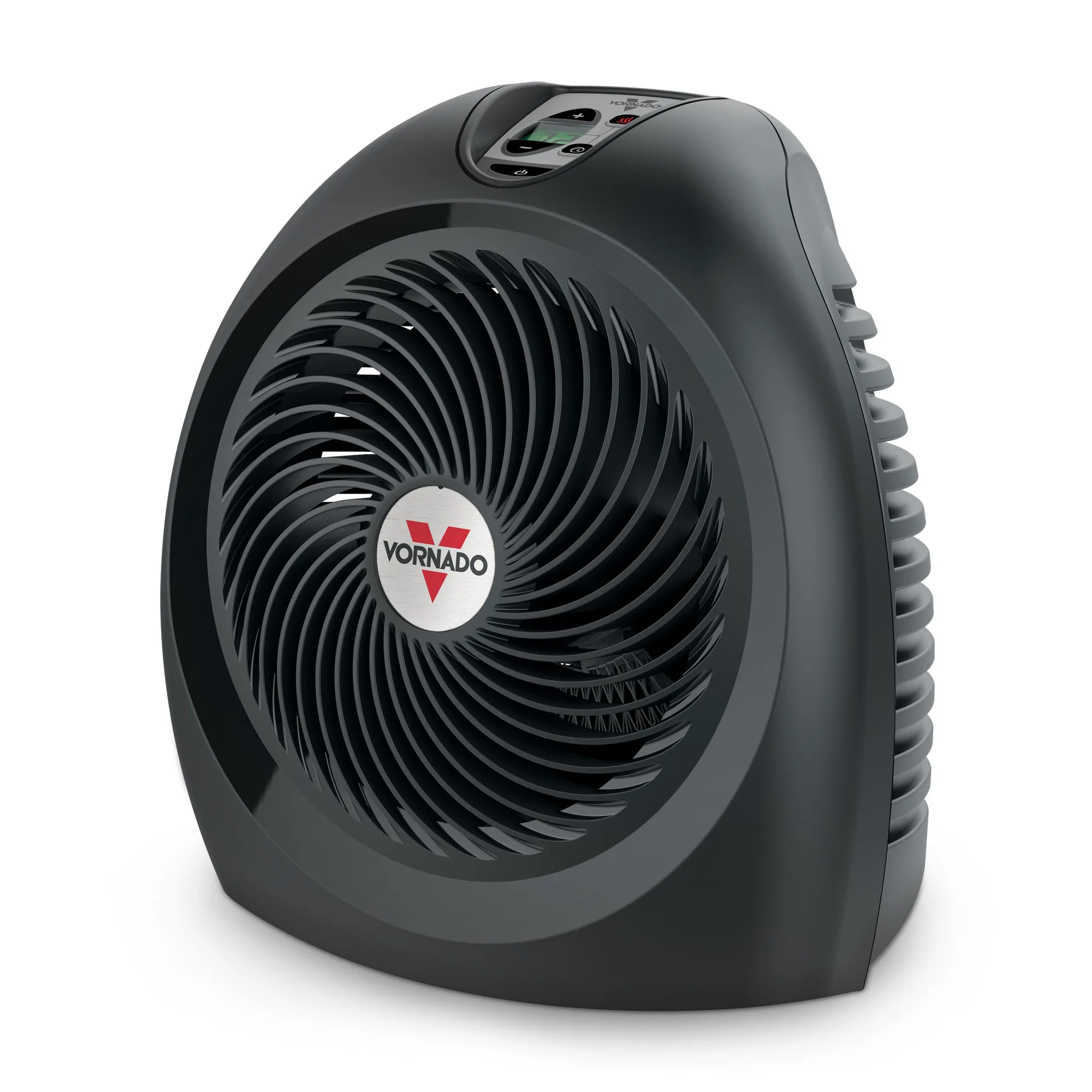
AVH2 Advanced Whole Room Heater with Auto Climate
Who should use this guide
Best for
- Homeowners wanting to heat a single room up to 150 sq ft efficiently
- People with standard 8-foot ceilings and average insulation
Not for
- Large open-plan areas over 300 sq ft that need central heating or multiple units
- Rooms with very high ceilings (10+ ft) or extreme drafts where a larger system is more practical