Quick answer
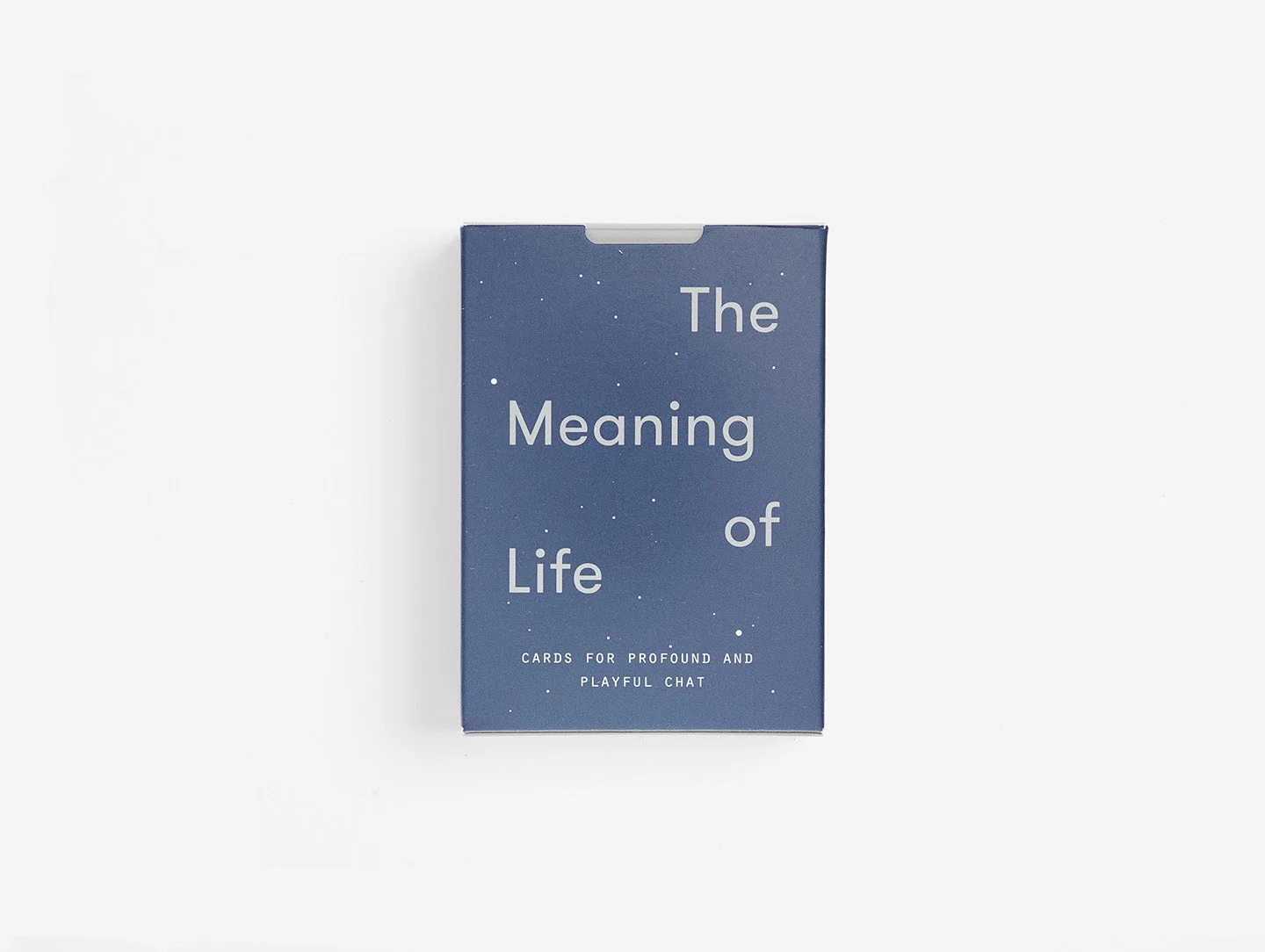
The Meaning of Life card game teaches you to approach life's biggest questions with curiosity and playfulness, using 52 cards that make deep self-reflection feel natural and fun.
Why this game works differently
Most conversation games rely on trivia or silly prompts. The Meaning of Life instead uses elegant, direct questions that cut through the awkwardness of discussing existential topics. The deck is designed to be used alone or with others, making it versatile for solo journaling or group gatherings.
Who benefits most
This game suits anyone who enjoys thoughtful conversation but finds it hard to start. It's especially helpful for people who want to explore their own values, beliefs, and purpose in a low-pressure setting. The cards work well for date nights, dinner parties, or quiet evenings of self-reflection.
Frequently asked questions
Can I play this game alone?
Yes. The cards are designed for solo reflection. Draw a card and journal your thoughts, or use it as a daily prompt for self-discovery.
How many players does it support?
The game works for any number of players, from one to a large group. There are no turn limits or scoring rules—just open-ended conversation.
Is it suitable for people who aren't philosophical?
Absolutely. The questions are phrased in everyday language and encourage personal reflection, not academic debate. No background in philosophy is needed.
How long does a typical session last?
Sessions are flexible. You can spend five minutes on a single card or an hour exploring multiple cards. The game adapts to your available time and mood.
What makes these cards different from other conversation games?
Unlike many games that focus on facts or humor, The Meaning of Life cards target genuine existential questions in a gentle, non-intimidating way. They invite depth without pressure. If you want a game that encourages real self-reflection without feeling forced, this deck is a strong choice.
Product facts
-
The Meaning of Life: Cards for profound and playful chat. 52 cards that directly and elegantly lead us to some of the largest questions about life and its meaning. You get a structured yet flexible tool that turns vague existential curiosity into concrete, shareable conversations.
The Meaning of Life