What This Condom Wrapper Actually Says
The foil reads "Women Don't Owe You Shit." It's a blunt statement that directly challenges the idea that women owe anyone their attention, conversation, or smiles—let alone sex. The product's own description reinforces this: "Not a hey, hi, or hello…and certainly not their smiles."
This isn't a product that makes a medical claim or offers a new type of protection. It's a standard condom with a wrapper designed to start a conversation about consent and entitlement.
The Consent Myth It Addresses
A common but harmful belief is that if someone is friendly, dressed a certain way, or has flirted before, they owe you sexual access. This condom directly confronts that myth. The message is clear: no one is owed a "yes," and a person's past behavior or appearance never implies future consent.
If you're looking for a tool to discuss this specific myth with a partner or friend, the wrapper gives you a ready-made opening. You can say something like, "This condom says what I've been thinking—nobody owes anybody anything."
Product Details for Your Decision
-
Women Don't Owe You Shit Condom: Women Don’t Owe You Shit. Not a hey, hi, or hello…and certainly not their smiles. But if everyone’s consenting then get down with this custom condom foil. The wrapper's message is the product's core feature. It's designed to be a conversation starter about consent, not a technical innovation. Knowing this helps you decide if it fits your communication goals.
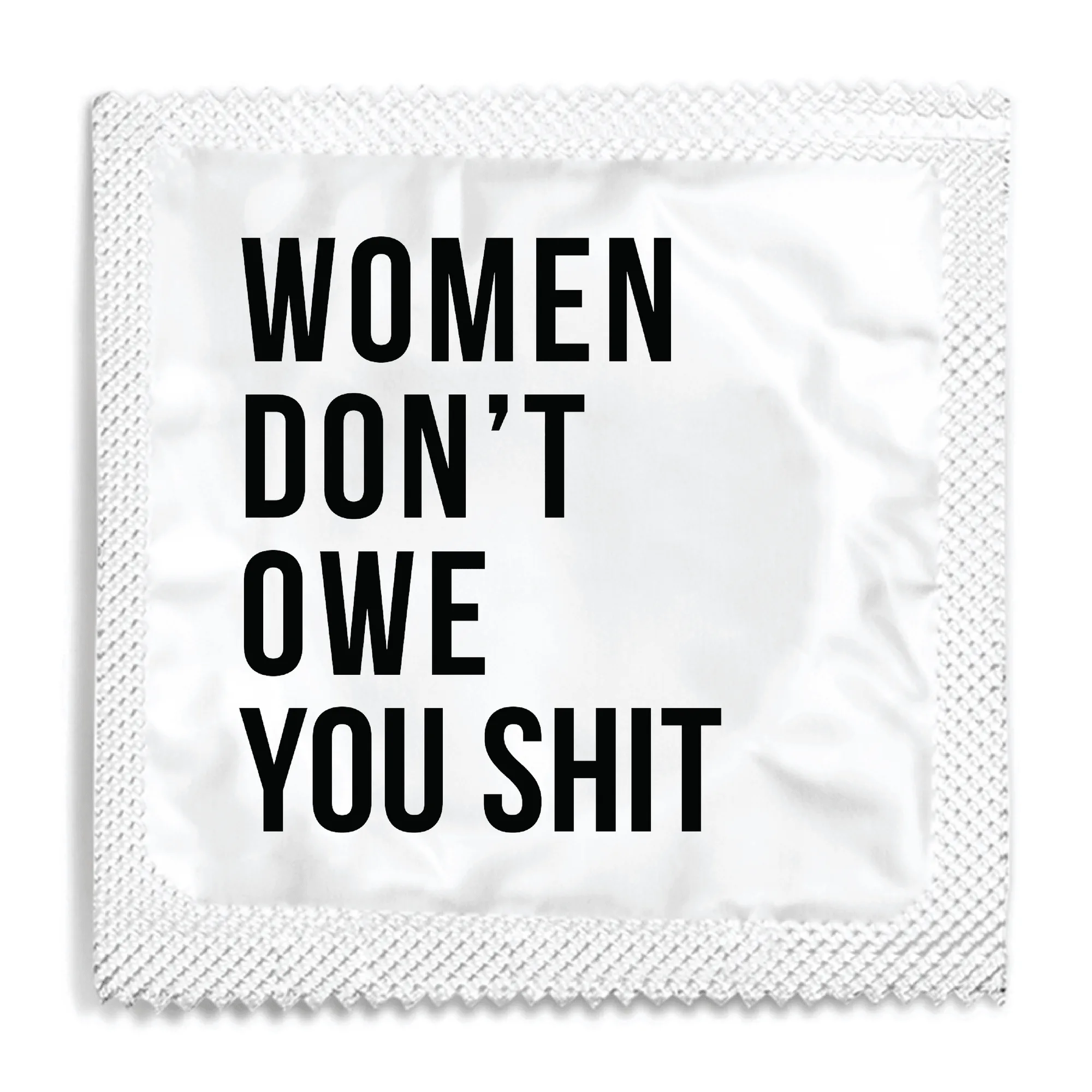
Women Don't Owe You Shit Condom
How to Use It to Talk About Boundaries
The condom works best when you're already in a situation where consent is being discussed or established. Handing it over with a smile and saying something like, "I saw this and thought it made a good point about respecting each other's boundaries" can feel less confrontational than the wrapper alone.
If you're using it with a new partner, you can tie it directly to the moment: "I like that this reminds us we're both here because we want to be." That keeps the focus on mutual respect rather than blame.
For a friend or group setting, the wrapper can spark a broader discussion about entitlement and how often people assume a "yes" without asking. The key is to let the message do the heavy lifting without lecturing.
When the Message Might Not Land
This is a strong, confrontational phrase. If you're in a delicate conversation or with someone who might feel accused, it could create defensiveness rather than understanding. In those cases, a gentler message condom might work better.
Also, the wrapper is not a substitute for a verbal consent conversation. It's a conversation starter, not a consent form. Always pair it with clear, enthusiastic, verbal agreement.