Start with Fit, Not Fashion
A Chelsea boot's clean silhouette only looks good if it fits well. The elastic side panels and pull tab make them easy to slip on, but that same ease can hide a poor fit. Before you decide on color or material, get your sizing right.
The Nisolo Marco Everyday Chelsea Boot, for example, is available in sizes 8 through 13, including half sizes. That range covers most men, but if you're between sizes, the half-step options give you a better chance at a snug heel and comfortable toe box. There's no width option listed, so if you have a wide foot, consider going up half a size for a roomier fit.
What the Catalog Confirms About the Marco Chelsea
-
Men's Marco Everyday Chelsea Boot Tobacco: Available in sizes 8–13, including half sizes. The half-size range helps you dial in fit, especially if you're between full sizes. No width options mean you may need to size up if you have a wide foot.
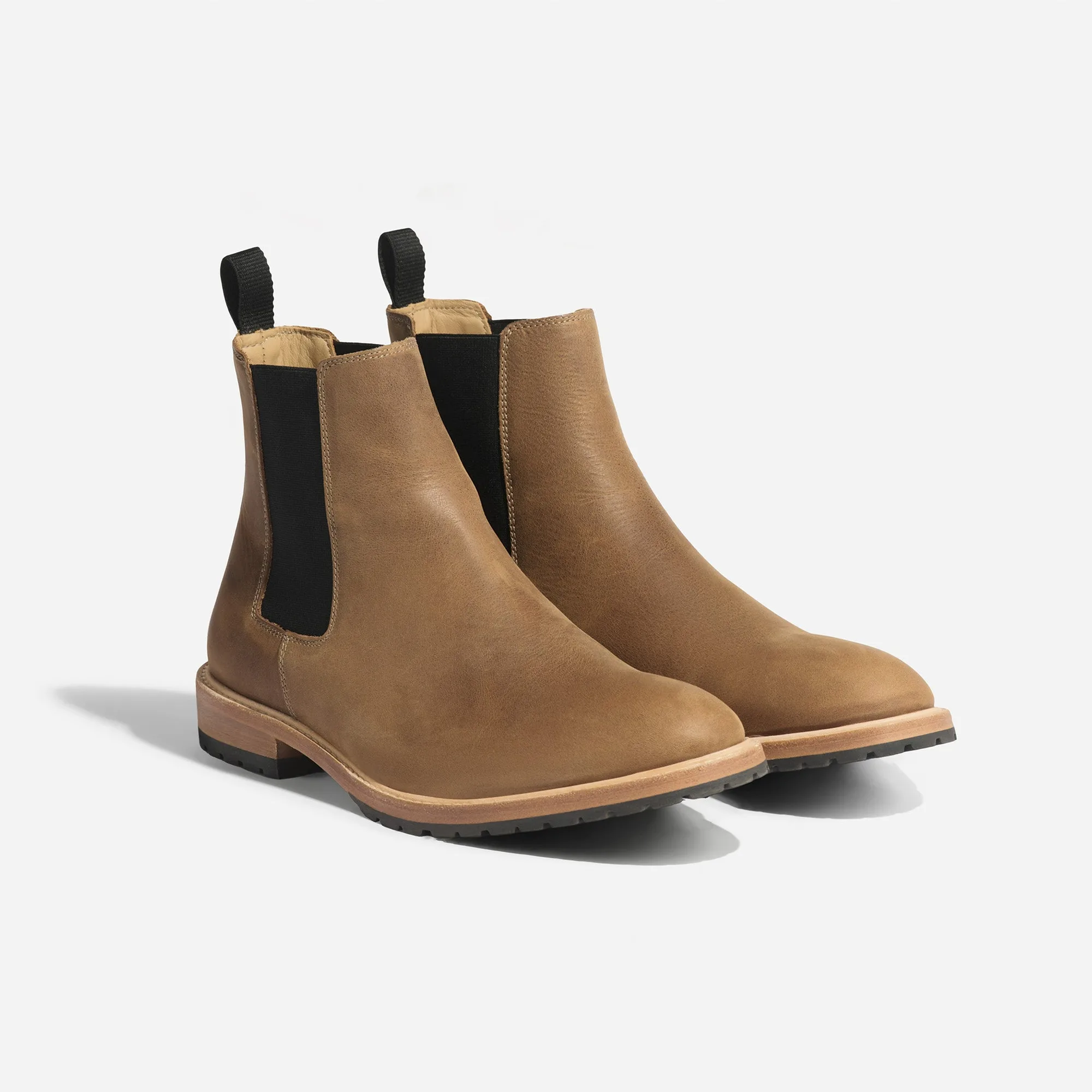
Men's Marco Everyday Chelsea Boot Tobacco
-
Men's Marco Everyday Chelsea Boot Tobacco: Described as 'packed with cloud-like comfort and everyday function'. Comfort is a stated priority, not an afterthought. For an everyday boot you'll wear for hours, this matters more than a trendy look.
Leather vs Suede: Choose by Use, Not by Look
Chelsea boots come in two main materials: smooth leather and suede. Leather is more durable and water-resistant, making it a better choice for rainy days or rough wear. Suede is softer and more casual, but it stains easily and requires more careful maintenance.
The Marco Chelsea is offered in 'Tobacco' — a rich brown leather. If your daily routine includes commuting, walking on pavement, or unpredictable weather, a leather Chelsea boot like this one is the practical pick. If you prefer suede, you'll need to budget for a protective spray and regular brushing.
Construction Details That Matter
Not all Chelsea boots are built the same. Look for these features when comparing options:
- Sole attachment: A stitched or Goodyear-welted sole can be replaced, extending the boot's life. Cemented soles are cheaper but harder to repair.
- Elastic panels: Thick, tight elastic holds the boot securely. Loose elastic means the boot won't stay snug against your ankle.
- Pull tab: A sturdy leather or fabric tab makes slipping the boot on easier. Check that it's securely stitched and won't tear.
- Insole and lining: A cushioned insole adds all-day comfort. Leather lining breathes better than synthetic, reducing odor.
Care and Maintenance: What's Required
Leather Chelsea boots need regular conditioning to prevent drying and cracking. Use a leather conditioner every few months, and clean off dirt with a damp cloth after each wear. Suede requires a suede brush and a protective spray before first wear.
The catalog doesn't provide specific care instructions for the Marco Chelsea, so treat it like any quality leather boot: keep it away from direct heat, use shoe trees to maintain shape, and rotate with another pair if you wear boots daily.
Price and Value: What You're Paying For
The Marco Everyday Chelsea Boot is priced at USD 208.60, with a catalog comparison price of USD 298.00. That puts it in the mid-range for a quality leather Chelsea boot. You're paying for a timeless design, all-day comfort, and the versatility to dress up or down.
Compare this to fast-fashion boots that may cost less but use thinner leather and glued soles. If you plan to wear your Chelsea boots regularly for more than one season, the extra upfront cost for a well-constructed pair pays off.