Quick Answer
White spots on chocolate truffles are usually caused by temperature fluctuations, leading to fat or sugar bloom. The good news: bloom is safe to eat, and you can often fix it by gently melting and tempering the chocolate. For truffles, simply storing them properly can prevent further bloom, and they remain delicious despite the spots.
You open your box of Monty Bojangles truffles, excited for a rich treat, only to find white spots or a dusty film on the surface. Before you panic, know that this is a common and harmless phenomenon called chocolate bloom. In this guide, we'll explain what causes those white spots, how to fix them, and how to prevent them in the future.
Whether you're a casual chocolate lover or a dedicated connoisseur, understanding bloom helps you get the most out of your truffles. We'll also share specific tips for caring for your Monty Bojangles truffles, so you can enjoy them at their best.
What Is Chocolate Bloom?
Chocolate bloom appears as white or gray spots, streaks, or a dull film on the surface of chocolate. It's not mold and it's not a sign of spoilage—it's simply a change in the chocolate's crystalline structure. There are two types: fat bloom and sugar bloom.
Fat bloom occurs when cocoa butter separates and rises to the surface, then recrystallizes. Sugar bloom happens when moisture causes sugar to dissolve and then recrystallize. Both are cosmetic issues, and the chocolate is still safe to eat.
- Fat bloom: caused by temperature fluctuations, improper tempering, or storage above 70°F (21°C).
- Sugar bloom: caused by condensation or high humidity, often from refrigerating chocolate without proper wrapping.
Why Do Truffles Bloom?
Truffles are especially prone to bloom because they contain added fats from cream, butter, or nut oils, which can migrate to the surface. For example, a truffle with a nutty praline center might experience fat migration from the nuts to the chocolate shell, creating white spots.
Temperature fluctuations are the main culprit. If your truffles are shipped in warm weather or stored in a spot that varies in temperature, the cocoa butter and other fats can separate. Even a few degrees can trigger bloom.
How to Fix Bloomed Chocolate Truffles
If your truffles have bloomed, the good news is that you can often restore them. For solid chocolate, melting and tempering will realign the cocoa butter crystals. For truffles, which have a filling, melting isn't practical, but you can still salvage them for baking or melting into a sauce.
If the bloom is only on the surface and the truffle is still firm, you can simply enjoy it as-is—the texture and flavor are largely unaffected. If you prefer a smooth appearance, you can gently re-melt the chocolate coating by warming the truffles briefly (but this may affect the filling).
For a quick fix, try placing the truffles in a sealed container with a slice of bread for a few hours—this can help reabsorb surface moisture and reduce sugar bloom. However, this won't fix fat bloom.
- For fat bloom: re-temper the chocolate if it's solid; for truffles, consider using them in baking.
- For sugar bloom: store in a dry, airtight container to prevent further moisture exposure.
Preventing Bloom: Proper Storage Tips
The best way to deal with bloom is to prevent it. Store your truffles in a cool, dry place, ideally between 60-68°F (15-20°C). Avoid the refrigerator, as the moisture and temperature changes can cause sugar bloom. If you must refrigerate, wrap them tightly in an airtight container and let them come to room temperature before opening.
Keep truffles away from strong odors, as chocolate absorbs smells. Also, avoid exposing them to direct sunlight or heat sources. Our Monty Bojangles truffles are handcrafted in the UK with premium ingredients, so a little care goes a long way in preserving their quality.
- Store in an airtight container at room temperature.
- Avoid temperature swings—don't move them from fridge to counter repeatedly.
- Consume within the recommended time frame for best quality.
Diagnosis: Is Your Truffle Bloomed?
- Symptom: White or gray spots, streaks, or a dull film on the surface of the truffle. If spots are powdery and dry, it's likely sugar bloom; if oily and waxy, it's fat bloom.
- Likely Cause: Temperature fluctuations, high humidity, or improper storage conditions. Check if your truffles were exposed to heat or stored in the fridge.
- Corrective Action: For solid chocolate, re-temper. For truffles, use them in baking or melting, or simply enjoy as-is. If the texture is still pleasant, no action needed—just eat them!
- Stop or Choose Another Option: If the truffle has an off smell, visible mold, or a soft, mushy texture, discard it—it may have spoiled. When in doubt, throw it out. Your health is more important than a treat.
Product Facts: Monty Bojangles Truffles
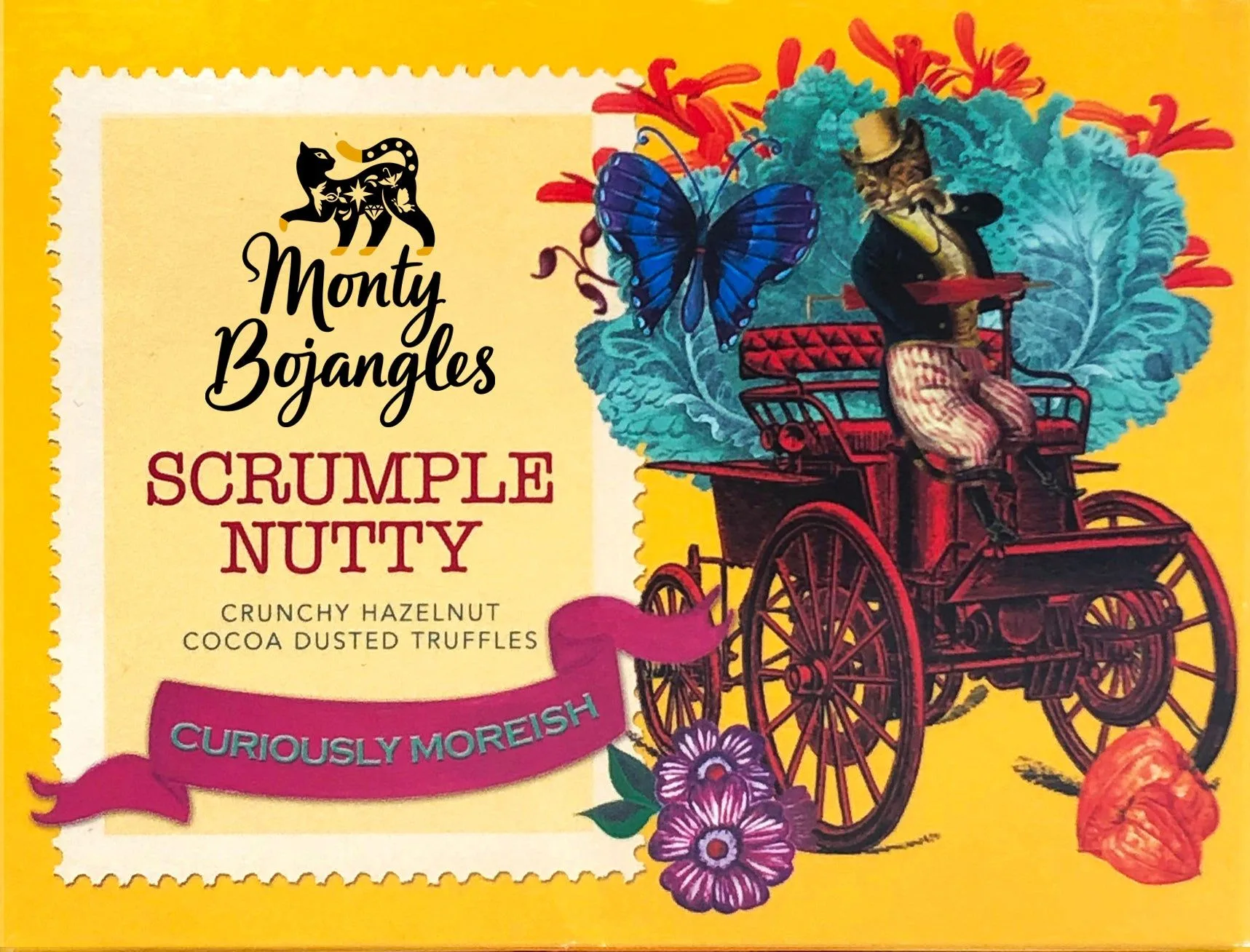
- Scrumple Nutty: Our incredible Scrumple Nutty chocolatey truffles, with seriously nutty praline and crunchy hazelnut chips for a rich, satisfying crunch. 100g The nutty praline and hazelnut chips add extra fats that can contribute to bloom if not stored properly, making correct storage essential.
- Coconut Crush: Our incredible Coconut Crush chocolatey truffles, with a creamy truffle centre and a generous dusting of caramelised coconut pieces. 100g The coconut pieces can absorb moisture, increasing the risk of sugar bloom if exposed to humidity, so keep them in a dry environment.
Chocolate bloom is a common, harmless issue that doesn't ruin your truffles. By understanding the causes and following proper storage practices, you can keep your Monty Bojangles truffles looking and tasting their best. If you're craving a fresh batch, explore our Scrumple Nutty truffles for a nutty delight, or try the Coconut Crush for a tropical twist. Happy indulging!