Quick answer
Recycled fabric bras and briefs are made from fibres like recycled nylon and recycled elastane, and they behave much like good conventional stretch fabrics: soft, flexible and shape-holding. The difference shows up in construction, not in feel. Engineered seamfree pieces and higher-elastane bras are where recycled fabric earns its place, because the fibre and the build have to work together to keep their shape.
Recycled fabric has moved past the scratchy, shapeless reputation it had a decade ago. In bras and briefs, the fibre itself is rarely the problem. What matters is how the fabric is cut, how much elastane is in the body, and whether the elastic can survive repeated washing.
These are the questions readers ask most often about recycled bra fabric and recycled nylon underwear, answered directly so you can judge a piece before it arrives.
What is recycled bra fabric actually made from?
Recycled bra fabric is typically a knit blend of recycled nylon or recycled polyester with elastane for stretch. The recycled content replaces virgin fibre; the elastane is what gives the fabric its memory and recovery. That blend ratio is the single biggest factor in how a bra or brief feels on day one and how it looks after fifty washes.
Because recycled nylon is produced from recovered material rather than newly made polymer, the fibre can behave almost identically to virgin nylon in a knit. It takes dye, holds a smooth surface and stretches the same way. What you are really choosing between is not recycled versus conventional, but well-engineered stretch fabric versus cheap stretch fabric.
- Look for the fibre names, not just the word recycled: recycled nylon and recycled polyester wear differently.
- Higher elastane in the body usually means more support and better shape recovery.
Does recycled fabric feel different on the skin?
In a fine rib knit, recycled nylon feels smooth and buttery, not plasticky. The texture comes from the knit structure, not the recycled content. A rib seamfree brief, for example, is soft against the skin because the rib construction creates gentle stretch in three dimensions rather than because of where the fibre came from.
If a recycled piece feels stiff or clammy, that is usually a sign of low-quality yarn or too little elastane, not a limitation of recycled fabric itself.
- Rib knits tend to feel softer and more forgiving than flat, tightly woven stretch fabrics.
- If a brief rolls or digs on the first wear, the cut or elastic is at fault, not the recycled fibre.
How does recycled nylon underwear hold up over time?
Recycled nylon is durable, but durability in underwear depends on the elastic. Elastic is the component that fails first: it waves, digs or loses recovery long before the fabric wears through. That is why some brands spend far more on elastic than on the visible fabric, because support that disappears after washing is not support at all.
Wash recycled bras and briefs in cool water and avoid hot dryers. Heat is what breaks down elastane, recycled or not, so the care routine matters more than the fibre origin for longevity.
- Cool hand or gentle machine wash extends the life of the elastic.
- Air dry flat to protect shape and stretch recovery.
Is recycled fabric supportive enough for larger cup sizes?
Yes, if the bra is engineered for it. Most wireless bras give up on support the moment cup size increases, which is why DD+ and H+ wireless styles are genuinely hard to find. The fix is not more fabric but more elastane in the body and higher-grade elastic that supports breast weight without digging, waving or losing shape after washing.
For DD+ and above, look for a wireless bra that states it increases elastane in the body for additional support without adding restriction. If a product listing does not mention cup-specific engineering, treat the support claim with caution.
- Check whether the bra specifies a cup range; a generic wireless bra is usually built for a mid-range fit.
- Strap slippage is a construction issue, so look for brands that address it directly.
Do recycled briefs cost more, and are they worth it?
Recycled briefs can sit at a similar price to conventional ones, especially in seamfree ranges where the engineering is the selling point rather than the fibre. A well-made recycled seamfree brief priced around the mid-teens is competing on fit and longevity, not on a green premium.
The honest tradeoff: recycled fabric is not automatically better than organic cotton or conventional cotton. It is better for stretch, recovery and smoothness under clothing. If you want breathability and a natural hand feel, cotton still wins. If you want a brief that disappears under a dress, recycled seamfree is the stronger choice.
- Compare on construction and elastic quality, not on the recycled label alone.
- Buy one piece first and test it through several washes before committing to a set.
Recycled fabric checklist before you buy
Fibre and elastane content
Check whether the listing names recycled nylon or recycled polyester and states the elastane level. Higher elastane in the body means more support and better shape recovery. If elastane is not mentioned at all, assume it is a basic stretch blend.
Cup-specific engineering
For DD+ and above, look for a wireless bra that explicitly increases elastane for larger cups and uses higher-grade elastic. Generic wireless bras are usually built for a mid-range fit. Support that fades after washing is not support; the elastic spec matters more than the cup label.
Seamfree construction quality
Seamfree works like a sock: the stretch, cut and elastic have to work together in three dimensions. A brief that rolls, digs or loses shape on the first wear has a construction problem, not a fibre problem. Try one piece through several washes before buying multiples.
Care routine
Wash cool and air dry flat. Heat breaks down elastane faster than wear does, whether the fabric is recycled or conventional. Care extends the life of the elastic, which is the part that fails first.
Recycled fabric in practice: three examples
- High Waist Brief - Recycled Seamfree - Atlantis: Recycled rib seamfree high waist sits high with full coverage, smooth under clothing and flexible enough to stretch with the body. A good test case for recycled seamfree: if the cut and elastic are engineered together, the brief stays smooth and does not roll or dig.
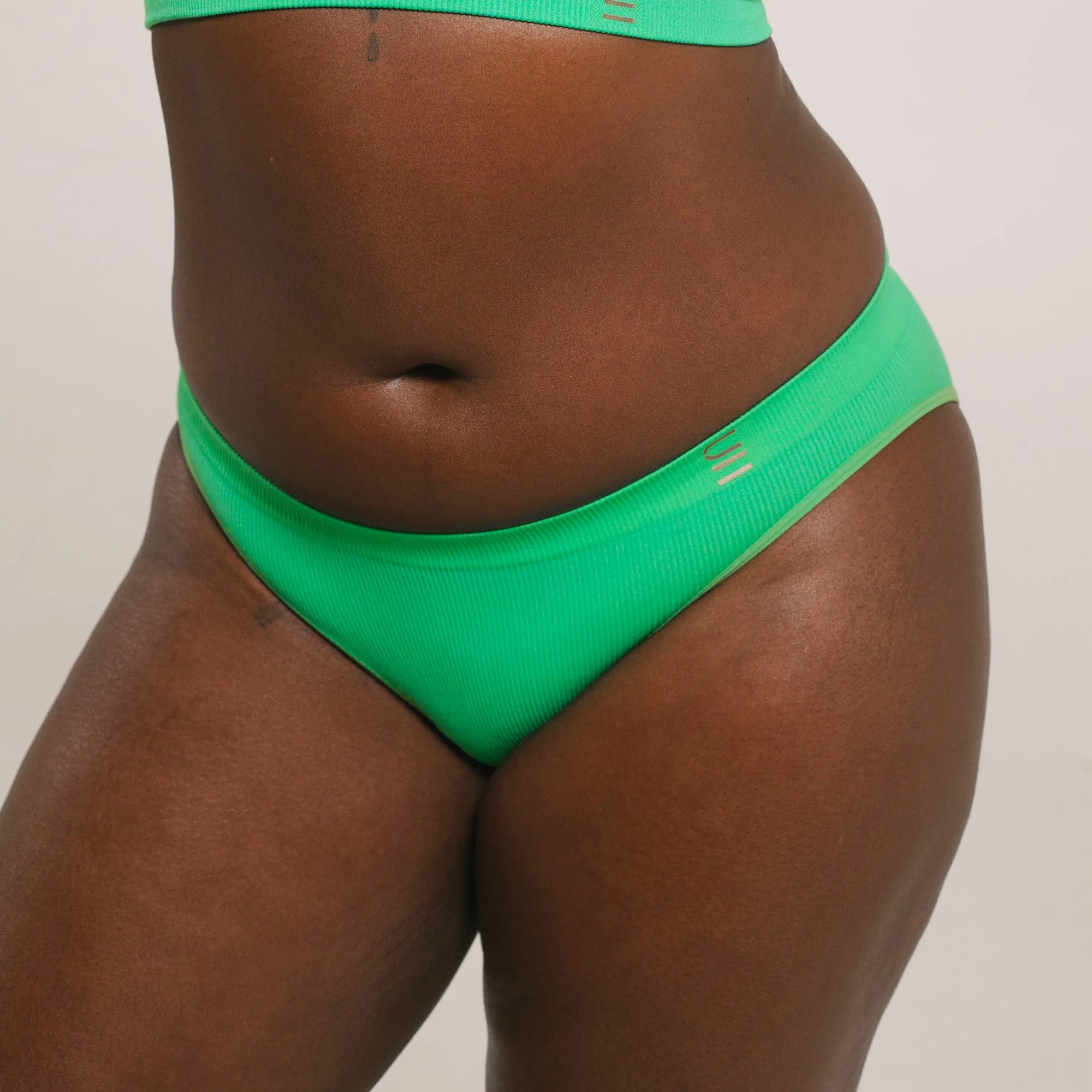
- Bikini Brief - Recycled Seamfree - Apple: Recycled rib seamfree bikini sits low on the hips, engineered not to ride or show under clothing, and is buttery soft. Shows that recycled fabric can be used for a low-rise cut without sacrificing the no-ride fit that seamfree is supposed to deliver.
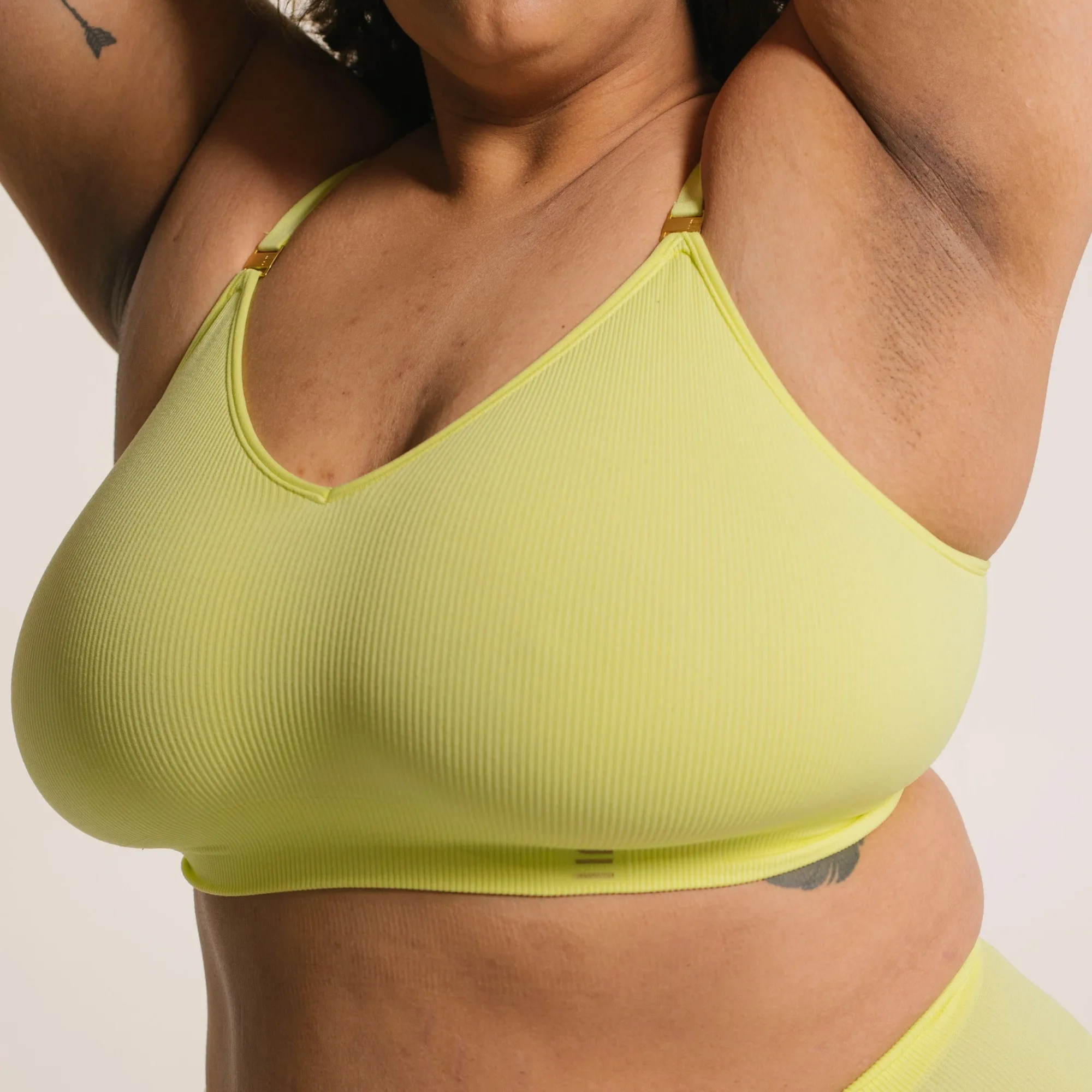
- Recycled Wireless Bra DD+ - Lime: Elastic costs 13 times standard bra elastic, supporting breast weight without digging, waving or losing shape after washing; elastane is increased in the body for DD+ support without restriction. Explains why a recycled wireless bra can support a larger cup: the spend is in the elastic and elastane, not the fibre label.
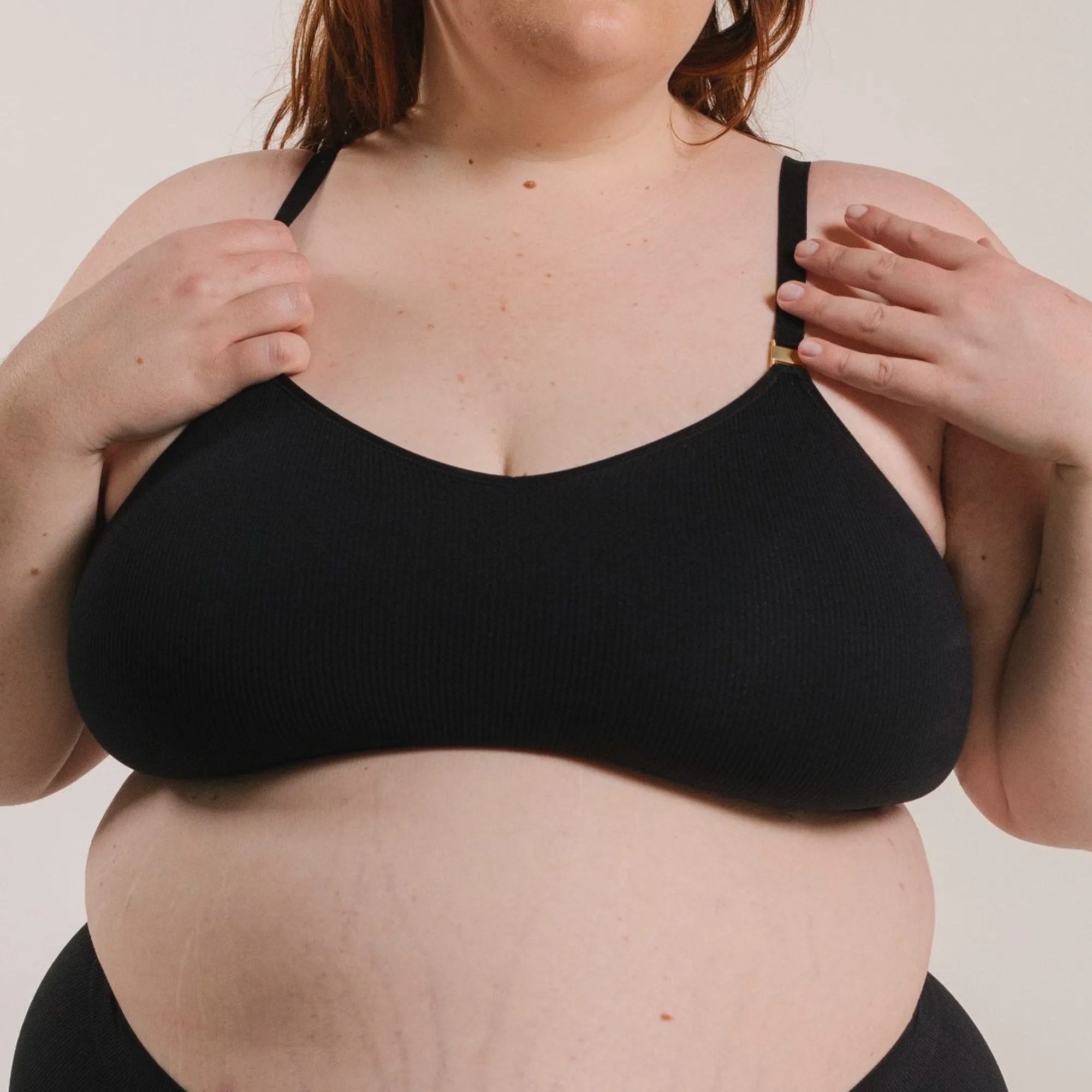
- Recycled Wireless Bra H+ - Black: Maximum elastane in the body for support without digging, restricting or losing shape, with elastic that costs 13 times standard bra elastic. For H+ cups, recycled fabric is only viable when the bra is built specifically for that weight; a generic wireless style will not hold up.
Recycled fabric in bras and briefs is not a compromise. Judge it the way you would any stretch underwear: by the elastane content, the quality of the elastic and whether the cut is engineered for your body and cup size. Get those right and the recycled label is simply a bonus.