Quick answer
Choose a kids backpack by fit first, then weight, then features. Measure your child's torso from the top of the shoulders to the waist, pick a pack that keeps the bottom at or slightly above the waist, and keep the empty weight light enough that your child can carry it comfortably. For preschool and early elementary, a quilted backpack with an embroidered design and coordinating zipper pull is often the right size. For school-age kids carrying books and supplies, an all-over print backpack sized for school gear works better.
Start with torso fit, not age or grade
Age and grade are rough guides at best. Two 7-year-olds can have very different torsos. Measure from the bony bump at the base of the neck down to the top of the hip bones. That number tells you where the bottom of the pack should sit. A pack that hangs below the waist pulls the shoulders back and puts strain on the lower back, while a pack that rides too high feels unstable and slides around.
Once you have the torso measurement, check the shoulder straps. They should be padded, adjustable, and wide enough not to dig in. If the straps are thin or the adjusters slip, the pack will never sit right no matter how good the size is. For younger kids, look for a pack that sits close to the body without needing a waist belt, since many preschoolers will not keep a belt fastened.
Match the pack to what it actually carries
A preschool backpack mostly carries a change of clothes, a snack, and a folder. A school-age backpack carries books, a lunch box, and sometimes a water bottle. Those are different loads, and the pack should match. If you buy a large school backpack for a preschooler, it will be heavy and floppy before anything goes inside. If you buy a small preschool pack for a third grader, it will not hold the day's supplies.
Think about the heaviest regular day, not the lightest. If your child regularly carries a lunch box plus a folder plus a water bottle, check that the main compartment and any front pockets can hold those items without stretching. A pack that is already full on a light day has no room for a library book or a jacket.
Weigh the empty pack before you buy
A lightweight backpack for children matters because kids carry a higher percentage of their body weight than adults do. An empty pack that already feels heavy will only get worse once it is loaded. If you are shopping online, look for the empty weight in the product details. If the weight is not listed, treat that as a decision limitation and either ask the seller or choose a pack whose weight is published.
Fabric choice affects weight and durability. Quilted fabrics tend to be soft and light, which suits younger kids and lighter loads. Denser woven fabrics used in all-over print backpacks hold up better to heavier books and rougher daily use. Neither is automatically better; match the fabric to the load and the child's age.
Features worth paying for, and features to skip
Worth paying for: padded adjustable shoulder straps, a main compartment that opens wide enough for a folder, a water bottle pocket your child can actually reach, and a zipper pull that is easy for small hands to grip. A coordinating zipper pull is not just decoration; it gives kids something bigger to hold and reduces zipper frustration.
Skip or deprioritize: too many small pockets that add weight and confusion, complicated buckle systems younger kids cannot fasten, and novelty shapes that limit how much the pack can hold. A simple two- or three-pocket layout is easier for kids to manage and easier to keep organized.
Check the care and cleaning reality
Backpacks get dropped on playgrounds, stuffed into cubbies, and used as makeshift seats. Before buying, check whether the pack is machine washable or spot clean only. If the care instructions are not listed, that is another decision limitation; assume spot cleaning and plan accordingly. Quilted backpacks are often easy to care for, which is a real advantage for preschool and early elementary use.
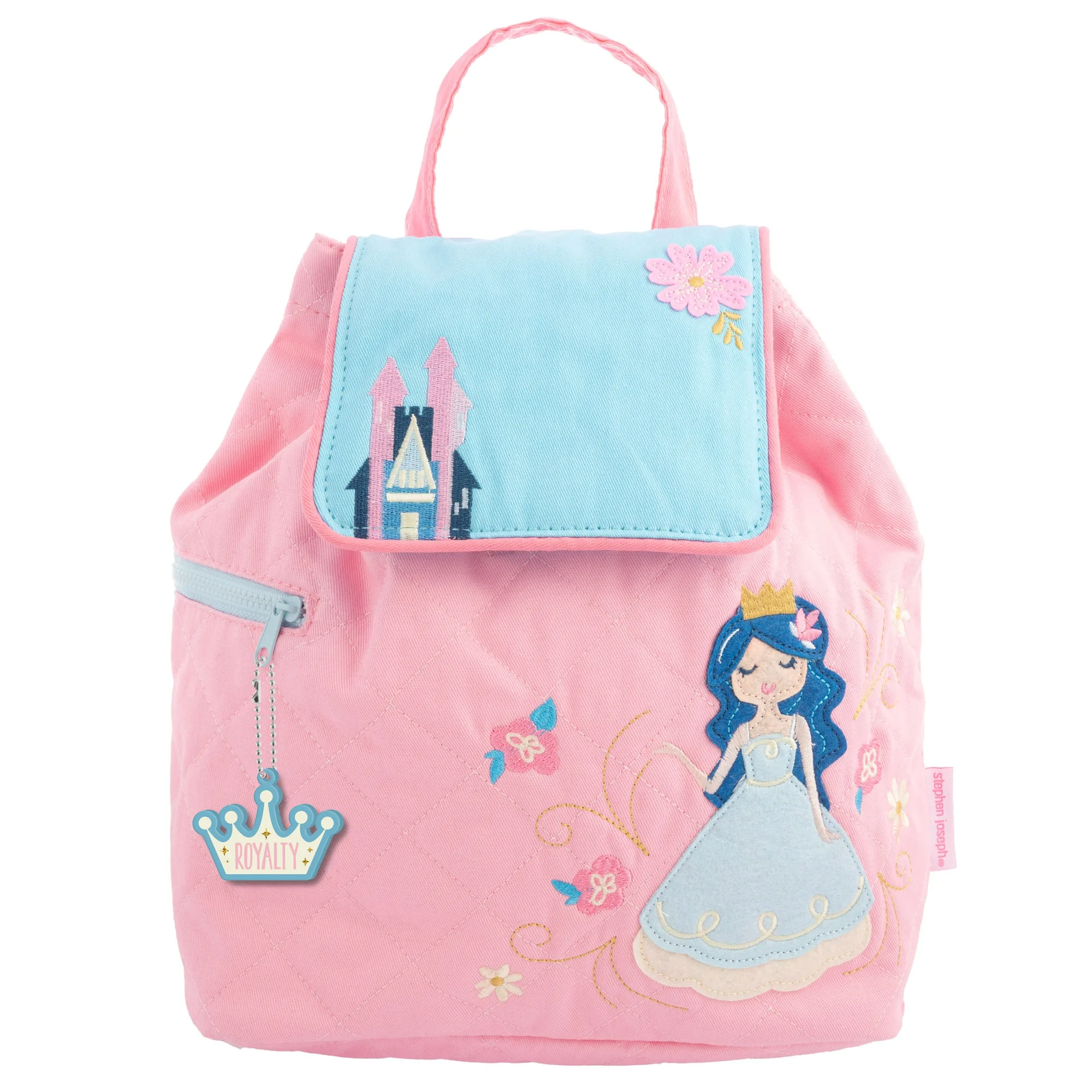
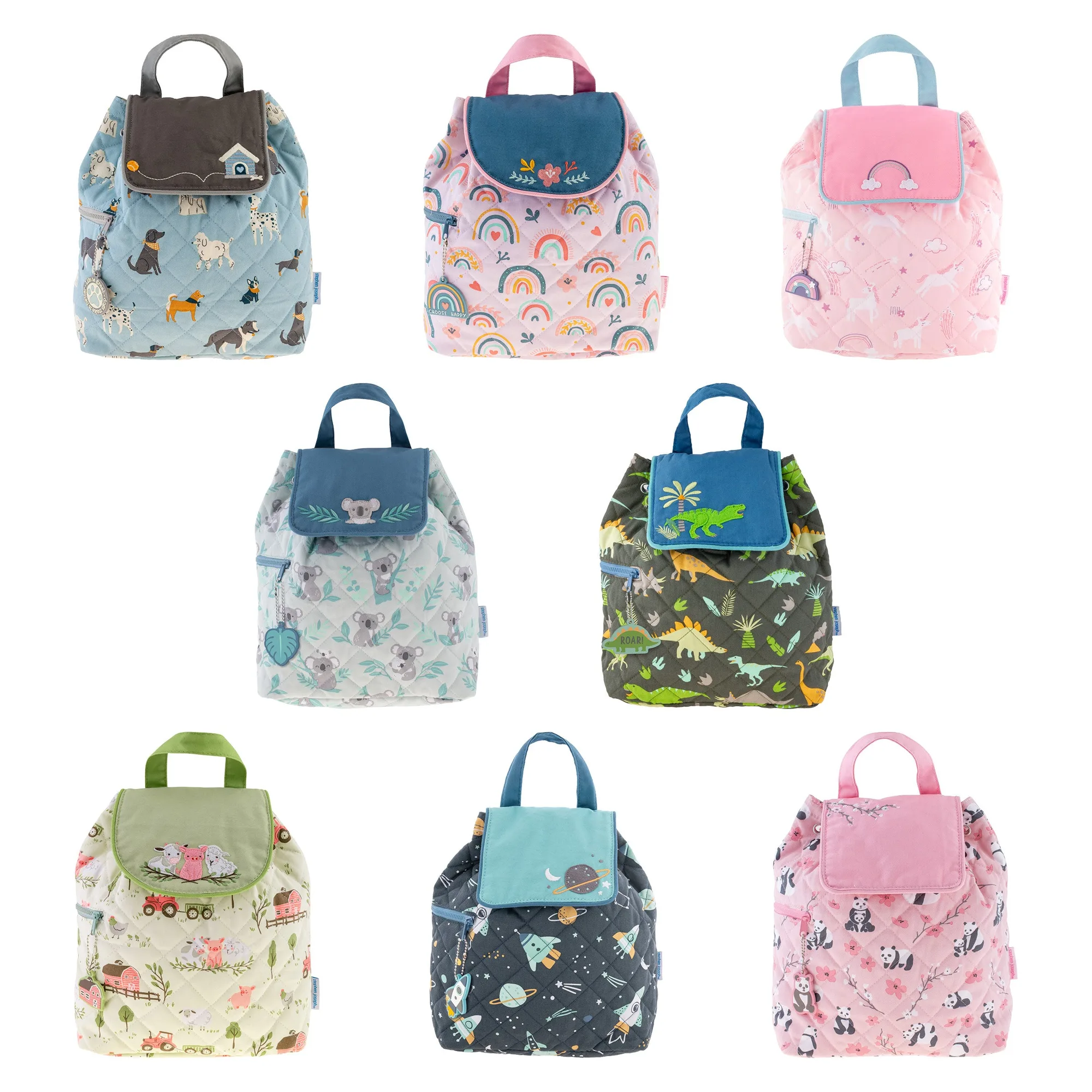
Quilted backpacks
If your child uses the pack for both school and diaper or change bag duty, look for a pack that can be wiped down and that has a lining or interior that does not trap crumbs. A pack that doubles as a diaper bag needs to be easy to empty and clean, not just cute.
Decision rules for choosing a kids backpack
- If the child is preschool age: Choose a smaller quilted pack with a light empty weight and simple pockets. Skip large school backpacks; they will be too heavy and floppy before anything is inside. Preschool packs should fit a change of clothes, a snack, and a folder, nothing more.
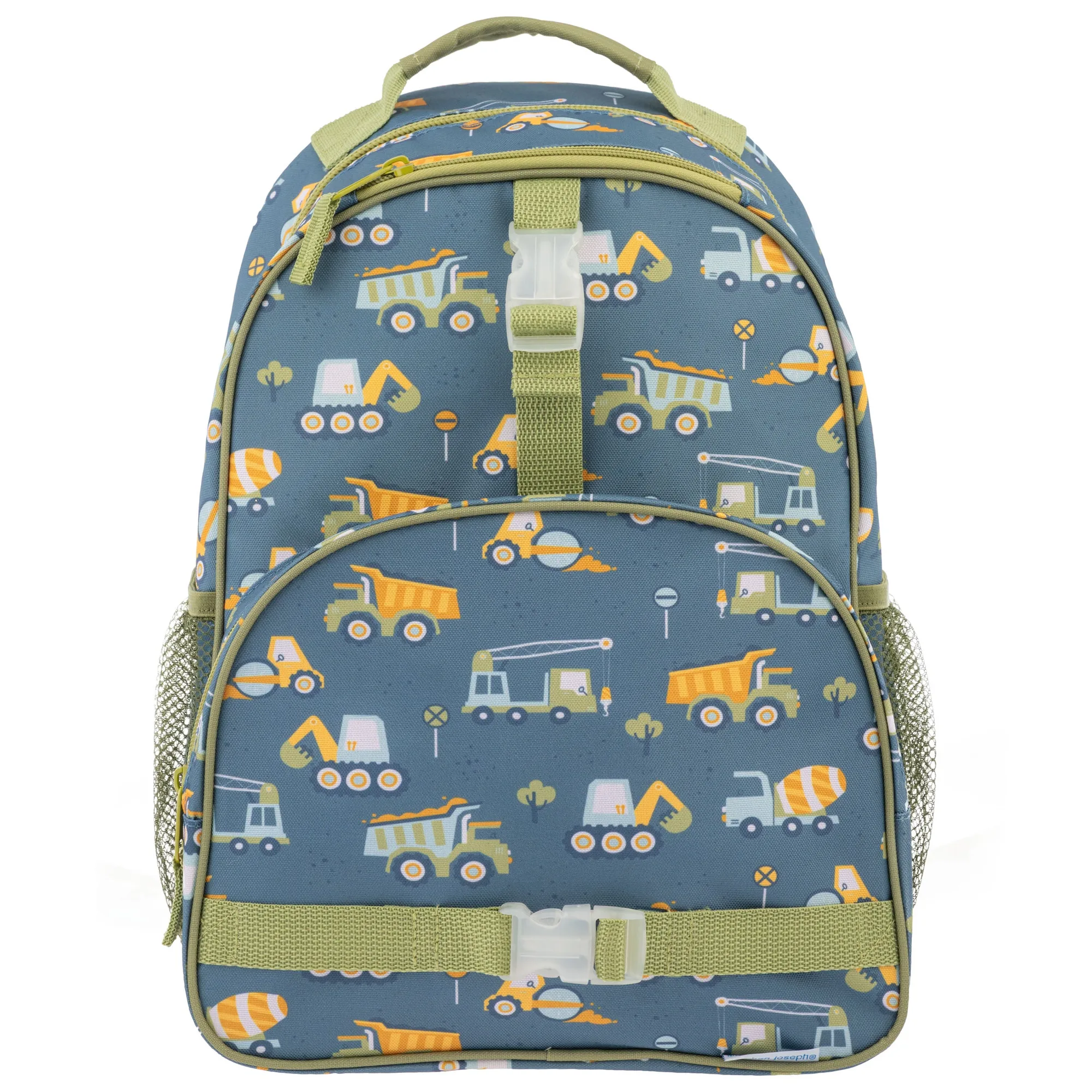
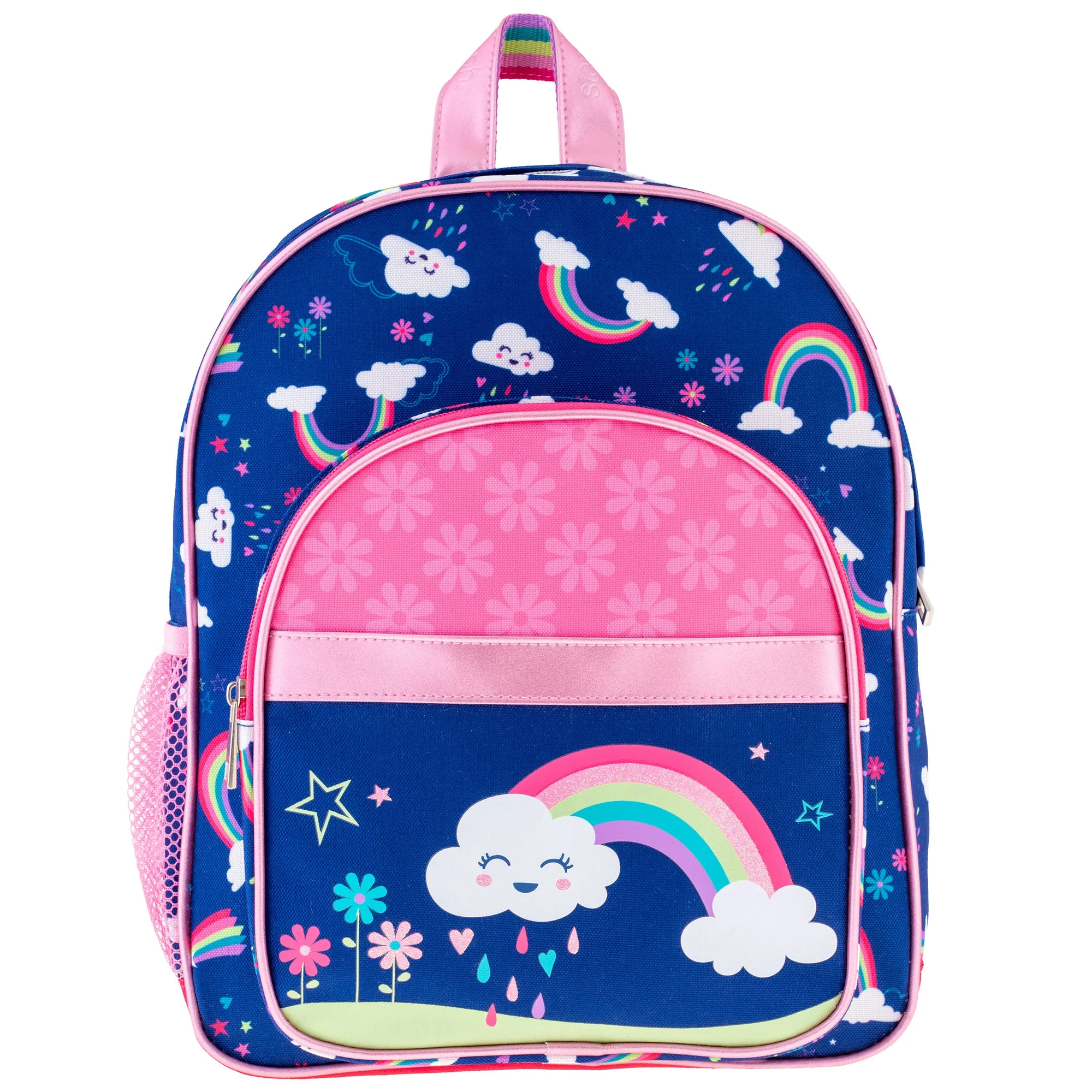
- If the child carries books daily: Choose an all-over print backpack sized for school-age kids, with padded adjustable straps and a main compartment that opens wide enough for a folder. The pack should hold the heaviest regular day without being stretched to capacity.
- If the pack will double as a diaper bag: Choose a quilted backpack that is easy to wipe down and has a coordinating zipper pull for quick access, and check that the interior does not trap crumbs. Dual-purpose packs need to be easy to empty and clean, not just cute.
- If the empty weight is not listed: Treat that as a decision limitation. Ask the seller or choose a pack whose weight is published, because an unlisted weight makes it impossible to judge carry comfort. Never guess on weight; it is the most common reason a backpack gets left at home.
- If the straps are thin or the adjusters slip: Walk away. Fit cannot be fixed with a good size alone if the straps will not stay adjusted. Padded, adjustable, non-slip straps are the one feature worth prioritizing over style.
Product facts that help the decision
- Quilted Backpacks Assortment: Quilted Backpacks Assortment is a 10-piece assortment with embroidered designs and coordinating zipper pulls, and the catalog notes they can double as a diaper or change bag. This suits preschool and early elementary kids who carry light loads, and it gives caregivers a dual-purpose option for outings with younger siblings.
- All Over Print Backpack Assortment: All Over Print Backpack Assortment is a 10-piece assortment sized for school-age kids, with room for school books, day-to-day supplies, and a change of clothes for after-class play. This is the better match when the daily load includes books and supplies, and the extra room prevents the pack from being stuffed to capacity on a normal day.
- Double Wall Stainless Steel Bottles: Double Wall Stainless Steel Bottles are BPA-, phthalate-, and PVC-free with a leak-proof lid and an easy-open button. A bottle that fits a backpack side pocket without leaking keeps the pack contents dry and makes it more likely your child will actually carry water.
Fit guidance: who this advice is for
Best for
- Parents choosing a first preschool backpack for a child who carries light loads
- Caregivers who need a pack that can double as a diaper or change bag
- Families buying a school-age backpack that must hold books, supplies, and a change of clothes
Not for
- Teens or adults who need a larger commuter or laptop backpack
- Hikers or campers who need a technical pack with a load-bearing frame
- Buyers who need a rolling backpack or a pack with a rigid internal frame