Quick Answer
For a premium journaling notebook, prioritize paper that feels smooth and holds up to your favorite pen, a binding that lies flat, and a size that fits your writing habits. Consider eco-friendly materials if sustainability matters to you.
Paper Quality: The Heart of the Experience
The paper determines how your writing feels and how your ink behaves. Premium notebooks often use thicker, smoother paper that resists bleed-through and feathering, even with fountain pens or markers. Look for descriptors like 'buttery smooth' or '100% recycled' to gauge quality and sustainability.
A recycled, FSC-certified paper is a strong indicator of both environmental care and a pleasant writing surface. However, thicker paper adds bulk and weight, so balance paper weight with portability needs.
Binding and Layout: Practical Considerations
A notebook that lies flat when open makes writing and reviewing easier. Consider whether you prefer a sewn binding, which tends to be more durable and lay-flat, versus a glued or spiral binding that may be more flexible but could wear over time.
The layout—lined, blank, or dotted—affects how you use the notebook. Lined pages guide handwriting, blank pages offer freedom for sketches and mind maps, and dotted pages provide structure without being too restrictive. Choose based on your primary journaling style.
Size and Portability: Matching Your Routine
Think about where you'll journal most. A larger notebook (like A4) offers more space per page but is heavier to carry. A compact size (like A5) fits easily in bags and is great for on-the-go notes. Consider your writing frequency and location to decide what's practical.
If you journal at a desk, a larger size may be ideal. If you prefer capturing thoughts during commutes or travels, a smaller, lighter notebook is more convenient.
Decision Rules for Choosing a Premium Journaling Notebook
- If you use fountain pens or wet inks: Choose a notebook with thick, smooth paper (at least 100 gsm) to prevent bleed-through and feathering. Test with your preferred pen before committing if possible.
- If you write for long sessions: Opt for a lay-flat binding (sewn or flexible) so pages stay open without holding them down.
- If you journal on the go: Select a compact size (A5 or smaller) that fits in your bag and is light enough to carry daily. Check the weight and dimensions against your usual carry setup.
- If sustainability is a priority: Look for notebooks made from recycled or FSC-certified paper to reduce environmental impact. Verify the certification label on the product page.
A Premium Option to Consider
-
Premium Notebook - Yellow: This premium notebook features bespoke, 100% recycled, FSC-certified buttery smooth paper. The smooth, eco-friendly paper provides a pleasant writing surface while supporting sustainable practices.
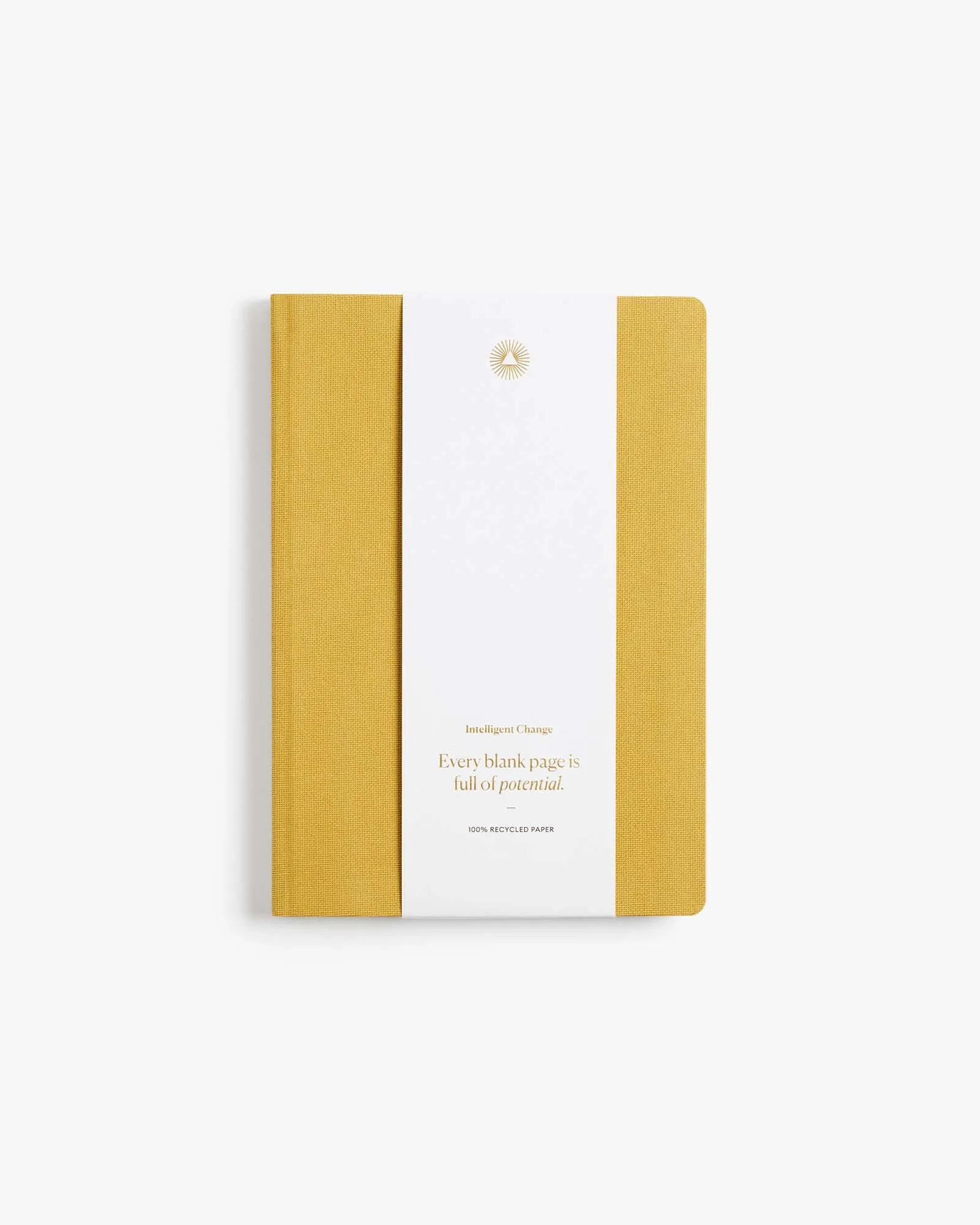
Premium Notebook - Yellow
Who Should Choose What
Best for
- Journalers who value a smooth, eco-friendly writing surface and want a versatile lined notebook for daily notes, to-do lists, and creative writing.
- Writers who prefer a premium feel and are willing to invest in a higher-quality notebook for long-term use.
Not for
- Budget-conscious buyers who need a disposable notebook for rough drafts or quick notes.
- Artists who require heavyweight, mixed-media paper that can handle wet media like watercolor.