Quick answer
For most Pilates sessions, wear fitted leggings, a light-support bralette or fitted tank, and grip socks. Choose pieces that stay put when you roll onto your back or move through planks. If you want one decision instead of three, a unitard solves the waistband question entirely.
Why Pilates Clothing Rules Differ from Gym Rules
Pilates is low impact, but it is not low movement. You spend time on your back, your side, and in positions where a loose shirt slides toward your face. Fitted clothing lets you and your instructor see whether your spine and hips are aligned. That is the practical reason Pilates outfits look the way they do.
You do not need compression-level support for most mat or reformer classes. What you need is coverage that stays in place. A bralette designed for light support can be enough, especially if your class is mostly floor work. Choose your top based on how much you move, not on how hard the class sounds.
Tops: Match Neckline to the Movement
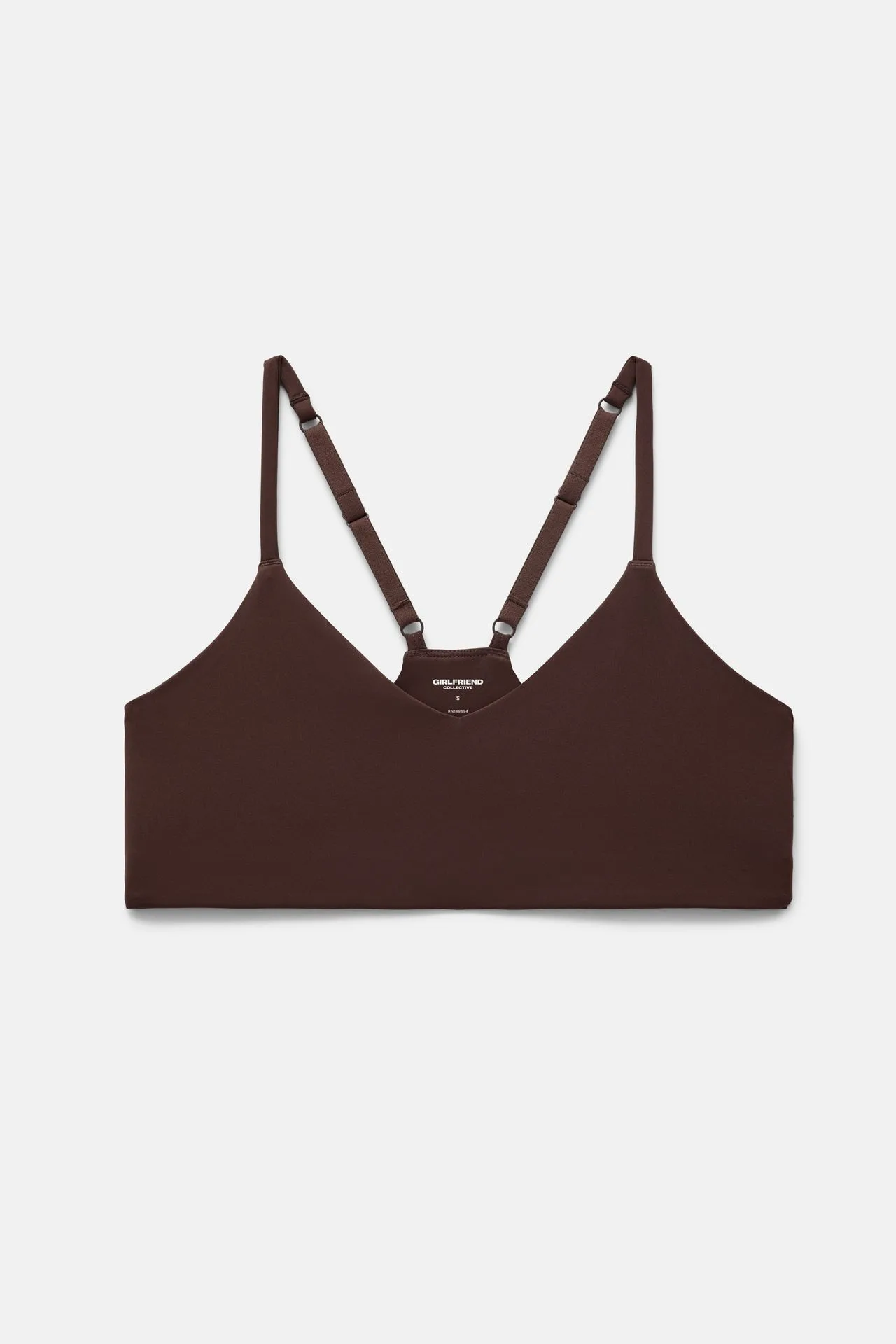
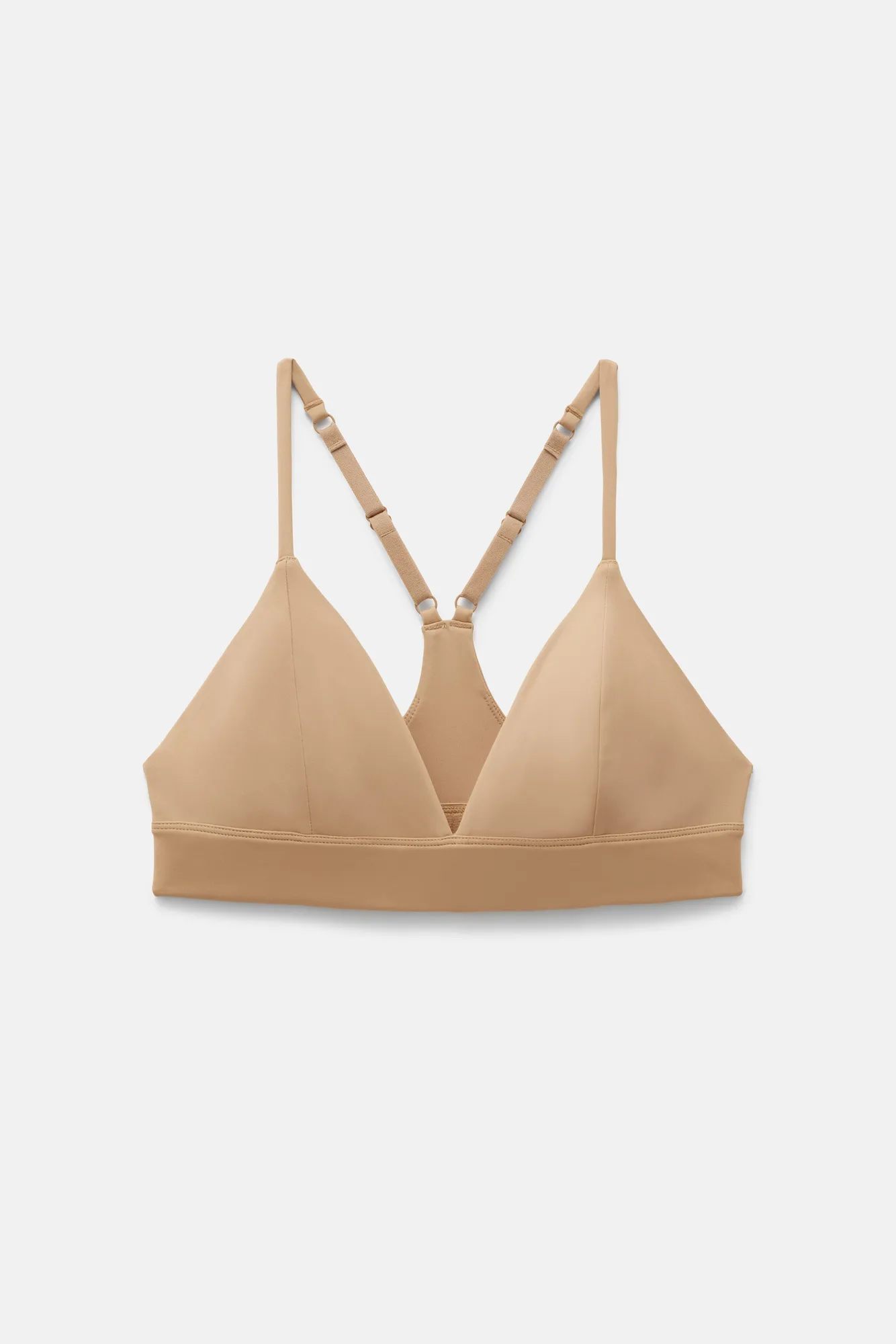
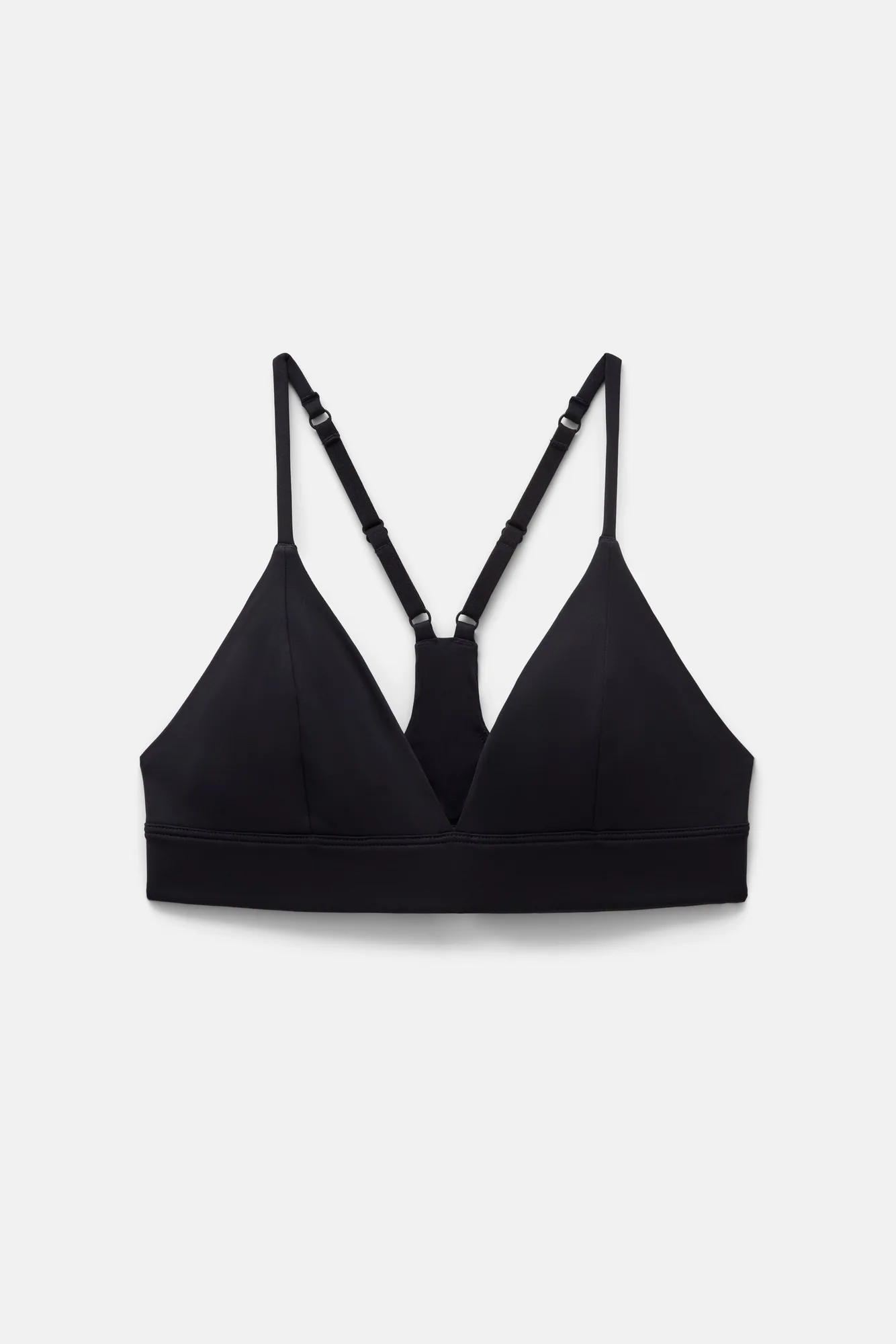
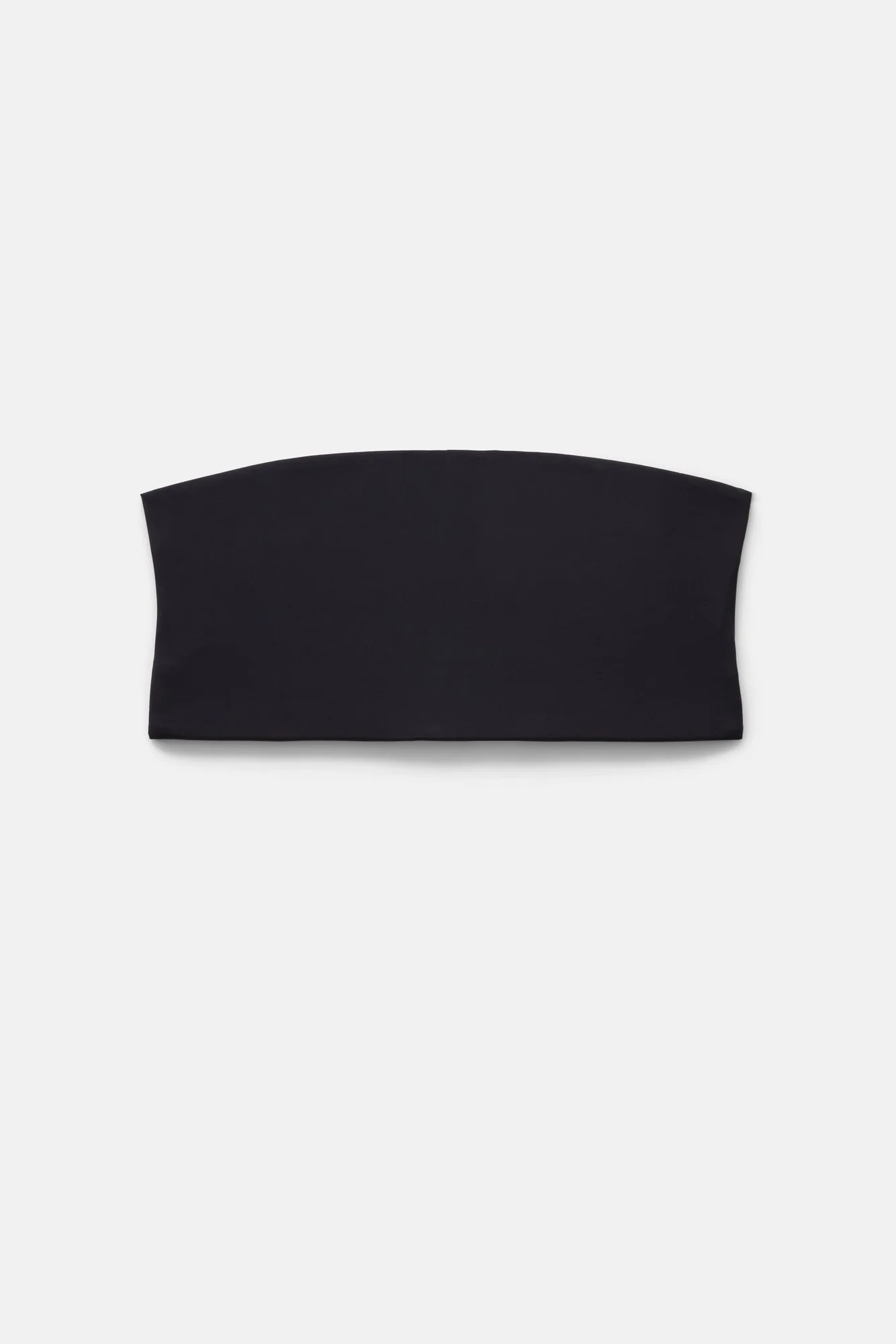
A deep V-neckline with thin straps keeps the chest open and feels barely there, which suits reclined work and low-impact classes. A triangle silhouette with adjustable straps lets you tighten or loosen the fit as the session goes on. A strapless bandeau solves the problem of straps slipping during side-lying work, but it offers less adjustability than a strap style.
If you are deciding between two tops, pick the one you can adjust without leaving the mat. Adjustable straps are the single most useful feature in a Pilates top because your body position changes constantly.
- Deep V neckline: best for reclined and low-impact floor work.
- Triangle with adjustable straps: best for daily wear and customizable fit.
- Strapless bandeau: best under off-shoulder tops and for side-lying work where straps slip.
Bottoms: Leggings, Shorts, or a Unitard
Fitted leggings are the default for a reason: they do not bunch behind the knee during leg circles, and they stay in place when you bridge. If your studio is warm or you prefer less fabric, fitted shorts work for mat classes. Avoid loose shorts and wide-leg pants, which can catch on the reformer carriage or hide your knee alignment.
A unitard removes the waistband gap problem entirely. You do not have to re-tuck a shirt after every roll-up, and there is no waistband digging in during seated work. The trade-off is bathroom breaks and layering flexibility. If you run cold before class and hot during it, separates are easier.
Grip Socks and Leggings: The Practical Pairing
Many studios require grip socks for hygiene and safety on the reformer. Grip socks work best with leggings that end at the ankle or can be pushed up, so the sock can grip the footbed without fabric bunching under your arch. If your leggings are full length, check that the cuff does not roll down over the sock during footwork.
Bring a spare pair of grip socks in your bag if you are new. Studios often sell them at the front desk, but sizes run out before popular evening classes.
Fit Guidance for Pilates Tops and Bralettes
A Pilates top should feel snug but not restrictive. If you can slide two fingers under the band, it is likely to stay put during leg circles. If the band rides up when you raise your arms, size down or choose a style with adjustable straps.
For bralettes, the band does most of the work. Measure your underbust and choose the size that matches, not the size you wear in a compression sports bra. Light-support styles are designed to move with you, so a relaxed fit is normal. If you want more hold for a reformer class with jumpboard work, a compressive sports bra is the better choice.
Decision Rules for Your Next Pilates Class
- If your class is mostly mat work: Choose light-support pieces like a V-neck or triangle bralette with fitted leggings. You do not need compression for floor exercises. Light support is enough when you stay on the mat.
- If your class uses a reformer with a jumpboard: Choose a compressive sports bra instead of a bralette, and check that your leggings do not slide down during footwork. More movement means more hold.
- If you hate re-tucking your shirt: Wear a unitard or a fitted tank tucked into high-rise leggings. Loose tops move toward your face when you roll onto your back. Fitted layers stay put.
- If your studio requires grip socks: Pack them before you leave. Pair them with ankle-length leggings or cuffs you can push up so the sock grips the footbed. Grip socks plus the right legging length prevent slipping.
Pilates-Friendly Pieces from the Catalog
- Amber V Neck Bralette: Thin strap, deep V bralette with soft, stretchy fabric and light support for lounging or low-impact activities. The deep V and thin straps keep the chest open during reclined work, and light support matches most mat and reformer classes.
- Black Bandeau Bra: Strapless bandeau with double-lined coverage and a soft, lightweight feel, available from XXS to 6XL. No straps means nothing to slip during side-lying work, and double lining adds coverage under fitted tops.
- Java Triangle Bralette: Triangle bralette with adjustable straps and a classic silhouette, available from XXS to 6XL. Adjustable straps let you tighten the fit before class and loosen it after, which suits changing positions on the mat.
Who This Outfit Approach Is For
Best for
- Mat and reformer Pilates classes with light to moderate movement
- Anyone who wants a low-impact workout outfit that stays in place
- People who prefer adjustable straps and a relaxed fit over compression
Not for
- High-impact training or running, where a compressive sports bra is the better choice
- Anyone who needs maximum bust support during jumpboard or cardio-heavy sessions