Quick answer
Start with a simple expression of sorrow, then add a personal memory or offer of support. Avoid clichés and keep your message genuine. If you're truly stuck, a blank card like Sapling Press's letterpress options gives you the freedom to write exactly what you feel.
Why Writing a Sympathy Card Feels So Hard
The fear of saying the wrong thing often stops us from saying anything at all. You worry your words will sound hollow, too formal, or that they'll accidentally cause more pain. This is completely normal. The good news is that grieving people rarely judge your exact phrasing—they remember that you reached out.
A short, honest message is almost always better than a long, polished one. If you knew the person who died, mention a specific quality or memory. If you didn't, focus on supporting the person you're writing to. Either way, keep your tone warm and direct.
Condolence Message Ideas for Different Situations
For a close friend who lost a parent: "I'm so sorry for your loss. Your mom always made me feel welcome in your home, and I'll never forget her laugh. I'm here to bring dinner this week—just say when."
For a colleague who lost a spouse: "I was so sad to hear about John. He was always kind to everyone in the office. Please take all the time you need, and know we're thinking of you."
For someone you don't know well: "Thinking of you and your family during this difficult time. I'm so sorry for your loss." This simple approach is respectful and never feels intrusive.
What to Avoid in a Sympathy Card
Steer clear of phrases like "They're in a better place" or "Everything happens for a reason." These can feel dismissive of the person's grief. Also avoid comparing their loss to your own experience unless you're very close. The focus should stay on the bereaved person's feelings, not your own story.
Diagnosis: Why You're Stuck and How to Move Forward
- Symptom: You stare at a blank card and can't think of a single word to write. This is the most common barrier to sending a sympathy card.
- Likely cause: You're overthinking. You want your words to be perfect, but grief doesn't have a perfect script. Perfectionism is the enemy of a sincere condolence.
- Corrective action: Write a simple sentence: 'I'm so sorry. I'm thinking of you.' Then add one personal detail—a memory, a quality, or an offer of specific help. Done is better than perfect. Your card will be appreciated.
- When to stop or choose another option: If you still feel your words might cause harm, send a blank card with only your signature. The act of sending a card itself shows you care. Sometimes the card itself is the message.
Cards That Give You Room to Write
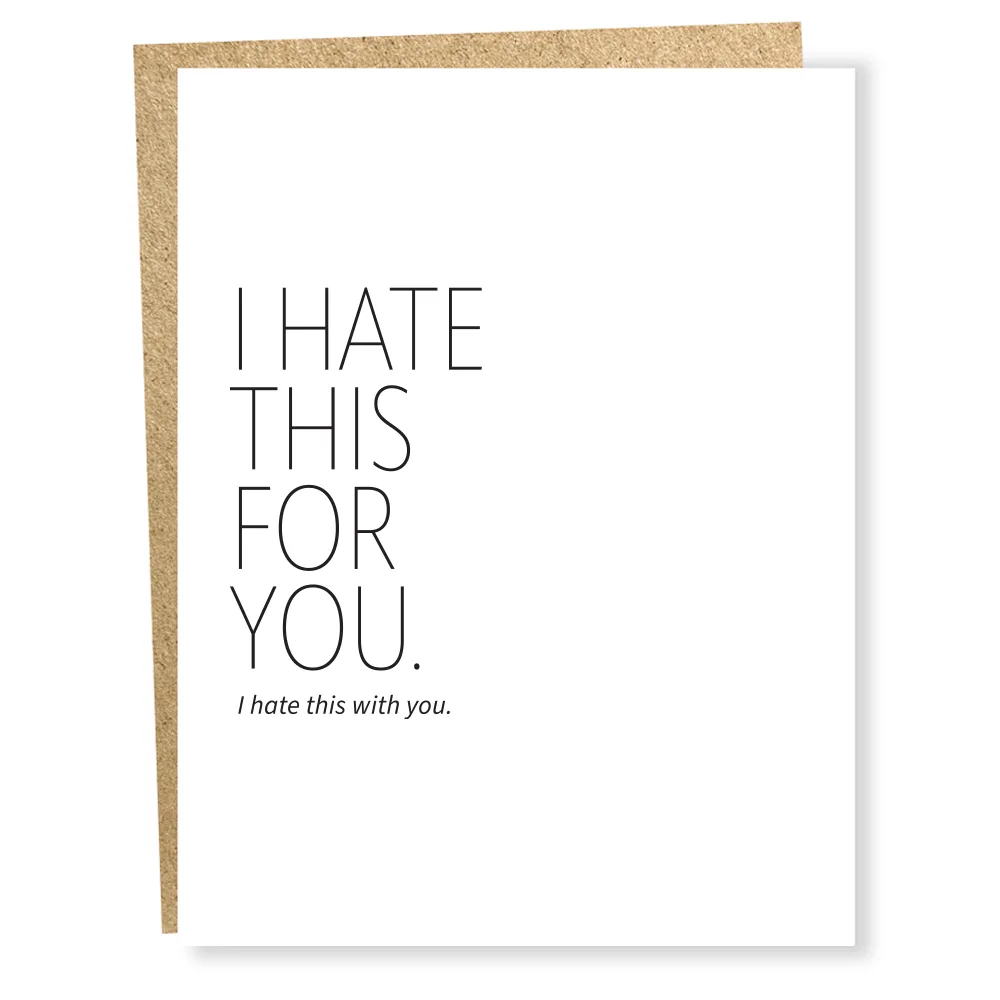
- Hate this card: Size: 5.5 x 4.25. Inside Message: blank. Paper: white cotton. Envelope: brown bag. Printing: letterpress. Ink: black. A blank interior means you can write a long, personal message without feeling cramped by pre-printed text. The letterpress texture and cotton paper add a tactile sense of care that matches the gravity of a sympathy note.
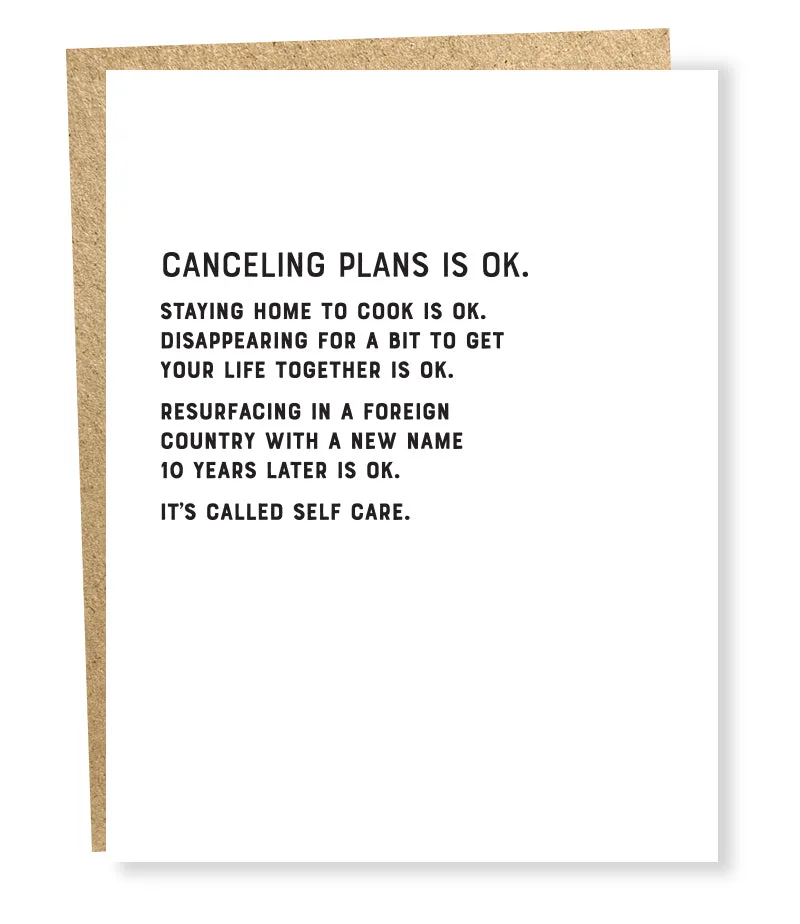
- ok card: Size: 5.5 x 4.25. Inside Message: blank. Paper: white cotton. Envelope: brown bag. Printing: letterpress. Ink: black. The card's message about self-care and giving yourself grace can be a gentle, affirming backdrop for a condolence note. The blank inside still lets you write your own message, but the front offers a quiet reminder that it's okay to not be okay.