Quick answer
Keep it short, specific, and honest: name the hard thing, say you care, and offer one concrete help. A simple line like "I'm so sorry about your dad. I'm bringing dinner Thursday" beats a long note full of advice. Write from the heart, not from a script.
Why simple, specific words work better than perfect ones
When someone is grieving or overwhelmed, they are not grading your prose. They are scanning for proof that you see them and that they are not alone. Short notes that mention a real detail—a name, a memory, a specific offer—land harder than generic sympathy. If you are stuck, say the plain thing out loud first, then write that down. The goal is to be a steady presence, not to fix anything.
Wording you can borrow when you don't know what to say
Use these as starting points, then add one personal line. For a death: "I'm so sorry about [name]. I keep thinking about [memory]. I'm here." For illness: "This sounds exhausting. I'm not going anywhere—text me when you want company or a meal dropped off." For a hard season with no clear label: "I don't know all of what you're carrying, but I can see it's heavy. You don't have to explain it to me." Avoid "at least" and "everything happens for a reason"; they minimize rather than comfort.
Small gifts that carry the message
A card can stand alone, but a small, useful object can keep the sentiment visible after the note is put away. A catch-all tray by the door holds keys and reminds the person of your care each time they pass it. A mug they can wrap their hands around offers warmth on a hard morning. If you're sending a card from afar, a mug or tray can be a gentle add-on that doesn't demand a response.
How to write a sympathy or tough-times card in four steps
- Name the hard thing: Start by acknowledging what happened or what they're facing, using plain words. For example: "I was so sorry to hear about your mom" or "This treatment sounds brutal." Checkpoint: if your first line could be copied into any card, add one specific detail.
- Say you care without trying to fix it: Use a short line that conveys presence: "I'm here," "You're not alone," or "I'm thinking of you." Resist adding advice or silver linings. Common mistake: offering solutions before they've asked. Comfort first, problem-solving later—if ever.
- Offer one concrete help: Instead of "Let me know if you need anything," name a specific action: "I'm dropping off dinner Thursday," "I can take the kids Saturday morning," or "I'll text you next week to check in." Checkpoint: make the offer easy to accept or decline with a simple yes or no.
- Close with warmth and your name: End with a brief line like "With love," "Thinking of you," or "Here for you," then sign your name. If you're including a small gift, mention it lightly—no need to explain the symbolism. Next step: put the card where they'll see it soon, or drop it in the mail the same day you write it.
Products that pair well with a support card
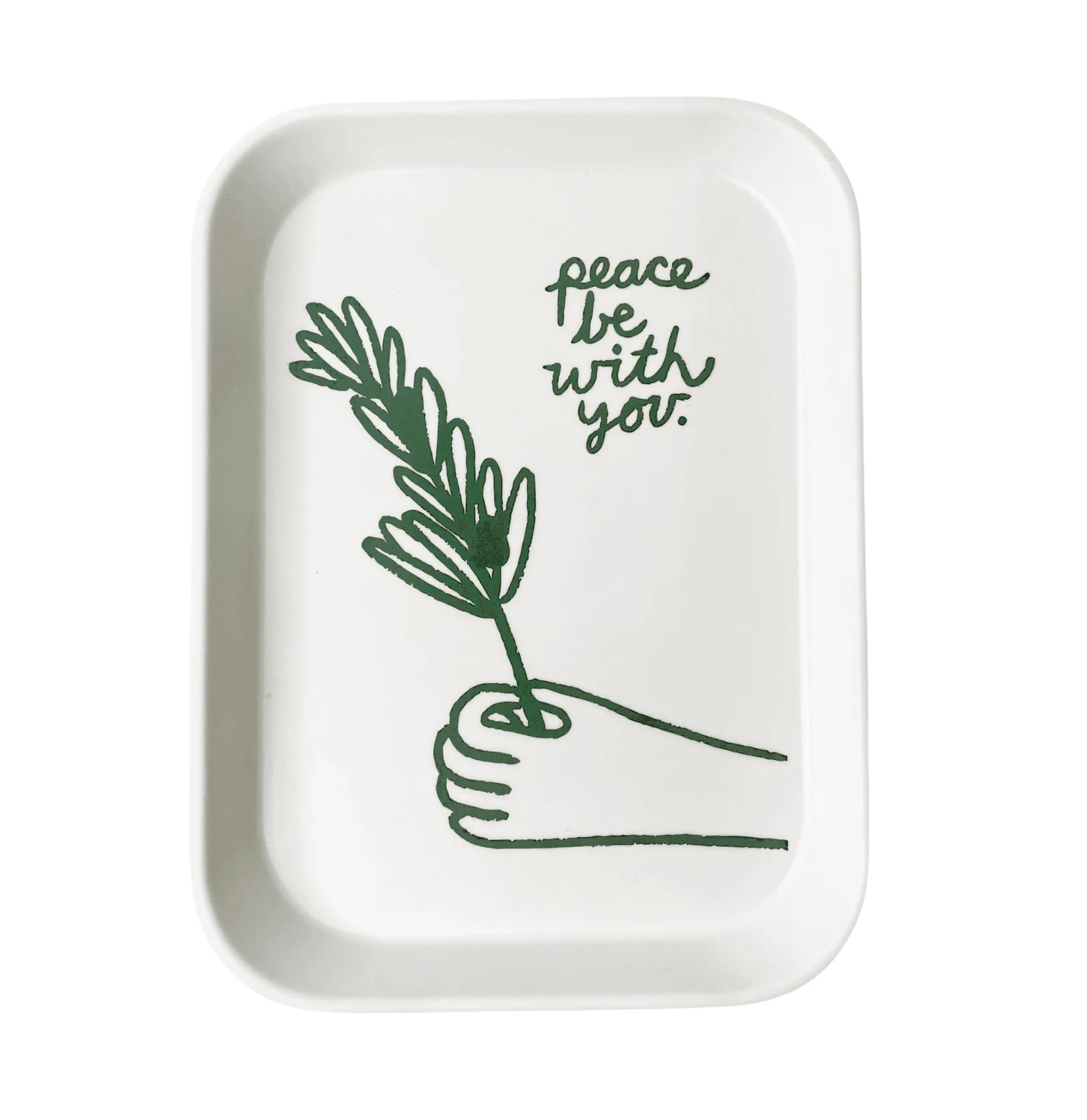
- Peace Be With You Tray: 5 x 7 inch bamboo melamine catch-all tray with the reminder "Peace Be With You." A practical size for a front-door drop zone or bedside table, so the message stays in view during a hard season.
- Safe and Cared For Mug: 12 oz ceramic mug that is microwave and dishwasher safe. Easy to use and clean, which matters when someone is too tired to fuss over hand-washing.
- Merci Beaucoup Card: 4.25 x 5.5 inch digitally printed card on archival-quality card stock with a kraft envelope; made in the USA. A ready-to-send card that already says "Merci Beaucoup" in French, useful when you want a warm note without writing a long message.