Quick answer
Write a short note that names one real writing habit, pairs it with a coffee joke that fits the mug image, and ends with a send-off that sounds like you. Aim for three to five sentences so the blank inside stays part of the joke.
Why the blank inside is an advantage, not a problem
A card with no printed message gives you room to sound like a person instead of a card company. That matters for writers, who notice stock phrasing. The trade-off is that a blank card can feel like homework if you stare at it too long. Solve that by drafting your note before you uncap a pen, and by deciding on one memory or habit to mention rather than trying to summarize the whole friendship.
When to skip the coffee angle
If you know the writer does not drink coffee, do not force a coffee lover greeting card idea onto the page. Use the mug as a desk object instead: the mug that holds pens, the one that goes cold during a draft, or the one that marks the start of a writing session. The card still works because the image is about the writing routine, not the beverage. If even that feels off, choose a different card rather than writing a note that contradicts the picture.
Five steps to a note that fits the card
- Pick one writing habit to name: Choose a specific, observable habit: writing before sunrise, revising in the margins, or keeping a notebook in the car. Name it in one sentence so the writer knows you actually see them. Common mistake: listing three habits, which turns the note into a list instead of a message. One habit lands harder than a list.
- Add a coffee line that matches the mug: Write a single line that connects the mug to the habit, such as a wish that the next cup stays hot through a full page. Keep it dry rather than cute. Checkpoint: read the line aloud; if it sounds like a slogan, cut it or make it more specific to the person.
- Include one real detail from their writing life: Mention a draft they shared, a story they told you, or a deadline they survived. This is the line the writer will remember. Common mistake: inventing praise about work you have not read; a specific memory is safer and warmer. Specific beats flattering.
- Close with a send-off in your own voice: End with a short wish tied to the habit, such as more quiet mornings or fewer cold cups. Sign your name and skip the formal closing if it does not sound like you. Checkpoint: the last line should feel like something you would actually say out loud.
- Draft on a separate page, then copy it in: Write the note on scrap paper first, count the sentences, and trim to three to five before writing inside the card. Use a pen that will not smudge on the heavy white cardstock. Common mistake: starting directly in the card and running out of room near the signature. Draft first; the card only gets one pass.
About the Writer's Mug Greeting Card
-
Writer's Mug Greeting Card: The card is A2 size, 4.25 by 5.5 inches folded, and blank inside. The small format rewards a tight note, so three to five sentences will fill it comfortably without crowding.
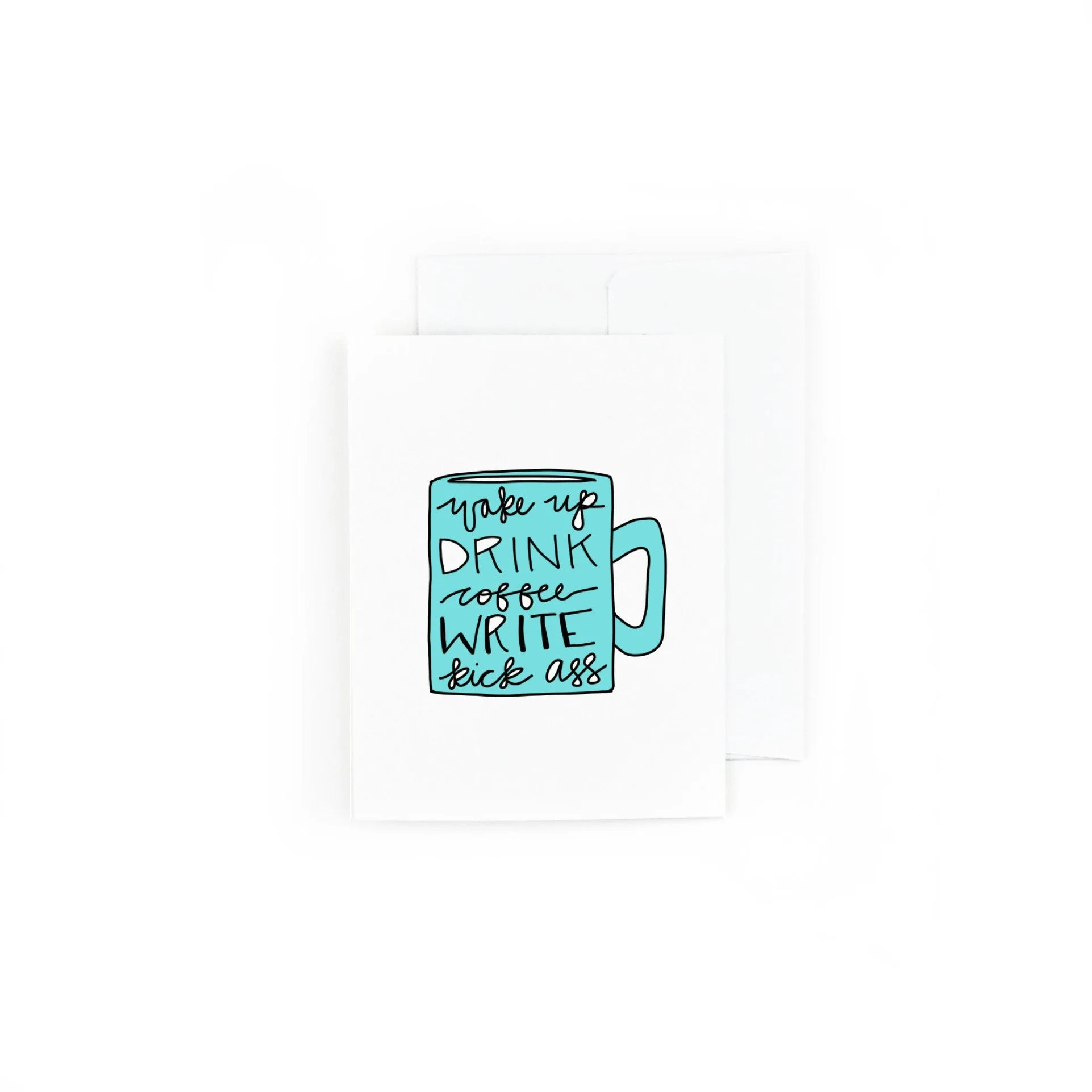
Writer's Mug Greeting Card