Start with Your First Bird Sighting
A Songbird Damask Hardcover Journal is more than a notebook—it's a place to capture what you notice outdoors. Begin by recording your first bird sighting of the day. Note the species, the time, and a detail about its behavior or song. Over time, these entries build a personal field diary that connects each page to a real moment.
Use the Lined Pages for Birding Notes
With 150 lined pages, this journal gives you plenty of room for structured bird notes. Use each page to log the date, location, weather, and bird activity. The vintage-inspired robin-and-vine cover makes it a natural companion for a birding bag or desk. Keep your observations organized without needing a separate field notebook.
What the Journal Offers
-
Songbird Damask Hardcover Journal: 150 lined pages inside a hardcover journal with a vintage-inspired robin-and-vine damask pattern and warm golden palette. The lined format supports neat, legible notes, while the durable cover protects your entries during daily use or travel.
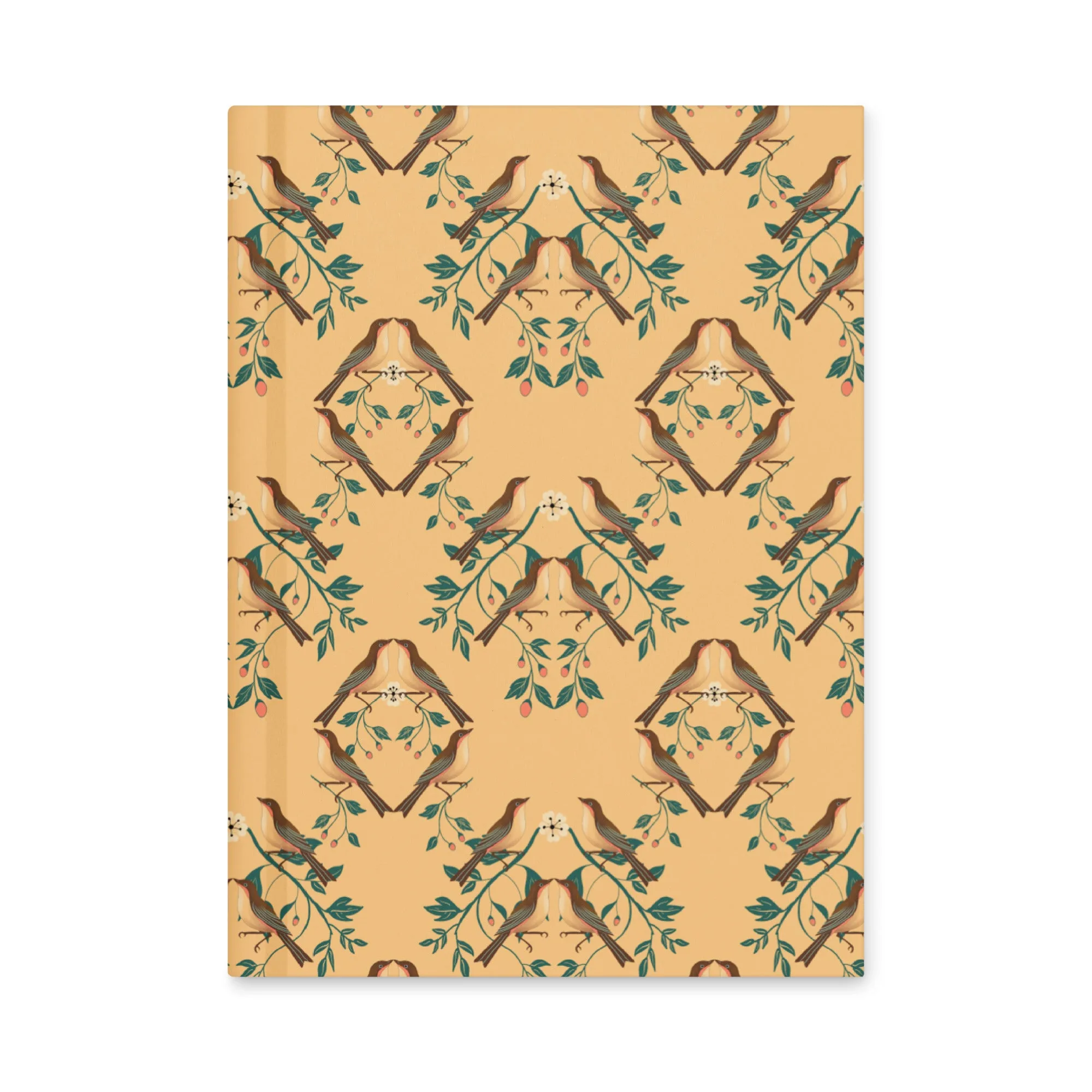
Songbird Damask Hardcover Journal
-
Songbird Damask Hardcover Journal: Smooth matte cover with a soft-touch finish. The comfortable feel makes it pleasant to handle during long journaling sessions, whether you're at a desk or in the field.
Try Creative Bird Journal Prompts
If you're not sure what to write, prompts can spark ideas. Describe the flight pattern of a robin you see near your home. Sketch a vine or berry you noticed alongside a bird. Write a short story from the bird's perspective—what does it see from its perch? The journal's damask pattern and songbird theme naturally invite nature-inspired writing.
Combine Sketching with Written Notes
The lined pages work well for quick sketches of birds, leaves, or nests. Add a few descriptive words next to each drawing to capture color, size, and location. This mix of visual and written notes makes each entry more memorable and personal.
Record Seasonal Bird Activity
Use the journal to track which birds appear in each season. Note arrival and departure dates for migratory species, or changes in feeding behavior as the weather shifts. Over a year, these records become a valuable personal reference for local bird patterns.