Start with the card’s blank canvas
The Thanks A Bunch Flowers A2 Card gives you a clean slate: it’s blank inside, so the message is entirely up to you. That’s good news if you want to personalize a thank you, but it can also make the first line feel harder to find. Before you write, decide who the note is for and what you’re thanking them for. That single decision will shape your tone and length more than any template.
The card itself is a standard A2 size—4.25" x 5.5"—which means you have a compact space. You don’t need to fill every inch; a few sincere sentences often land better than a long paragraph. The paper is FSC certified 100% post-consumer recycled, and it’s printed with soy ink in the USA, so it’s a thoughtful choice if the recipient appreciates eco-friendly stationery. Keep that in mind if you’re writing to someone who values sustainability—it can be a natural detail to mention.
Pick a thank-you angle that fits the relationship
Different relationships call for different levels of formality and warmth. Use these angles to choose a starting point, then adapt the wording to your own voice.
- Casual friend or family member: Keep it warm and specific: “Thank you for the beautiful flowers—they made my whole week.” Mention a shared memory or the timing of the gesture to make it personal.
- Coworker or acquaintance: Aim for friendly but professional: “Thanks so much for your help with the project. I really appreciate your time.” Avoid inside jokes unless you know them well.
- Formal or professional thank-you: Use a full sentence and a clear closing: “I am writing to thank you for your thoughtful gift. It was very kind of you.” Sign with your full name if the card is for a business contact.
- Heartfelt or emotional note: Lead with feeling: “Your kindness meant more than I can say.” Then add one concrete detail about what the person did or gave, and close with a simple “With gratitude.”
Build the message in three short moves
A blank card can feel intimidating, but you can structure your note without making it sound stiff. Try this three-part flow: first, name what you’re thanking them for; second, say why it mattered or how it made you feel; third, offer a forward-looking line or a warm close. For example: “Thank you for the lovely flowers. They brightened up my kitchen all week. I’m so glad we got to catch up—let’s do it again soon.”
This structure works because it moves from the specific to the personal to the relational. It also keeps you from rambling on a small card. If you’re writing to someone you don’t know well, you can drop the third part and end with a simple “Thanks again.”
Card details that affect your writing space
-
Thanks A Bunch Flowers A2 Card: Blank inside You have full control over the message—no pre-printed text to work around, so you can write as much or as little as you like.
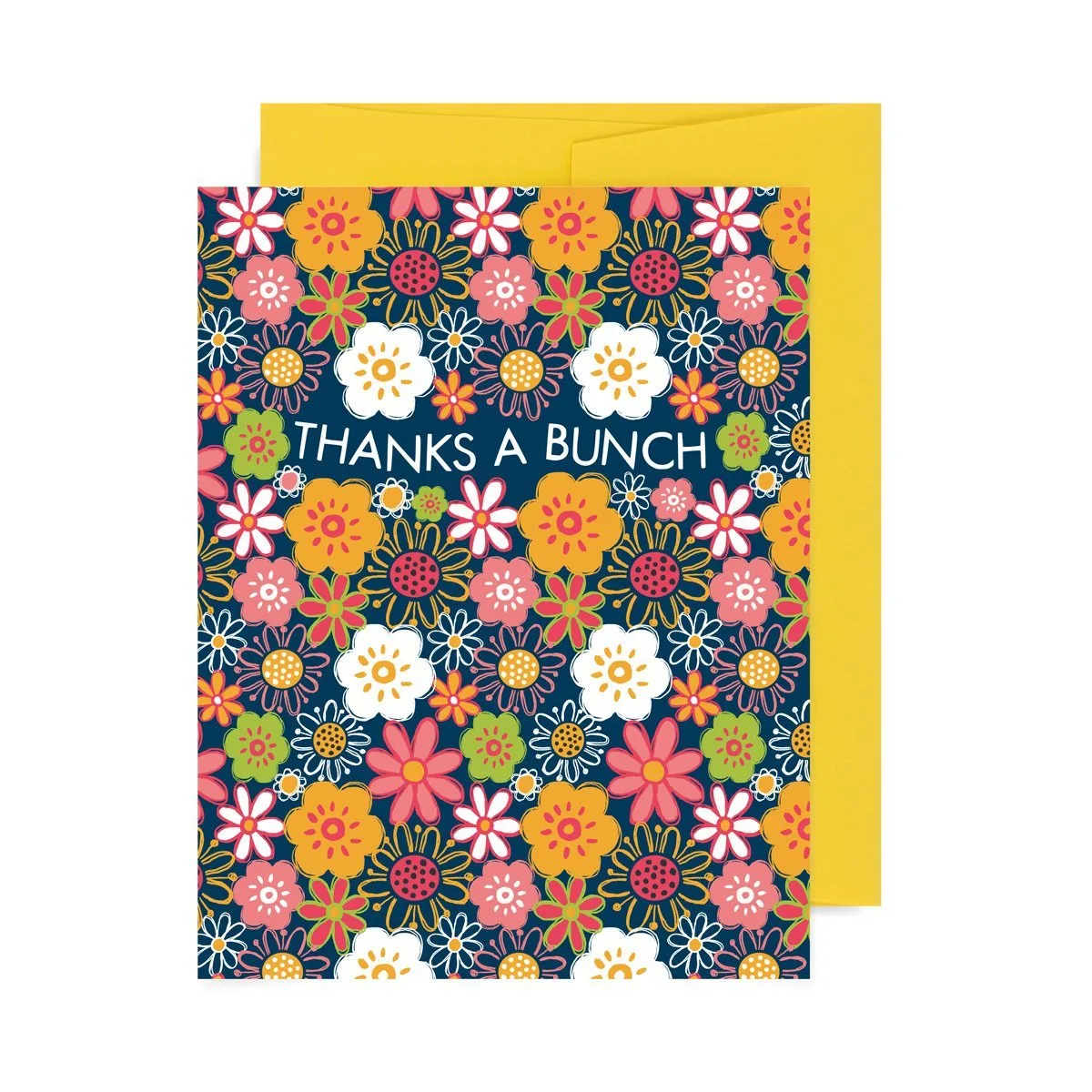
Thanks A Bunch Flowers A2 Card
-
Thanks A Bunch Flowers A2 Card: 4.25" x 5.5" A2 size This is a compact card. Plan for about 3–5 short sentences; longer notes may need a smaller handwriting or an additional insert.
-
Thanks A Bunch Flowers A2 Card: Printed with soy ink in the USA on FSC certified 100% post-consumer recycled paper If the recipient values eco-friendly choices, you can mention the card’s materials as part of your note—it shows you thought about their preferences.
Avoid these common thank-you note pitfalls
Even a sincere note can fall flat if you slip into these habits. Watch for them as you write.
- Overly generic thanks: “Thanks for everything” feels vague. Replace it with one specific detail: “Thanks for the flowers—they’re on my desk right now.”
- Making it about you: Keep the focus on the giver’s kindness. Instead of “I’ve been so busy,” try “Your note arrived at just the right time.”
- Forgetting to sign: A blank card can be signed at the bottom. Use your first name for casual notes, full name for formal ones, and consider adding the date if you’re sending it later.
- Writing too much for the space: If you have a lot to say, write a draft on a separate sheet first, then trim it to fit the A2 card. Or add a small insert—just check that it fits the envelope.
A quick checkpoint before you seal the envelope
Once you’ve written your message, read it aloud. Does it sound like you? Is the recipient’s name spelled correctly? Did you include a specific detail that shows you remember the gesture? If the card is for a formal occasion, check that your closing matches the tone—‘Sincerely’ for business, ‘Warmly’ for friends. The card comes packaged in a plastic sleeve with a recycled envelope, so you can send it as is or repackage it if you prefer. There’s no right or wrong way to fill a blank card, but a little planning helps you write something the recipient will want to keep.