Quick answer
For most off-road trucks and SUVs, choose a wheel width 0.5 to 1 inch narrower than the tire’s measured section width, and stay within the tire maker’s approved rim width range. For UTVs, match the wheel width to the tire’s intended size and your riding terrain rather than chasing the widest option.
Wheel width is not a style choice. It controls how the tire’s tread sits on the rim, how the sidewall flexes, and whether your setup clears suspension and bodywork. Get it wrong and you will fight uneven wear, poor air-down performance, or rubbing that no alignment can fix.
This wheel width guide gives you concrete decision rules for choosing wheel width based on tire size, terrain, and load. It also covers tire width vs wheel width, so you can order once and ride without second-guessing.
Start With the Tire, Not the Wheel
Every tire has an approved rim width range. That range is the single most important number in choosing wheel width, because it defines how the tire’s contact patch and sidewall behave. If you go narrower than the minimum, the tread crowns and wears in the center. If you go wider than the maximum, the sidewall stretches, the tread flattens, and bead retention suffers under low pressure.
So the first step is to look up your tire’s measured section width and its approved rim widths. Then pick a wheel width inside that range that matches your terrain and driving style. A wheel width guide only works when it starts from the tire you actually plan to run.
- Find the tire’s approved rim width range before you shop for wheels.
- A wheel 0.5 to 1 inch narrower than the tire’s section width is a safe starting point for most off-road use.
- If the tire spec is missing, do not guess. Contact the tire maker or choose a different size.
Tire Width vs Wheel Width: What the Numbers Mean
Tire width is the measurement across the tire’s section, usually given in millimeters or inches. Wheel width is the distance between the bead seats inside the rim. They are related but not the same, and the difference explains why a 12.5-inch-wide tire does not need a 12.5-inch-wide wheel.
For example, a 35x12.50R17 tire commonly fits wheels between 8.5 and 10 inches wide. A 9-inch wheel keeps the sidewall supported for trail riding, while a 10-inch wheel gives a slightly flatter tread for sand and street. Neither is universally better; the right pick depends on how you use the vehicle.
- Tire width is measured across the tire; wheel width is measured between the beads.
- A wheel narrower than the tire is normal and often beneficial off-road.
- Use the tire maker’s range as your hard limit, not a forum rule of thumb.
How Terrain Changes the Ideal Wheel Width
Rock crawling and technical trails reward a slightly narrower wheel within the approved range. The narrower rim holds the bead tighter and lets you air down with more confidence, because the sidewall has less room to roll over. That extra sidewall support can mean the difference between finishing a trail and reseating a bead on the trail.
Sand, desert running, and high-speed dirt favor a wider wheel within the range. A wider rim flattens the tread for a larger contact patch and more flotation. If you split time between rocks and sand, choose the middle of the approved range and adjust with air pressure rather than buying two sets of wheels.
- Rocks and technical trails: lean toward the narrower end of the approved range.
- Sand and desert: lean toward the wider end for flotation and stability.
- Mixed terrain: pick the middle and tune with air pressure.
Load, Sidewall, and Bead Technology
Heavier rigs and higher loads need more sidewall support, which usually means staying closer to the narrow end of the approved range. A supported sidewall resists deflection under load and reduces heat buildup on long highway drives. That matters for tow rigs and fully loaded overland builds.
Bead technology also plays a role. Method Race Wheels offers both Bead Grip and Beadlock designs, and each has its own strengths for airing down. Bead Grip wheels use a specially shaped bead seat to help retain the tire at lower pressures, while beadlock wheels physically clamp the bead. Neither changes the tire’s approved rim width range, so width selection still comes first.
- Heavy loads and towing: choose a wheel width that supports the sidewall, not the widest option.
- Bead Grip and beadlock help with low-pressure retention but do not replace correct width.
- If you frequently air down, confirm the tire’s minimum approved rim width before ordering.
UTV Wheel Width: A Different Set of Rules
UTVs often run staggered widths front and rear, and many are sold as mounted packages. That makes width selection simpler in one way and trickier in another: you need to match the wheel to the tire and to the machine’s track width. A package that is professionally mounted removes the guesswork of pairing a specific wheel and tire.
If you are buying separate components, start with the tire’s approved rim width and the machine’s factory offset. Do not assume a wider wheel adds stability; it can change scrub radius and steering feel. For most trail and dune UTVs, staying within the tire maker’s recommended range and the factory track width is the safer path.
- Check whether your UTV uses staggered front and rear widths.
- A mounted package eliminates mismatched wheel and tire sizing.
- Keep track width close to factory unless you have supporting suspension work.
Decision rules for choosing wheel width
- Rule 1: Stay inside the tire’s approved rim width range: This is non-negotiable. The tire maker’s range defines safe bead seating and sidewall shape. If your desired wheel width falls outside it, change the tire or the wheel, not the rule. Check this before price, finish, or brand.
- Rule 2: Go narrower for rocks, wider for sand: Within the approved range, a narrower wheel supports the sidewall for low-pressure rock use. A wider wheel flattens the tread for flotation in sand and desert. Match the width to your most common terrain, not your occasional trip.
- Rule 3: Let load and air-down habits set the final number: Heavy loads and frequent airing down favor the narrower end of the range. If you rarely air down and want a flatter tread for street and sand, the wider end is reasonable. Write down your tire’s range, then pick the end that matches your use.
Real examples from the catalog
- 414 Bead Grip® | Graphite + Regulator 2: The Method 414 Bead Grip® UTV Wheel paired with a Tensor Tire Regulator 2 tire, professionally mounted and shipped direct to your door. A mounted package removes the risk of ordering a wheel width that does not match the tire, which is a common and expensive mistake.
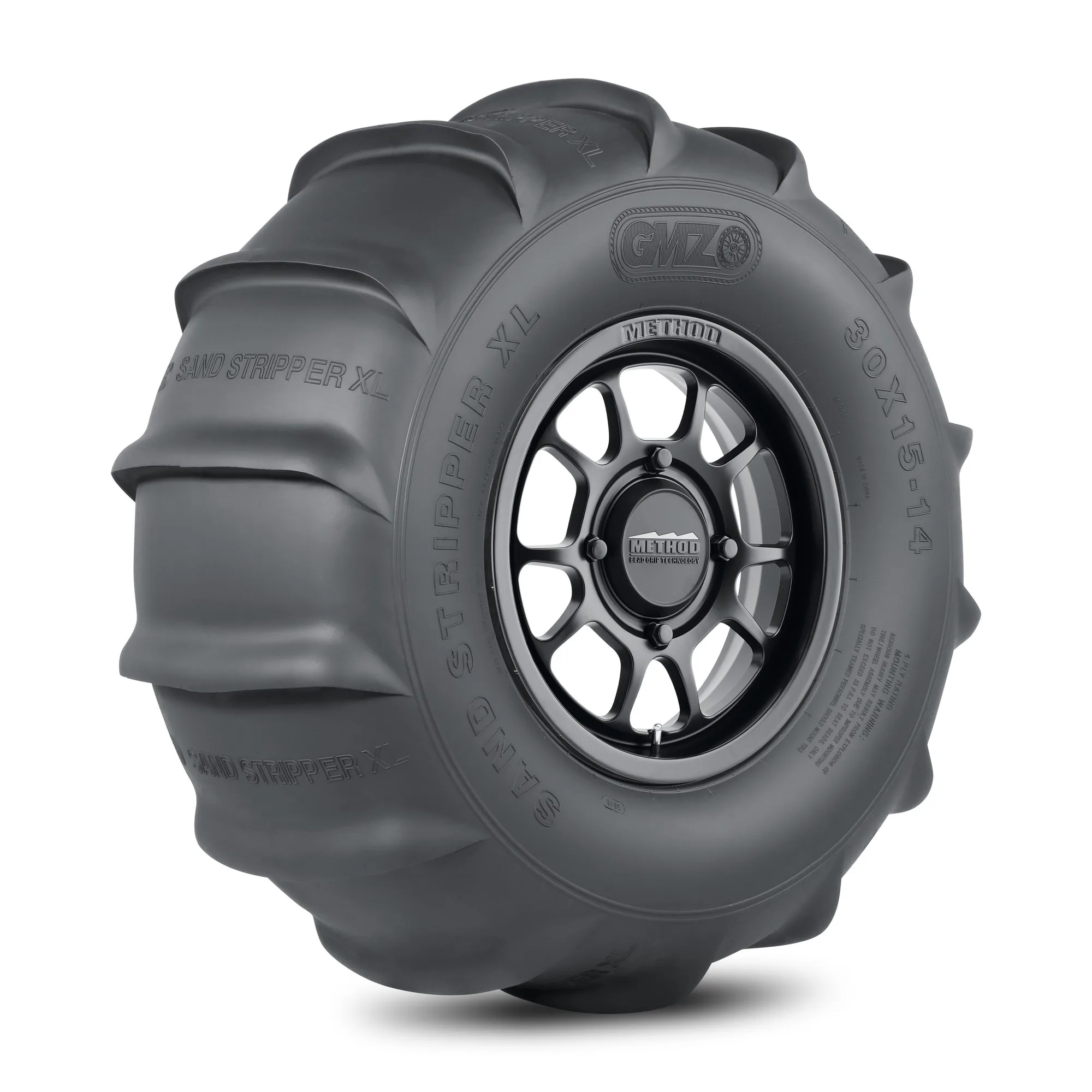
- 409 Bead Grip® | Matte Black + Sand Stripper Rear 14 XL 32: The Method Race Wheels 409 UTV Bead Grip® wheel is offered as a mounted package paired with a GMZ Sand Stripper Rear 14 XL 32 tire, available in 15x10 sizes with 4x156 and 4x136 bolt patterns, 0mm offset with a 5+5 configuration. This shows how a specific wheel width and offset are already matched to a specific tire and bolt pattern, so you can compare the package specs directly to your machine instead of calculating fitment from scratch.
Who this width approach fits
Best for
- Drivers who already know their tire size and want a wheel width that matches it
- Off-roaders who air down and need reliable bead retention without guessing
- UTV owners comparing mounted wheel and tire packages
Not for
- Anyone choosing a wheel width before deciding on a tire size
- Builds that need a custom backspace or offset outside common ranges without suspension work
- Buyers who want a single universal width recommendation regardless of terrain or load
Wheel width is a fitment decision, not a fashion one. Start with your tire’s approved rim width range, pick the end that matches your terrain and load, and confirm offset and bolt pattern before ordering. If you would rather skip the math, a professionally mounted package like the Method 414 Bead Grip® with Regulator 2 or the 409 Bead Grip® with Sand Stripper Rear gives you a matched setup from the start.