Quick answer
Most children are ready for simple emotion science ideas between ages 3 and 6, but the better signal is behavior, not birthdays: your child names a few feelings, notices body signals like a racing heart, and can follow a two-step activity with you nearby. Start with one hands-on kit, keep sessions short, and add body science once they connect feelings to physical sensations.
Emotion science sounds like a big topic for a small person, but it is really just the habit of noticing what happens in your body and giving it a name. The question is not whether your child is smart enough. It is whether they have the attention span, language, and adult support to make the activity feel safe instead of confusing.
This guide gives you concrete decision rules for timing, plus honest trade-offs about which Meandmine products fit which stage. If you are unsure, the safest move is to start with one kit and one predictable routine, then expand when your child asks for more.
Readiness signs that matter more than age
Age gives you a rough window, not a green light. A 3-year-old who points to a picture and says 'mad' is further along than a 6-year-old who shuts down when feelings come up. Watch for three behaviors over a week: your child uses two or more feeling words without prompting, they notice a body sensation like a tight chest or wiggly legs, and they can stay with a simple hands-on task for five to ten minutes when you sit beside them.
If two of those three are true, you can introduce emotion science now. If none are true, keep building vocabulary through daily moments first. That is not a delay; it is the foundation the science activity will stand on.
- Try a low-pressure test: ask 'where do you feel that in your body?' during a calm moment, not a meltdown.
- Short and repeated beats long and impressive. Ten minutes twice a week is plenty to start.
How to introduce feelings science without overwhelming your child
Start with one concrete idea, not a whole system. For example, teach that feelings show up in the body before they show up in words. You can do this with a mirror, a hand on the chest, or a simple craft where your child builds something and talks about what they noticed while making it. The making matters because young children process ideas through their hands.
Keep your own language plain. Instead of 'let's regulate your nervous system,' say 'let's see what your body is doing right now.' If your child loses interest, stop and come back another day. Emotion science readiness is not a test they can fail; it is a door you open when they are near it.
- Pair the activity with a predictable phrase, like 'let's check in with your body.'
- Do the activity yourself alongside your child. Modeling does more than instructing.
Which Meandmine kit to choose first
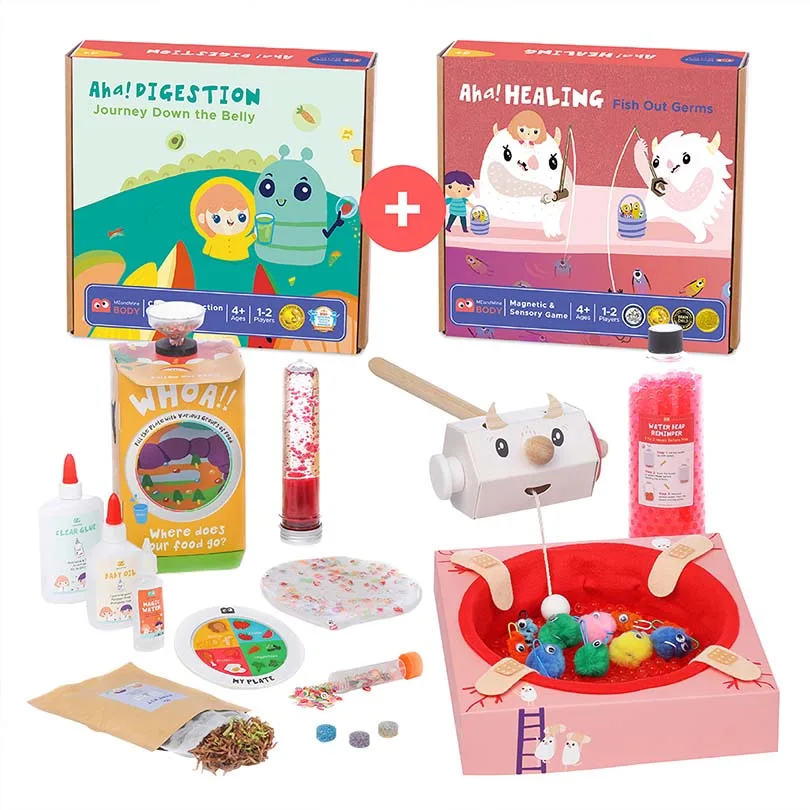
If your child is drawn to how the body works, start with a body science kit. Aha! Digestion follows a tiny enzyme through the digestive system with food slime, a nutrients lava activity, and a poop lab, so the science is gross in the way kids love and the learning is about how food becomes energy. It also opens the door to talking about how different foods make the body feel, which is emotion science in disguise.
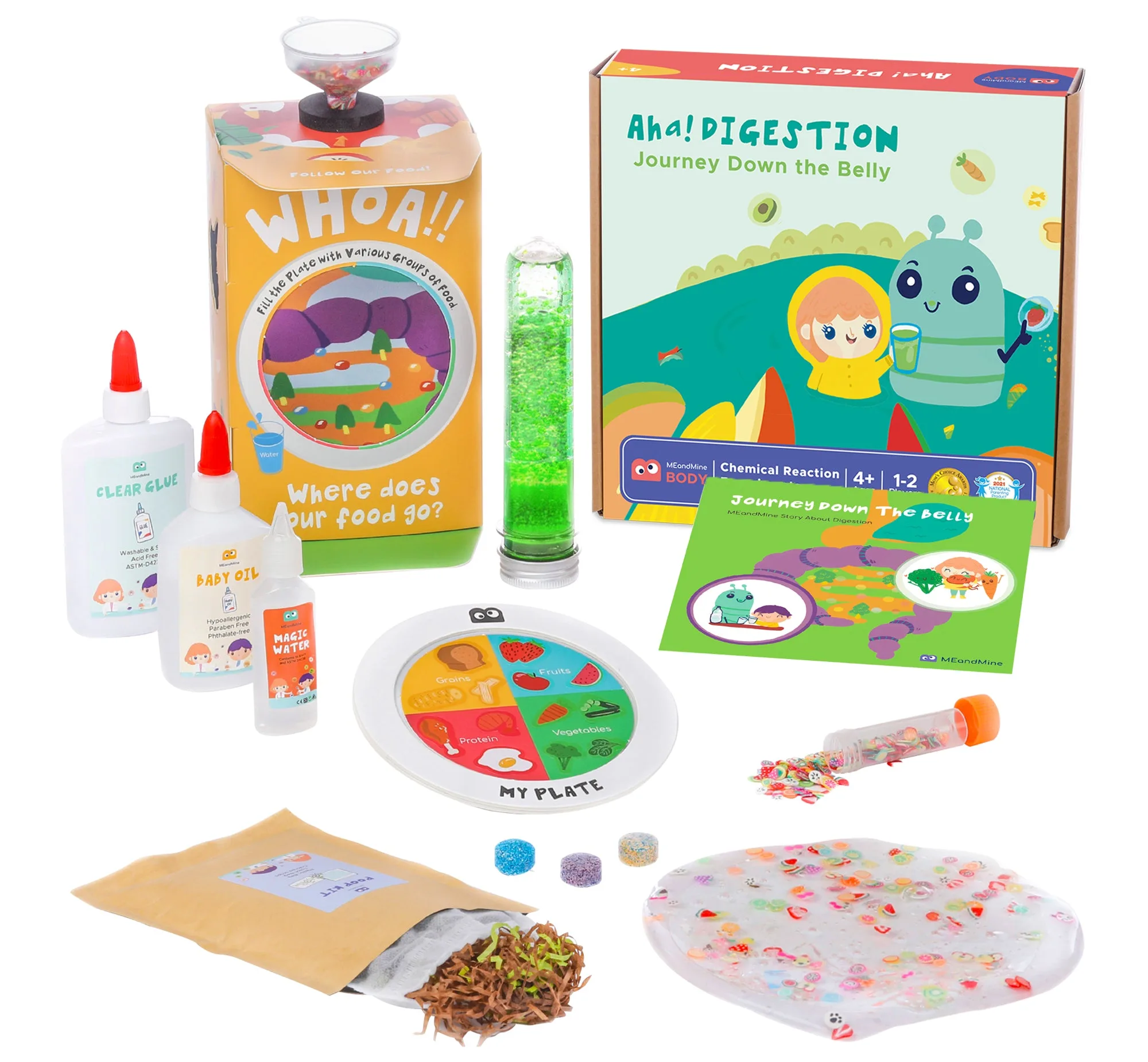
Aha! Digestion
If your child is more interested in people and protection, Aha! Healing turns a fishing game into an immune system lesson where they build a white blood cell fishing rod and four types of germs. That kit gives you a natural way to talk about what happens when we feel run down, and it pairs well with conversations about rest, care, and asking for help.
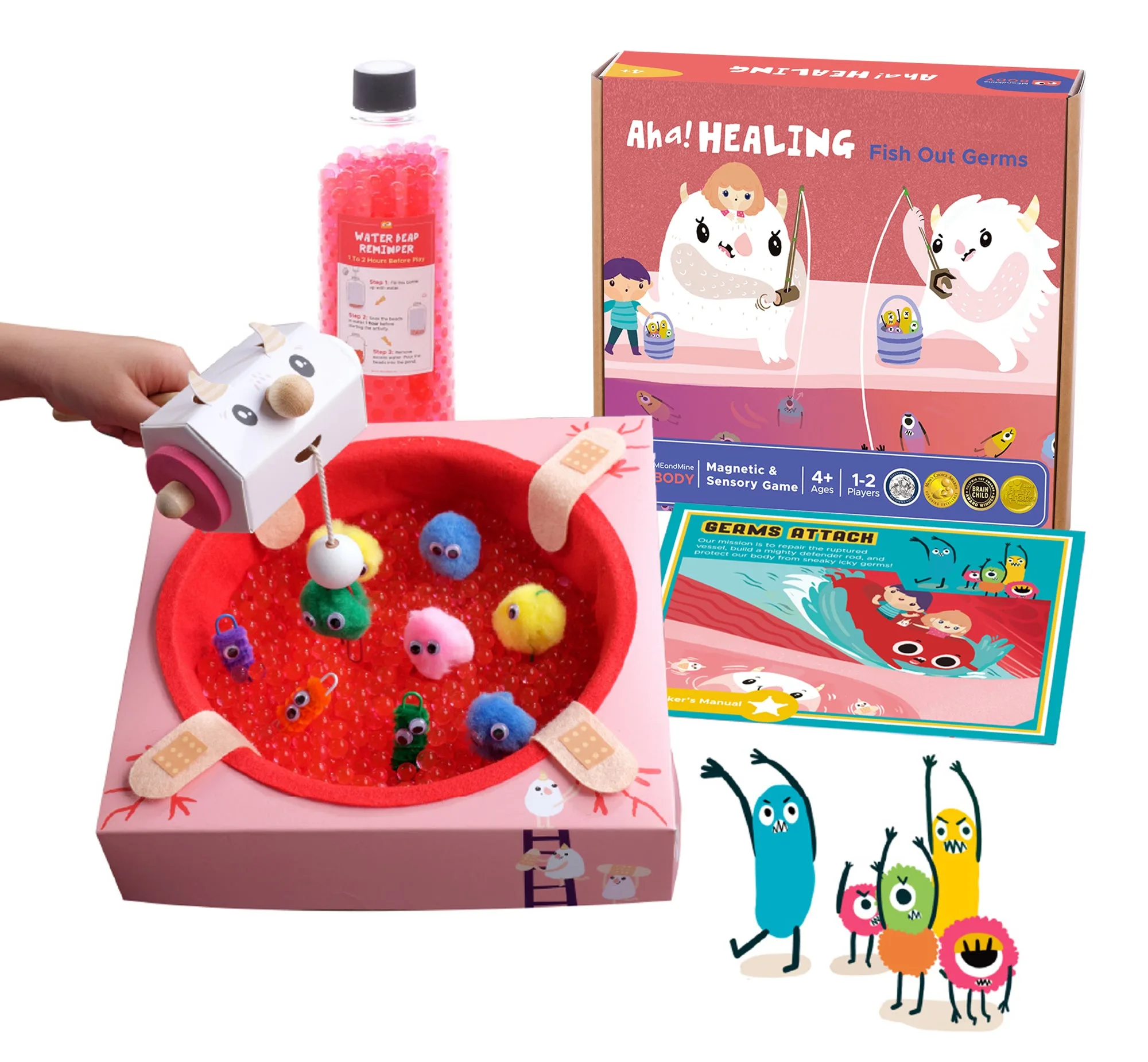
Aha! Healing
- Choose the topic your child already asks about. Interest is the strongest predictor of a kit getting used.
- If you want both topics in one purchase, the Body Science Starter Kit bundles digestive and immune system projects designed by pediatricians and educators.
What to skip until later
Skip anything that asks your child to label complex or mixed emotions before they can name basic ones. Also skip long sessions, abstract worksheets, and activities that require reading if your child is pre-literate. Those are not bad tools; they are just mismatched to this stage and tend to create frustration that makes the next attempt harder.
Another common mistake is buying a full curriculum when one kit would do. You can always add more later. A single kit used consistently teaches more than a shelf of kits used once.
- If your child melts down during the activity, the activity is too long or too abstract for now.
- Wait on comparison language like 'sometimes we feel two things at once' until basic naming is solid.
Decision rules for introducing emotion science
- Rule 1: Follow language, not age: If your child uses two or more feeling words and notices body sensations, start now. If they do not, spend two weeks naming feelings during everyday moments before buying a kit. Vocabulary first, kit second.
- Rule 2: Match the kit to the question your child already asks: A child curious about food and digestion will engage with Aha! Digestion. A child curious about getting sick or staying strong will engage with Aha! Healing. Buy the one that answers their existing question. Interest beats curriculum every time.
- Rule 3: One kit, one routine, then reassess: Use a single kit twice a week for three weeks. If your child asks for it, add a second kit or the Body Science Starter Kit. If they resist, pause and return to everyday feeling talk. Three weeks is enough data to decide.
- Rule 4: Keep sessions under fifteen minutes: Young children process big ideas in small doses. End while it is still fun, even if the project is not finished. You can return to it next time. Stopping early protects the habit.
Product facts that help you decide
- Aha! Digestion: Inside our body lives a teeny tiny friend called ENZYME who does chemical experiments on chewed-up food. The kit includes Food Slime, Nutrients Lava, and Poop Lab, and it teaches how the digestive system works while encouraging healthy eating habits. The hands-on slime and lab format gives you a concrete way to talk about how food affects how we feel, which is a natural bridge into emotion science.
- Aha! Healing: This award-winning play kit transforms a classic fishing game into a body science adventure. Kids build a white blood cell fishing rod and four types of germs while learning how the immune system works and how to protect the body. The fishing-game structure keeps younger children engaged, and the germ theme makes it easy to talk about feeling unwell, resting, and recovering.
- Body Science Starter Kit: Designed by pediatricians and educators, this bestselling duo helps kids explore how the body grows through stories, sensory play, and at-home science experiments. Projects include digestive and immune system activities. If you want one purchase that covers both body science topics and supports a lifelong sense of self worth, this bundle is the most efficient starting point.
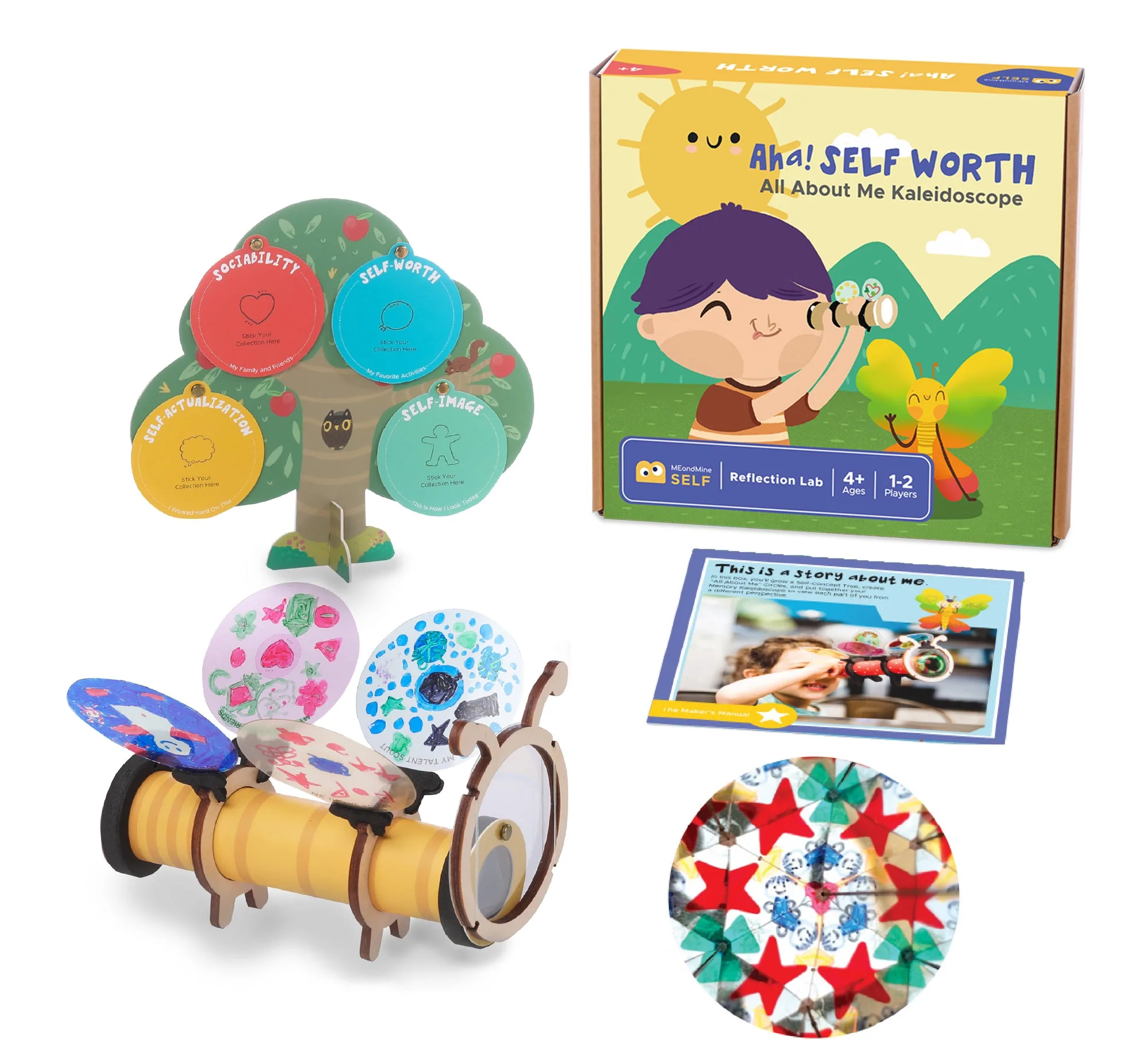
- Aha! Self Worth: Kids build a memory kaleidoscope and a self-concept tree, play an All About Me scavenger hunt, and practice expressing their own uniqueness while respecting others. This is a strong companion to body science kits because it connects physical self-awareness to identity and confidence, which is the emotional layer of the same learning.
Who this approach fits
Best for
- Parents of children ages 3 to 6 who can name a few feelings and follow a short hands-on activity with help
- Families who want a concrete, play-based way to talk about the body and emotions together
- Caregivers who prefer starting with one kit and adding more only when their child asks
Not for
- Children who are not yet using any feeling words; build vocabulary through daily conversation first
- Families looking for a structured curriculum with worksheets and reading assignments
- Parents who want a single activity to resolve big emotional struggles; this is a gradual habit, not a fix
Start when you see the signs, not when the calendar says so. Pick one kit that matches your child's curiosity, keep sessions short and predictable, and let their interest tell you when to add the next piece. That approach turns emotion science from a lesson into a normal part of how your family talks about being human.