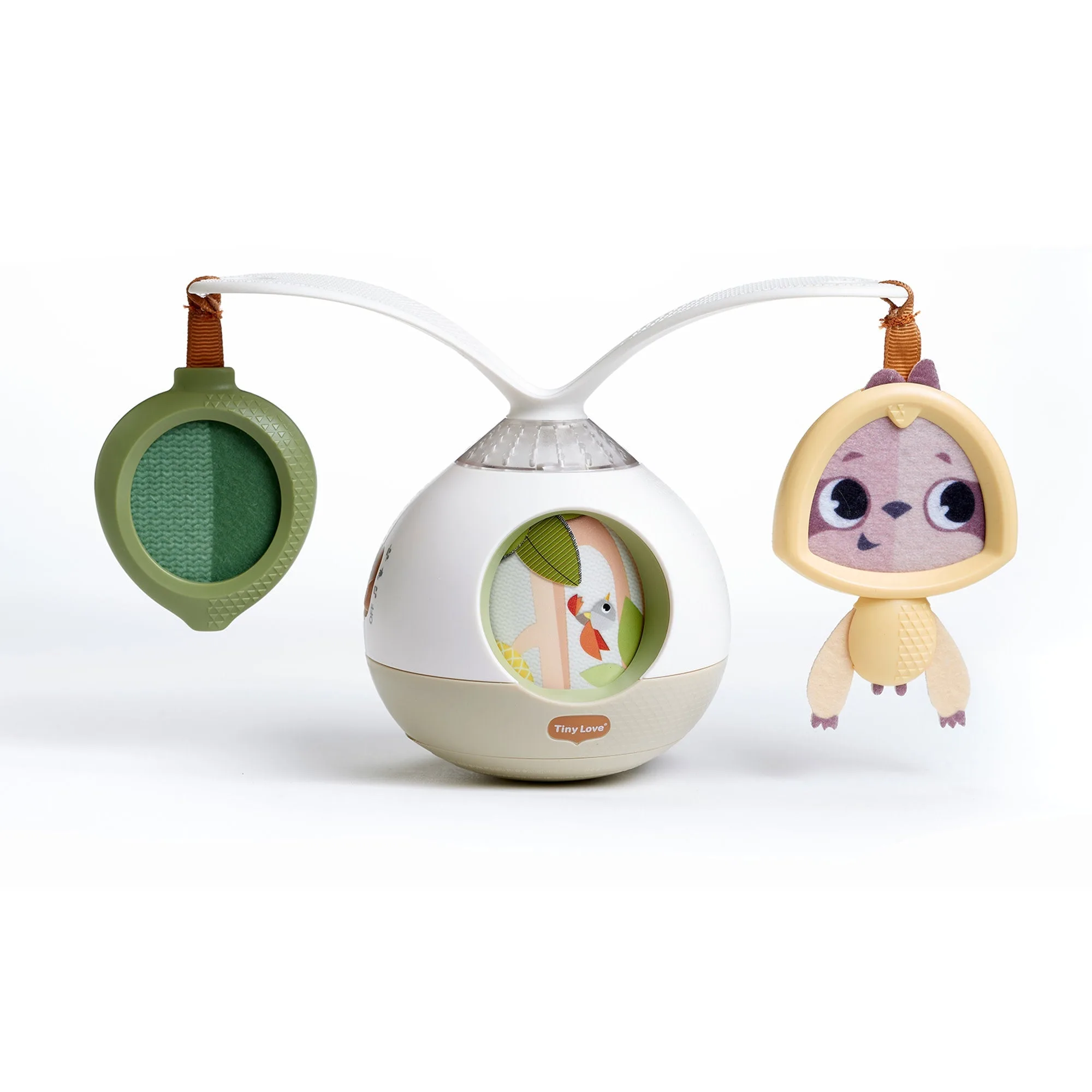
As your baby grows, every new toy or piece of gear feels like a milestone in itself. One of the most exciting (and sometimes confusing) purchases parents face is the stationary activity center. Unlike a traditional jumper or bouncer, a stationary activity center allows your little one to stand, spin, and explore a world of sensory play without any bouncing or jumping. But when is the right time to introduce one?
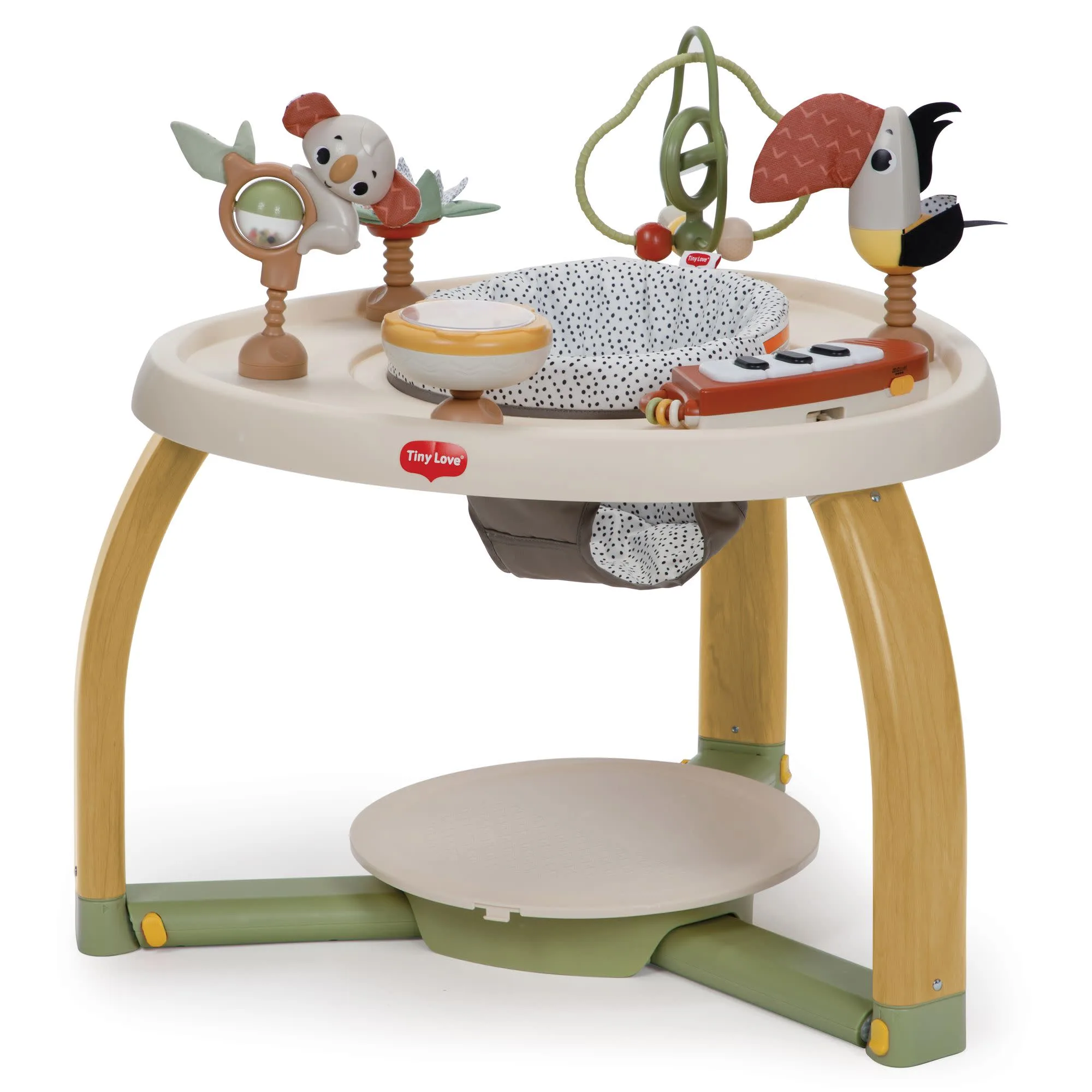
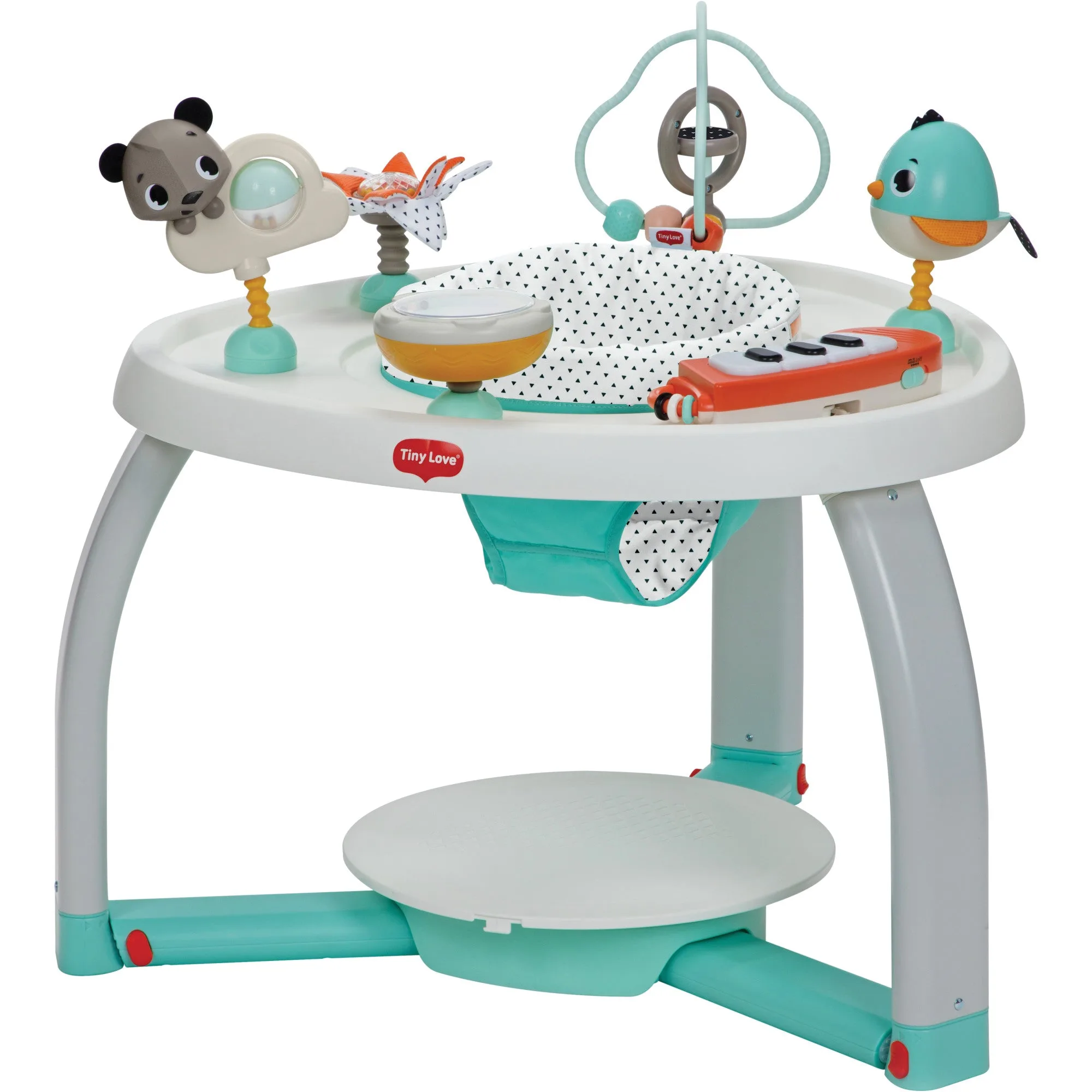
In this month-by-month guide, we break down exactly when and how to use a stationary activity center to support your baby's development safely. From newborn tummy time to early steps, you'll learn the signs of readiness, the benefits at each stage, and which features to look for. We'll also highlight two of our favorite developmental toys: the Magical Tales 5-in-1 Here I Grow Stationary Activity Center and the Black & White Décor 5-in-1 Here I Grow Stationary Activity Center.
Month 0-3: Laying the Foundation
During the first three months, your baby is mostly focused on building head and neck control, tracking objects with their eyes, and beginning to explore their hands. While a stationary activity center is not yet appropriate for use, this is the perfect time to introduce a high-contrast mobile or a play gym. The Meadow Days Take Along Mobile is an excellent choice for gentle visual stimulation and can be used both at home and on the go.
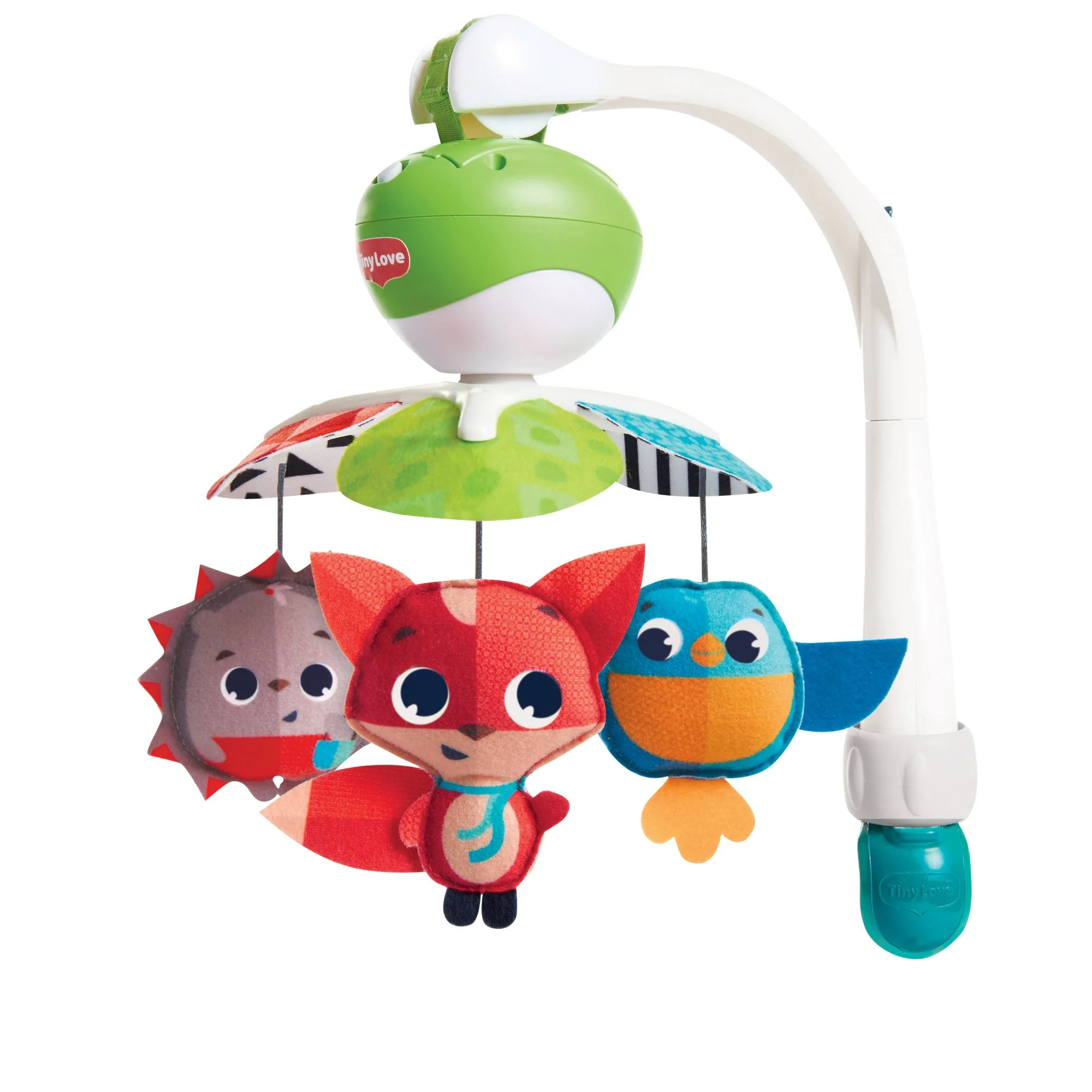
Meadow Days Take Along Mobile
Instead of an activity center, focus on supervised tummy time on a soft playmat. This builds the core strength your baby will need later to sit and stand. Look for a mat with dangling toys and mirrors, like the Tiny Mariners Developmental Gymini, which encourages reaching and batting. By the end of this stage, your baby may begin to push up on their arms, a key readiness sign for the next phase.
- Use a high-contrast mobile for visual tracking.
- Practice tummy time daily for short sessions.
- Avoid placing baby in an activity center before 4 months.
Month 4-5: Ready to Explore
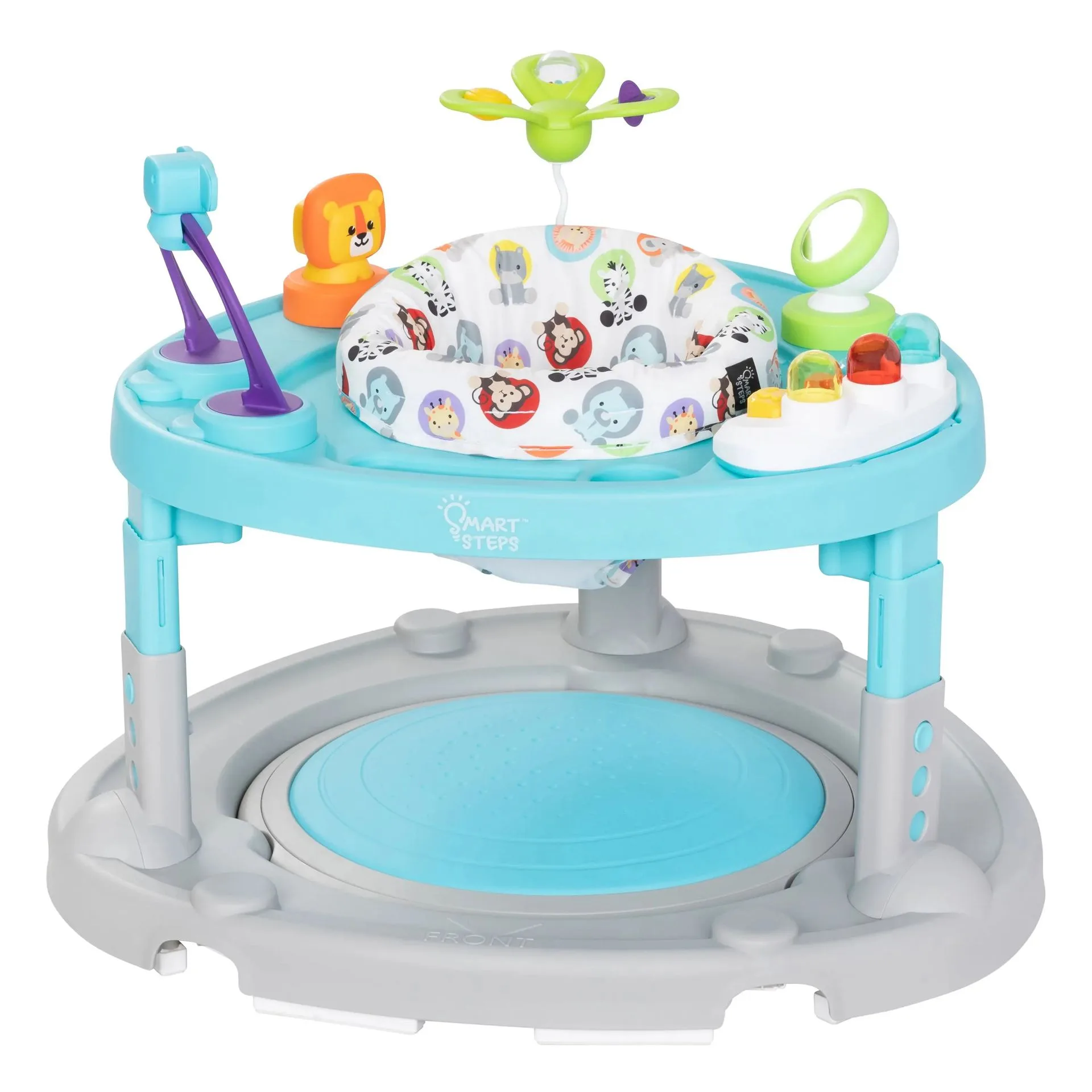
Around 4 to 5 months, many babies develop stronger neck and trunk control, and they start to bear weight on their legs when held upright. This is the earliest safe window to introduce a stationary activity center for very short periods (5-10 minutes at a time). The key is to ensure your baby's feet can rest flat on the base—not on tiptoes—and that they are not placed in the center if they cannot hold their head up steadily.
At this stage, look for an activity center with a 360-degree rotating seat and multiple interactive toys. The Magical Tales 5-in-1 Here I Grow Stationary Activity Center is ideal because it grows with your baby: it starts as a newborn play gym with a mat, then converts to an activity center with a seat, and later to a table for toddler play. This versatility means you can start using it as early as month 4 in the play gym mode.
- Limit activity center time to 10-15 minutes per session.
- Ensure baby's feet are flat on the base.
- Choose a convertible model like the Magical Tales 5-in-1.
Month 6-7: Sitting and Standing with Support
By 6 to 7 months, most babies can sit independently for a few seconds and love to bounce and stand with support. A stationary activity center becomes a fantastic tool for encouraging weight-bearing on legs and strengthening the muscles needed for crawling and walking. Your baby will enjoy spinning, reaching for toys, and activating sounds and lights.
This is also the age when babies become fascinated by cause-and-effect play. Look for an activity center with a variety of textures, buttons, and moving parts. The Black & White Décor 5-in-1 Here I Grow Stationary Activity Center offers high-contrast visuals that appeal to younger babies and older infants alike, plus it includes a removable toy bar and a piano keyboard for musical exploration. The seat can be adjusted as your baby grows taller.
- Encourage reaching and spinning to build coordination.
- Use the activity center as one of several play stations.
- Rotate toys to maintain interest.
Month 8-9: Moving and Exploring
Around 8 to 9 months, many babies begin to crawl, pull to stand, and cruise along furniture. A stationary activity center can still be used, but it should not replace floor time for crawling practice. Instead, use it for short bursts of standing play. The seat should be adjusted so your baby's hips are at a 90-degree angle and their feet are flat.
At this stage, babies love to practice standing and may even try to turn around in the seat. Choose a center with a sturdy, wide base to prevent tipping. The Magical Tales 5-in-1 Here I Grow Stationary Activity Center features a stable base and a 360-degree rotating seat, allowing your baby to explore all sides of the toy tray. The included toys—like a mirror, rattle, and teether—support sensory development.
- Use the activity center for standing practice, not as a containment device.
- Always supervise your baby while they are in the center.
- Transition to floor play as crawling skills improve.
Month 10-12: Transition to Toddler Play
As your baby approaches their first birthday, they may be pulling up to stand unaided and even taking a few steps. The stationary activity center can still be used, but many babies prefer to play on the floor or walk with push toys. At this point, consider converting the activity center into a toddler table or play station.
The Black & White Décor 5-in-1 Here I Grow Stationary Activity Center transforms into a table with a removable toy bar and a piano keyboard that can be used on the floor. This encourages standing, walking around the table, and fine motor play. The high-contrast design continues to appeal to toddlers, and the table mode allows for creative play with blocks and other toys.
- Convert the activity center to a table for toddler play.
- Encourage independent standing and walking with support.
- Use the piano keyboard for musical exploration.
Safety Tips for Using a Stationary Activity Center
Safety is paramount when introducing any baby gear. Always follow the manufacturer's age and weight recommendations. Never leave your baby unattended in the activity center. Ensure the base is on a flat, stable surface away from stairs, cords, or furniture that could be pulled over. Check that the seat is properly adjusted so your baby's feet are flat on the base.
Limit sessions to 15-20 minutes at a time to prevent overstimulation and fatigue. Rotate the toys on the tray to keep your baby engaged. If your baby seems fussy or tired, take them out. Remember, an activity center is a supplement to floor play, not a replacement. Tummy time, crawling practice, and interactive play with caregivers remain essential for development.
- Always follow the age and weight limits on the product.
- Place the center on a flat, non-slip surface.
- Supervise your baby at all times during use.
Introducing a stationary activity center at the right time can be a wonderful boost to your baby's physical and cognitive development. From the first tentative weight-bearing at 4 months to the confident standing of a 1-year-old, these versatile toys grow with your child. For a safe, engaging, and long-lasting option, consider the Magical Tales 5-in-1 Here I Grow Stationary Activity Center, which adapts from newborn play gym to toddler table. Explore our full collection of developmental toys at Tiny Love and find the perfect match for your baby's milestones.