The Short Answer
Most toddlers are ready to move from a high chair to a booster seat when they meet developmental and size milestones, but the right time depends on your child's size, behavior at the table, and the type of chair you're using. A convertible high chair that transforms into a toddler chair or youth stool can make this transition smoother and more cost-effective.
Signs Your Child Is Ready for a Booster Seat
Before switching, look for these readiness cues: your child can sit upright without support for extended periods, has outgrown the high chair's weight limit (check the manufacturer's specifications), and shows interest in sitting at the table like the rest of the family. Also, if your child can climb in and out of the high chair or frequently tries to escape, it may be time for a booster seat with a lower profile.
Age Guidelines for Booster Seat Use
Pediatricians generally recommend using a high chair with a 5-point harness until at least age 2, then transitioning to a booster seat with a 3-point or 5-point harness. Many booster seats are suitable from around the toddler years, but always check the manufacturer's minimum age and weight requirements. The Nuby 4-in-1 Multi-Use High Chair is designed for babies 6+ months in high chair and feeding chair modes, and for kids 3+ years in toddler chair and youth stool modes, giving you a clear age-based roadmap.
How the 4-in-1 High Chair Supports the Transition
-
4-in-1 Multi-Use High Chair | Green Garden: 4 modes in 1: high chair, feeding chair, toddler chair & youth stool You don't need to buy a separate booster seat; the same chair adapts as your child grows, saving money and space.
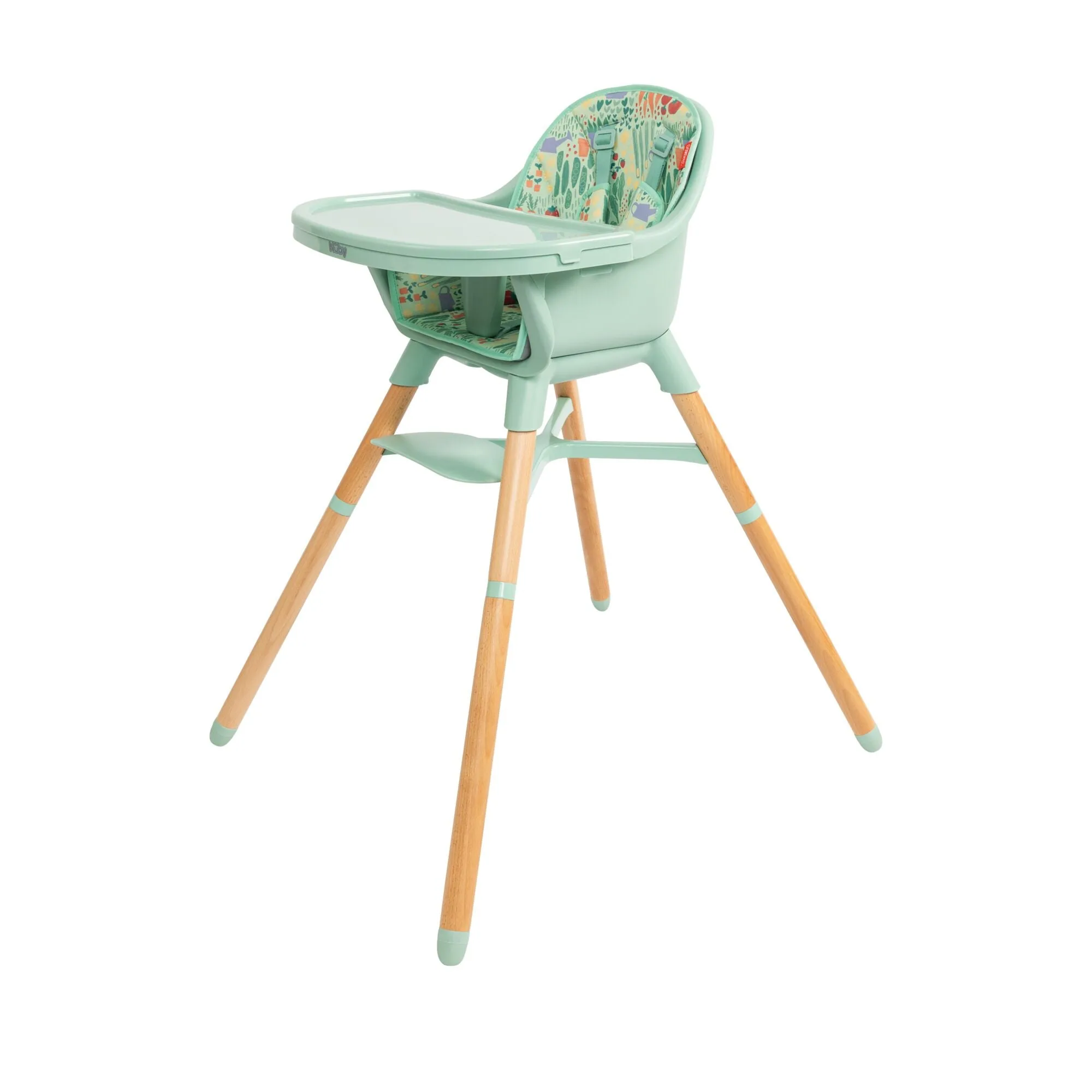
4-in-1 Multi-Use High Chair | Green Garden
-
4-in-1 Multi-Use High Chair | Green Garden: Sturdy design supports up to 60 lbs The high weight limit means most children can use the toddler chair and stool modes well past age 3, extending the product's useful life.
-
4-in-1 Multi-Use High Chair | Green Garden: Adjustable safety straps & 5-point harness Provides secure restraint in high chair and feeding chair modes, giving parents confidence during the early stages.
Safety Considerations When Switching
When you move to a booster seat, ensure it is securely strapped to a stable dining chair (if it's a strap-on model) and that your child uses the booster's harness or the chair's lap belt. Never place a booster seat on a stool, bench, or wobbly surface. The transition should feel gradual: start with one meal per day in the booster seat and watch for signs of discomfort or instability. If your child is not yet sitting independently or tries to lean out of the seat, stick with the high chair a little longer.
Booster Seat vs. Convertible High Chair: Which Is Right?
A dedicated booster seat is portable and often less expensive, but it typically has a shorter lifespan. A convertible high chair like the Nuby 4-in-1 Multi-Use High Chair grows with your child through multiple stages, offering better value if you plan to use it for years. The trade-off is that convertible chairs are larger and not as portable. For families who eat out often or have limited kitchen space, a separate booster seat may be more practical. For those who want a single, long-term solution, a 4-in-1 high chair is a strong choice.
What the Supplied Information Does Not Confirm
The supplied records do not include specific assembly instructions, exact dimensions, or detailed cleaning guidelines for the 4-in-1 Multi-Use High Chair. For these details, refer to the product's instruction manual or contact the manufacturer. The weight limit of 60 lbs is confirmed, but the chair's suitability for children above that weight is not supported by the available evidence.