Quick Answer
Move up from Dr Brown's Options+ Level 1 to Level 2 when your baby shows signs of frustration or takes longer to finish a bottle, typically around 3 months, but always let your baby's cues guide you.
Why Age Is Only a Starting Point
Dr Brown's labels Level 1 teats as 0 months+ and Level 2 as 3 months+, but every baby develops at their own pace. Some babies are ready for a faster flow earlier, while others prefer a slow flow for longer. Watch your baby's behavior during feeds rather than relying solely on age.
The Trade-Off: Slow vs. Fast Flow
A slow flow (Level 1) supports paced feeding, which helps babies regulate their intake and reduces spit-up. However, if the flow is too slow, your baby may get frustrated, take longer to finish, or swallow excess air. Moving up to Level 2 provides a faster, more natural feeding experience, but it may increase the risk of overfeeding if your baby isn't ready. Always monitor for cues like coughing or milk leaking from the mouth, which can indicate the flow is too fast.
Wide-Neck vs. Narrow-Neck Teats
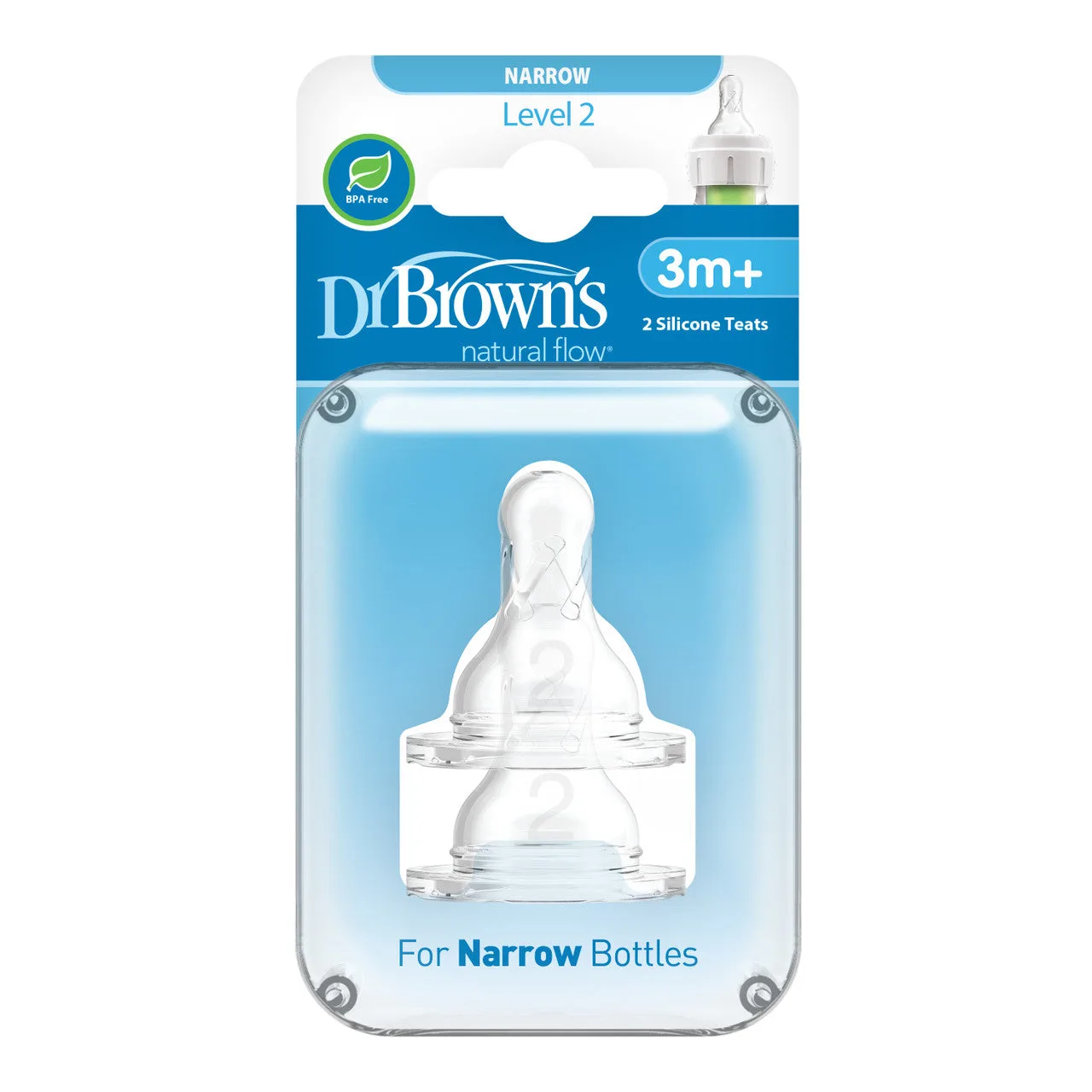
Dr Brown's offers both wide-neck and narrow-neck Options+ teats. Wide-neck teats have a contoured breast-like shape that encourages a proper latch, while narrow-neck teats are compatible with standard bottles and may feel more familiar to some babies. The flow levels are similar, but the shape can affect how your baby latches and feeds. If you're using narrow-neck bottles, consider the Dr Brown's Narrow Neck Options+ Level 2 Teats for a medium flow.
Your Flow Transition FAQ
How do I know my baby is ready for a faster flow?
Look for signs like taking longer than 20 minutes to finish a bottle, fussing or pulling away during feeds, or seeming frustrated even though they're hungry. These can indicate the flow is too slow. If you see these signs, try a Level 2 teat for a few feeds to see if your baby feeds more happily.
What's the difference between Level 1 and Level 2 teats?
Level 1 is a slow flow, ideal for newborns and paced feeding. Level 2 is a medium flow, designed for babies around 3 months and up who need a faster milk delivery. Always have both levels on hand so you can switch back if the faster flow seems too much.
How do I switch from Level 1 to Level 2?
Start by offering a Level 2 teat for one or two feeds a day, and watch for signs of gulping, coughing, or milk leaking. If your baby handles it well, gradually use it for all feeds. If your baby shows discomfort, revert to Level 1 and try again in a week or two.
Should I use wide-neck or narrow-neck teats?
Choose based on your bottle system. Wide-neck teats mimic the breast shape for a natural latch, while narrow-neck teats fit standard bottles and may be easier for some babies to hold. If you're switching bottle types, introduce the new teat slowly to help your baby adjust.
Dr Brown's Options+ Teats at a Glance
-
Dr Brown's Options+ Level 1 Teats: The Level 1 Wide-Neck Teat has a slow, paced flow engineered for a consistent rate, with a suggested age of 0 months+. This is the best starting point for newborns and babies who need a gentle, controlled flow.
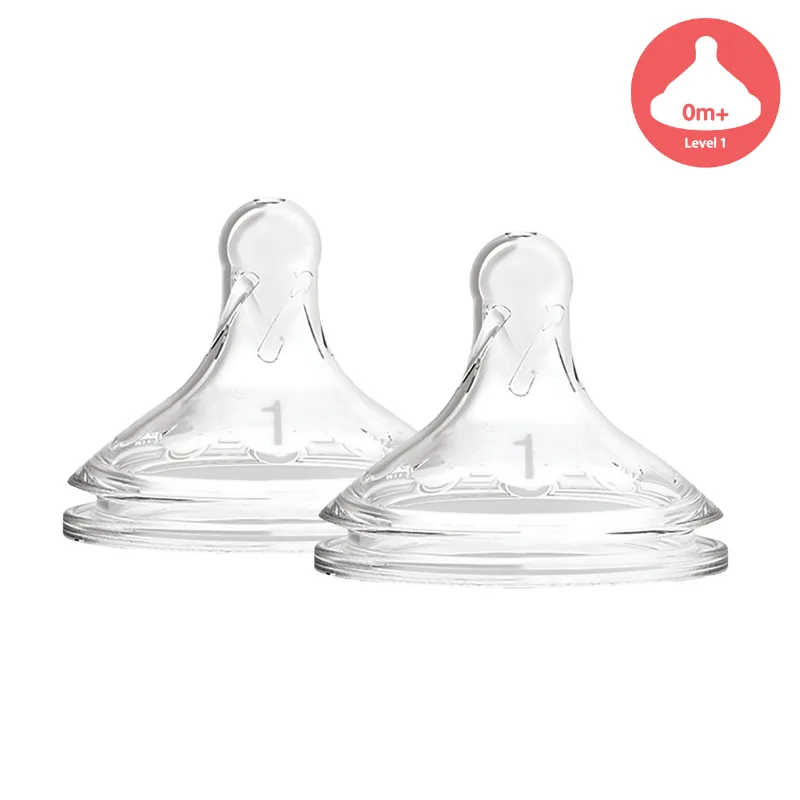
Dr Brown's Options+ Level 1 Teats
-
Dr Brown's Options+ Level 2 Teats: The Level 2 Wide-Neck Teat is a medium-flow teat for babies whose feeding has developed, with a suggested age of 3 months+. This provides a faster flow for babies who are ready to move up, while still supporting paced feeding.
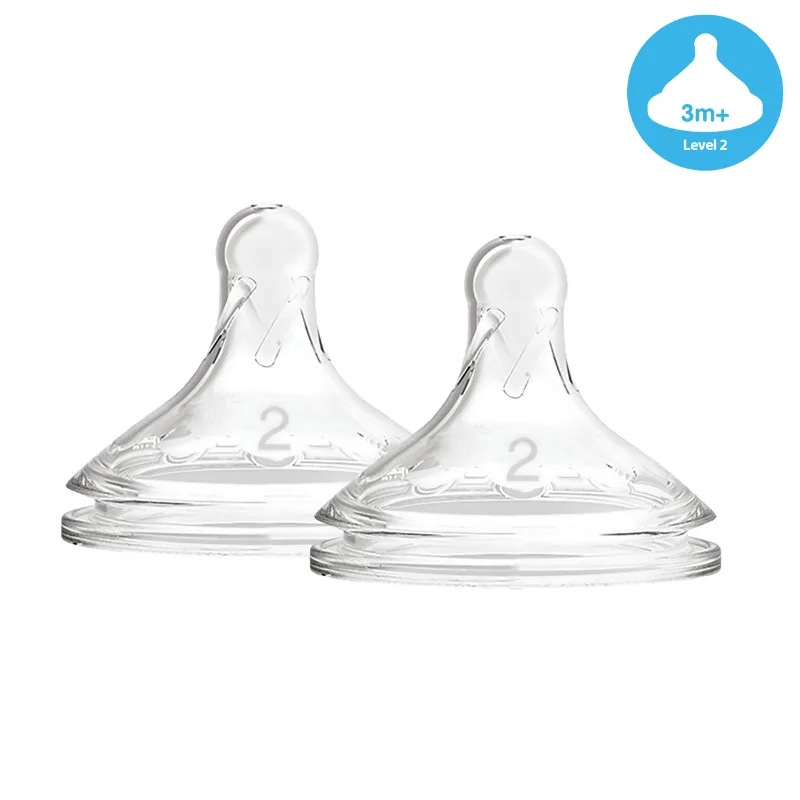
Dr Brown's Options+ Level 2 Teats
-
Dr Brown's Narrow Neck Options+ Level 2 Teats: The Narrow Neck Options+ Level 2 Teat is designed for babies around 3+ months, offering a slightly faster flow while maintaining paced feeding benefits. If you use narrow-neck bottles, this teat gives your baby a medium flow without changing bottle systems.