Start with what the kit gives you
The Stoneware Planter & Seed Kit pairs a hand-shaped matte white stoneware planter with a True Leaf Market culinary herb or salad starter kit. Each kit includes seeds, trays, soil pucks, and instructions—enough for multiple plantings. The planter and matching undertray are the destination, but the starter tray is where the seedlings begin.
Repotting timing depends on the plant, not the calendar. The supplied information does not include a specific week count or root‑development chart, so use the visual cues below as your guide. If you are ever unsure, the kit’s own instructions are the first place to check.
What comes in the kit
-
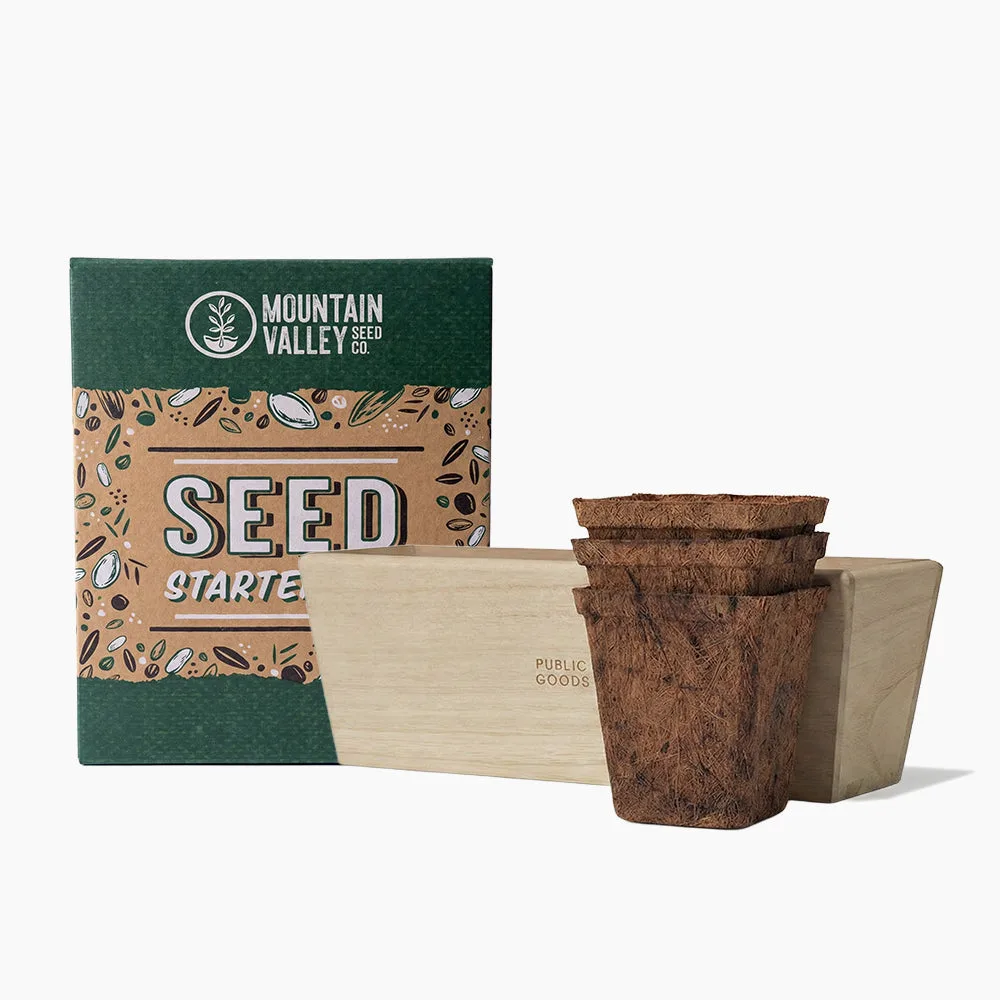
Stoneware Planter & Seed Kit: The Stoneware Planter & Seed Kit includes True Leaf Market herb or salad starter kits with seeds, trays, soil pucks, and instructions, enough for multiple plantings. Knowing what is included helps you plan the repotting step: you will move seedlings from the starter trays into the stoneware planter, not purchase separate seed‑starting supplies.
Stoneware Planter & Seed Kit
-
Stoneware Planter & Seed Kit: Each planter is hand-shaped with subtle variations and comes with a matching undertray; sizes include Medium, Large, and an Assorted Trio, with herb or salad kit options. The planter size you chose affects how much root room a seedling will eventually have, which is central to deciding when to repot.
Signs a seedling is ready to move
These cues are general gardening indicators, not manufacturer instructions. The kit’s supplied instructions may offer more specific guidance for the included herb and salad varieties.
- True leaves have appeared: The first leaves (seed leaves) are not a reliable signal. Wait until the plant has developed its first set of true leaves—the ones that look like the mature plant’s leaves.
- Roots are filling the starter cell: Gently lift a seedling from its tray. If roots are visible around the edges of the soil puck or starting to circle, the seedling has outgrown its starting space.
- The seedling looks crowded: When leaves from neighboring seedlings touch or overlap, competition for light and nutrients increases. Thinning or repotting at this stage gives each plant room to grow.
- Growth has slowed despite good light: If a seedling has stalled while others in the same tray are growing, it may be root‑bound. Check the roots before assuming a light or water issue.
How to move seedlings into the stoneware planter
The kit includes soil pucks and instructions; use those as your primary reference. The steps below cover the transplant itself, which the supplied information does not detail.
- Water the starter tray first: Moisten the soil in the starter tray a few hours before repotting. Damp soil holds together better and reduces root disturbance.
- Prepare the stoneware planter: Place the matching undertray under the planter. If the kit’s instructions specify a soil preparation step for the planter, follow those instructions. The supplied information does not state a required soil type or depth for the stoneware planter.
- Lift the seedling gently: Use a small spoon or your fingers to loosen the soil around the seedling. Lift by the root ball, never by the stem, and support the root ball with your hand.
- Set the seedling at the same depth: Plant the seedling so the top of its root ball sits level with the surrounding soil. Burying the stem deeper than it grew in the starter tray can stress the plant.
- Firm the soil and water: Gently press the soil around the roots to remove air pockets, then water until moisture reaches the undertray. Empty any standing water from the undertray after watering.
Choosing the right planter size for the job
The Stoneware Planter & Seed Kit is offered in Medium, Large, and an Assorted Trio, each with either an herb or salad kit. The supplied information does not give exact dimensions or soil volume for these sizes, so treat size selection as a judgment call based on how many seedlings you plan to grow and how large the mature plants will be.
A medium planter suits a small group of compact herbs such as basil or parsley. A large planter gives more root room for salad greens or larger herb plants. The Assorted Trio is useful if you want to separate varieties or stagger plantings. If you are unsure, start with the smaller planter and repot again later—stoneware planters are durable, and the undertray makes moving them easy.
The planter as a long‑term home
- Stoneware Planter & Seed Kit: The stoneware planter is hand-shaped with subtle variations and comes with a matching undertray, designed for kitchen, countertop, or windowsill use. This is the destination for your seedlings, so knowing its intended placement helps you choose a spot with appropriate light before you transplant.
Indoor transplant tips that make a difference
- Keep light consistent: After repotting, place the planter in the same light conditions the seedlings had in their starter tray. Sudden changes in light can slow growth.
- Watch the undertray: The matching undertray catches excess water. Empty it after watering so roots do not sit in standing water.
- Avoid repotting during a heat wave: If your indoor space is unusually warm or dry, wait for a milder day. Transplanting is stressful for seedlings, and stable conditions help them recover.
- Do not fertilize immediately: The kit’s soil pucks are formulated for starting seeds. Give seedlings a week or two to settle into the planter before adding any fertilizer, unless the kit instructions say otherwise.
What the supplied information does not cover
The Stoneware Planter & Seed Kit record does not include specific care instructions, safety ratings, or compatibility details beyond what is listed here. It also does not state exact planter dimensions, soil volume, or a recommended repotting schedule. For those details, refer to the kit’s own instructions or contact the manufacturer.
This guide gives you a practical framework for timing and technique, but the best signal is always the plant in front of you. Check roots, watch for true leaves, and give seedlings room before they become root‑bound.