Quick Answer
Use a nylon pellet on socket cap screws when you need a self-locking, vibration-resistant fastener that can be reused multiple times without losing its locking grip. It works especially well on larger fasteners like a 7/8-9 socket cap screw.
Why Choose a Nylon Pellet Over a Nylon Patch?
A nylon pellet is a small, pre-installed plug of nylon inserted into the threads of a screw. When the screw is tightened, the pellet compresses against the mating threads, creating friction that resists loosening from vibration. A nylon patch is a coating applied to the threads; it also locks but is generally better suited to smaller or finer threads and may lose effectiveness after fewer reuses.
For larger fasteners like a 7/8-9 socket cap screw, a pellet provides a more robust locking action because the larger contact area can generate higher friction. If you need a fastener that can be removed and retightened repeatedly, a pellet typically holds up better than a patch.
Match the Locking Method to Your Application
Consider the environment and how often you'll disassemble. Nylon pellets are ideal for machinery, tooling, jigs, and precision assemblies where vibration is a concern and where you might need to adjust or service the equipment. They also work well with partially threaded screws because the pellet can be positioned on the threaded portion that engages the mating part.
For applications where you need a temporary lock and may remove the screw frequently, a pellet is a better choice than a liquid threadlocker, which can be messy and requires curing time. However, if you need a locking element that can be applied in the field, a patch or adhesive might be more convenient.
Understand the Trade-offs of Nylon Pellets
Nylon pellets add cost compared to plain screws, and they are not suitable for very high temperatures (above about 250°F/121°C) because nylon can soften. They also require a slightly higher installation torque because the pellet adds friction. If you need a fastener for extreme heat or where you want minimal installation resistance, a mechanical locking device like a lock washer or a prevailing-torque nut might be a better fit.
Another consideration: a nylon pellet reduces the effective thread area slightly, which can lower the overall shear strength of the connection. For critical structural joints, you should verify that the reduced capacity still meets your design requirements.
Frequently Asked Questions
When should I choose a nylon pellet over a nylon patch?
Choose a nylon pellet for larger fasteners (like 7/8-9) or when you need repeated reuse without losing locking power. A patch is often adequate for smaller threads or one-time installations. For heavy-duty or frequently serviced equipment, prefer a pellet.
Can a nylon pellet screw be reused?
Yes, a nylon pellet can be reused multiple times because the nylon compresses and springs back. However, after many cycles, the pellet may wear and lose some locking effectiveness. Inspect the pellet for wear before reusing. Check the pellet for cracks or flattening before each reuse.
Does a nylon pellet affect installation torque?
Yes, the pellet adds friction, so you'll need slightly higher torque to seat the screw. Always follow the manufacturer's torque recommendations for the specific size and material. Adjust your torque wrench settings to account for the added friction.
Product Facts
-
7/8-9 X 3-1/2" Socket Cap Screws | Hex Socket Drive | Nylon Pellet | Partially Threaded | Alloy Steel Thermal Black Oxide (10 / Pkg.): These 7/8-9 x 3-1/2" socket cap screws are made from alloy steel with a thermal black oxide finish, feature a hex socket drive, and are partially threaded. The thermal black oxide provides corrosion resistance and a smooth surface, while the partial threading and nylon pellet option make them suitable for locking applications in machinery and tooling.
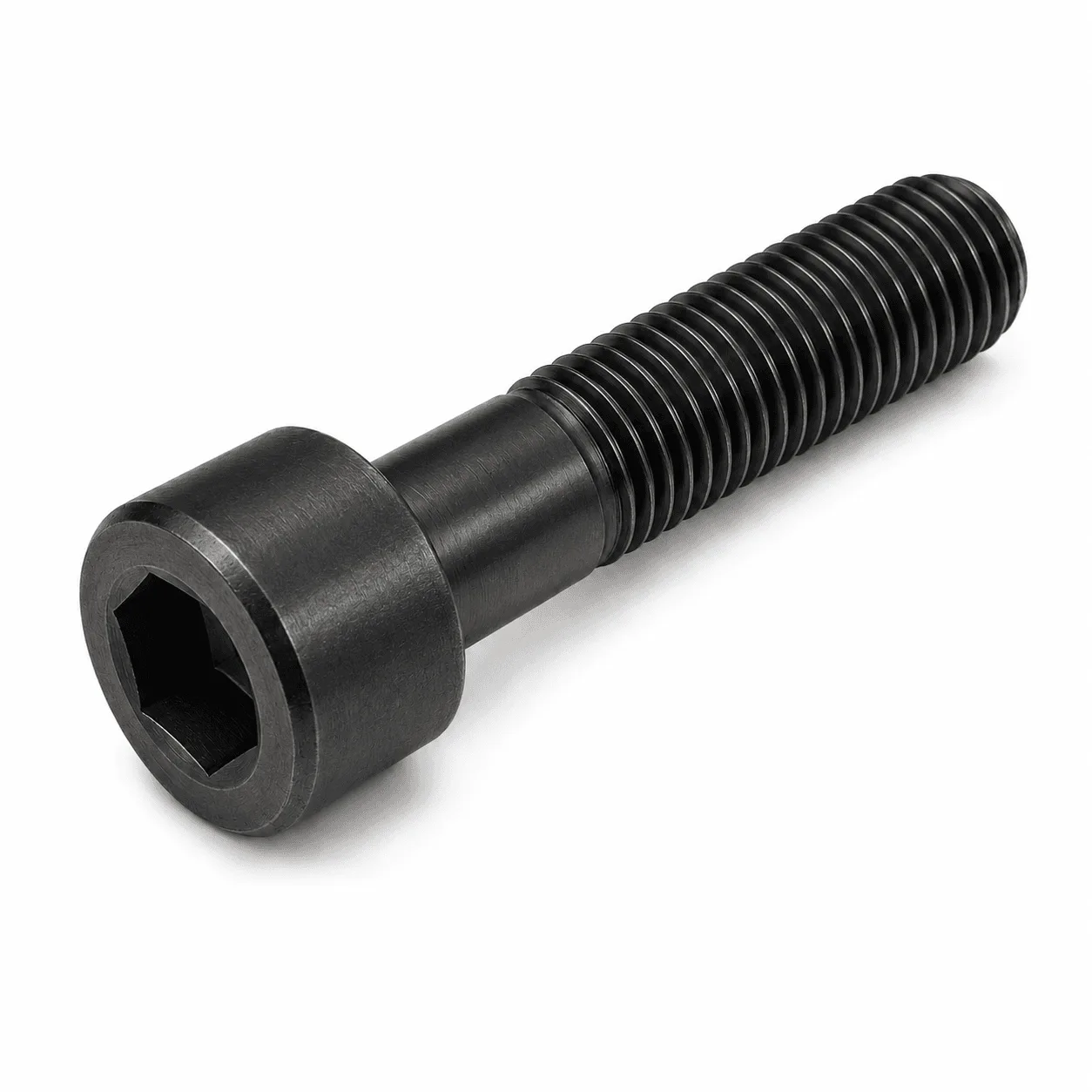
7/8-9 X 3-1/2" Socket Cap Screws | Hex Socket Drive | Nylon Pellet | Partially Threaded | Alloy Steel Thermal Black Oxide (10 / Pkg.)