Quick answer
Start with the supplement that matches the most specific gap in your pet’s diet or health history: Select Care – Vitamin C Herb Support for guinea pigs, Select Care – Urinary Health Support for urinary concerns, Select Care – Digestive Health Support for digestive upset, and Select Care – Multi-Vitamin Health Support for general daily coverage. If your pet has no specific issue, choose the multi-vitamin rather than stacking all four.
Why species changes the decision
Guinea pigs cannot produce their own vitamin C, so a supplement with added ascorbic acid is a practical daily choice for them. Rabbits and chinchillas can make their own vitamin C and do not have the same requirement, so the vitamin C biscuits are optional for them rather than essential. This species difference is the first filter before you compare formulas.
When a targeted formula beats a general one
A multi-vitamin covers broad nutritional gaps, but it will not address a specific urinary or digestive concern. If your pet has a history of bladder sludge, urinary tract issues, or digestive sensitivity, choose the targeted formula first. The trade-off is that targeted formulas are narrower; they are not designed to replace a complete diet or treat medical conditions.
The honest limits of supplements
These products are supportive, not curative. They do not replace veterinary care, and they should not be used to self-treat a sick pet. If your small pet is straining to urinate, losing weight, or has diarrhea, consult a veterinarian before adding any supplement. Also note that the catalog does not list guaranteed analysis or feeding amounts, so you will need to introduce any new supplement gradually and monitor your pet’s response.
Decision rules for choosing a Select Care supplement
- Guinea pig with no specific health issue: Choose Select Care – Vitamin C Herb Support as a daily vitamin C top-up, because guinea pigs cannot make their own vitamin C. If your guinea pig already eats vitamin C–fortified pellets, check total intake with your vet before adding biscuits.
- Rabbit or chinchilla with no specific health issue: Choose Select Care – Multi-Vitamin Health Support for general nutritional coverage; skip the vitamin C biscuits unless your vet recommends them.
- Pet with a history of urinary tract or bladder concerns: Choose Select Care – Urinary Health Support as the targeted formula, and do not rely on the multi-vitamin to address urinary health. Urinary issues can be serious; confirm with your vet that a supplement is appropriate alongside any treatment.
- Pet with occasional digestive sensitivity: Choose Select Care – Digestive Health Support during sensitive periods, but keep hay as the foundation of the diet. If digestive signs persist beyond a few days, stop the supplement and seek veterinary advice.
- You want to cover more than one concern: Do not stack all four supplements at once. Pick the single most relevant formula, or ask your vet whether combining two is safe for your pet’s size and diet.
Product facts at a glance
-
Select Care - Multi-Vitamin Health Support: Combines premium timothy hay with vitamins A, D, E and key B-complex nutrients, plus dandelion, parsley and nettle. A broad daily option when your pet’s diet is already balanced but you want general nutritional backup.
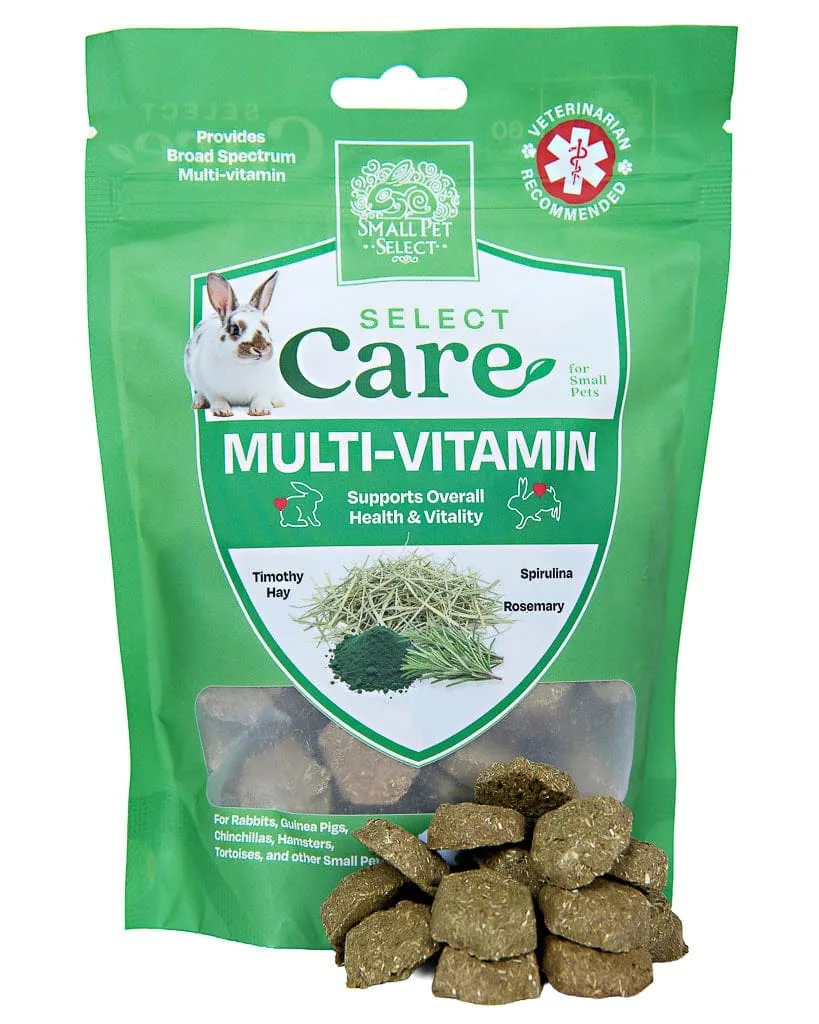
Select Care - Multi-Vitamin Health Support
-
Select Care - Urinary Health Support: Blends timothy hay with herbs traditionally used to support urinary function and bladder health in small herbivores. A focused choice for rabbits, guinea pigs, or chinchillas with a history of urinary tract concerns.
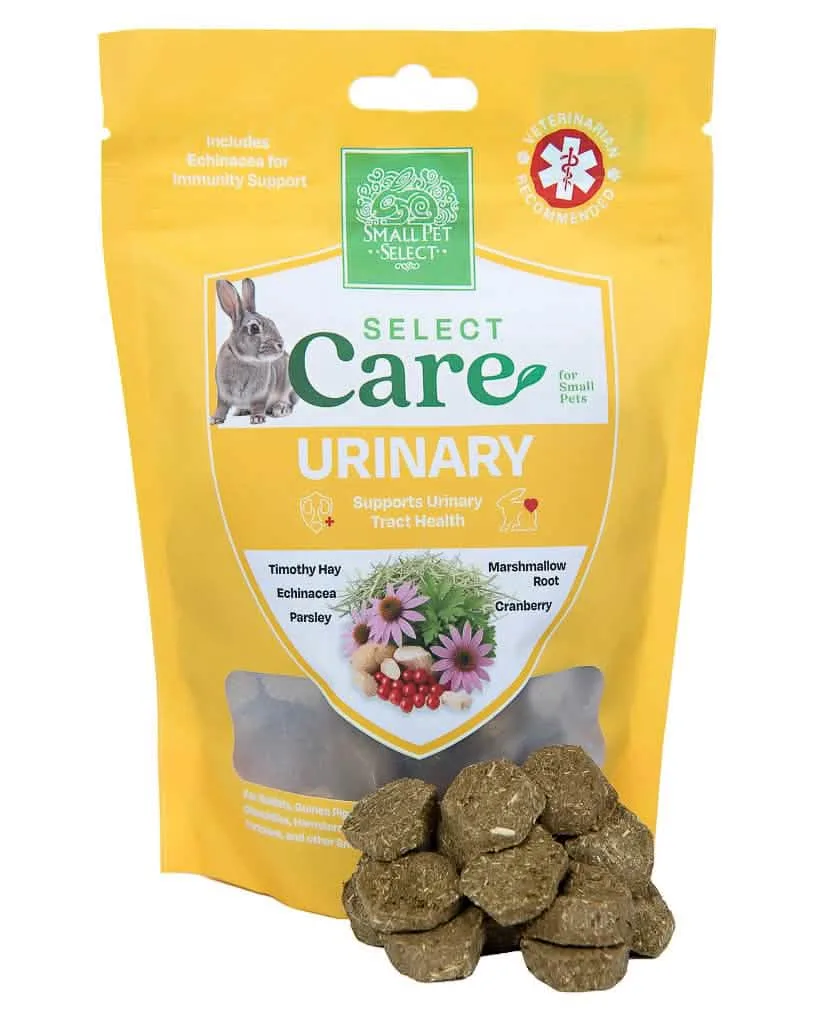
Select Care - Urinary Health Support
-
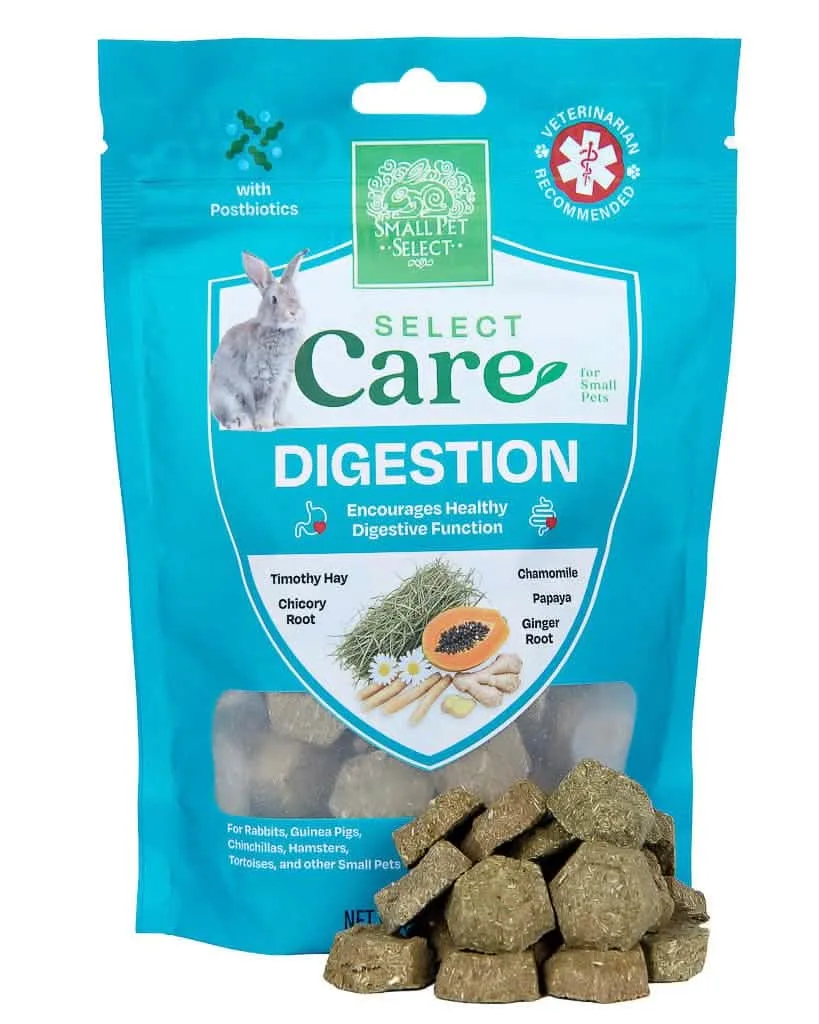
Select Care - Digestive Health Support: Pairs timothy hay with a blend of digestive-supporting herbs in a crunchy format. Useful during periods of digestive sensitivity, but not a substitute for hay-based fiber.
-
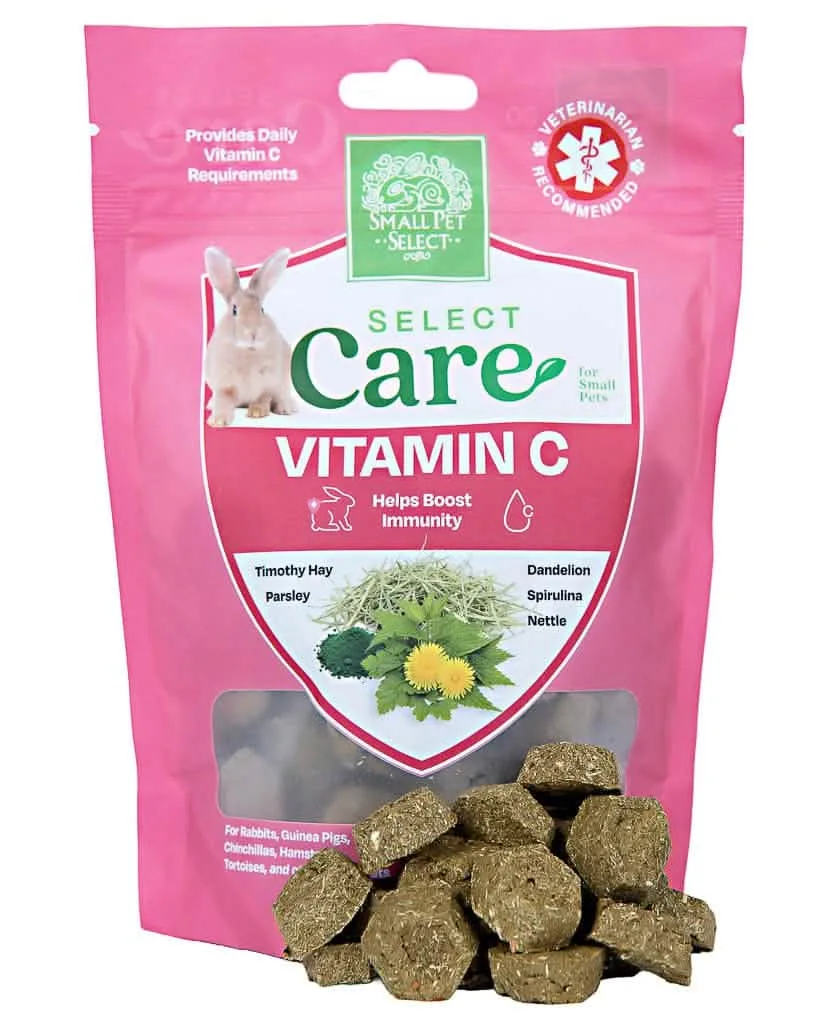
Select Care - Vitamin C Herb Support: Crunchy biscuits combine timothy hay, vitamin-rich herbs, and added ascorbic acid. Especially relevant for guinea pigs, who cannot produce their own vitamin C.
Who these supplements fit
Best for
- Guinea pig owners who need a reliable daily vitamin C source
- Rabbit or chinchilla owners who want general nutritional backup
- Pets with mild, vet-monitored urinary or digestive sensitivities
Not for
- Pets with acute illness or unexplained symptoms—see a vet first
- Owners looking for a complete food replacement
- Pets already on a vet-prescribed supplement without veterinary approval