Why truffle oil needs more careful storage than plain olive oil
White Truffle Extra Virgin Olive Oil is built around aroma, not heat. The catalog describes it as rich and savory, with an unmistakable truffle flavor that makes something very simple taste suddenly remarkable. That flavor is the whole point, so storage should protect the aroma rather than treat the bottle like a workhorse cooking oil.
The catalog is equally clear that this is not an oil for complicated cooking, and that the important thing is not to do very much. Storage follows the same logic: fewer variables, less disturbance, and a bottle kept ready for finishing rather than frying.
A low-effort storage routine that protects the truffle aroma
The catalog does not supply a specific storage temperature, shelf-life figure, or refrigeration instruction, so treat the points below as practical handling principles rather than manufacturer directions. Where the catalog is silent, the honest answer is that the detail is not confirmed by the supplied information.
- Keep the bottle closed and upright: A tight closure limits how much aroma escapes between uses. Store the bottle upright so oil stays away from the cap and the outside of the bottle stays clean.
- Keep it away from heat and direct light: The catalog does not specify a temperature range. A cool, dark cupboard is a reasonable default for an aromatic finishing oil, but it is general handling advice, not a stated manufacturer requirement.
- Do not leave it beside the stove: The catalog says this is not an oil for complicated cooking. Keeping the bottle out of the hot zone reinforces that role and avoids repeated temperature swings.
- Pour what you need, then close it: The catalog suggests drizzling and spooning rather than cooking. Decanting into a small serving vessel and resealing the main bottle keeps the reserve out of the open air.
- Skip the fridge unless you have a reason: No refrigeration instruction is supplied. Chilling can change the oil's texture, and the catalog offers no guidance on whether that is desirable here, so it is not a step you need to add.
What the catalog confirms about this bottle
-
White Truffle Extra Virgin Olive Oil: White Truffle Extra Virgin Olive Oil is described as rich and savory, with an unmistakable truffle flavor. Aroma is the product's defining quality, which is why storage should focus on protecting scent and flavor rather than extending cooking performance.
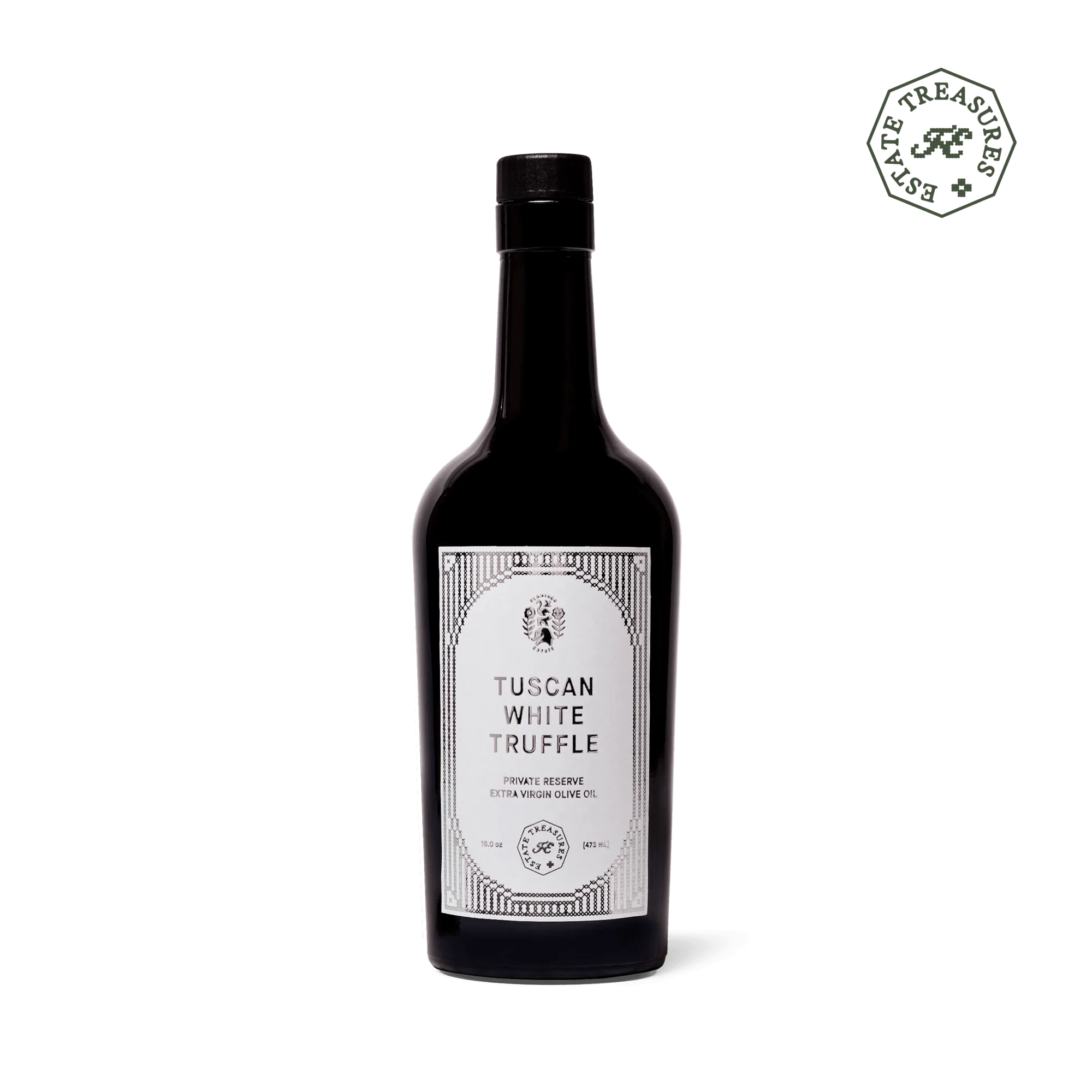
White Truffle Extra Virgin Olive Oil
-
White Truffle Extra Virgin Olive Oil: The catalog states this is not an oil for complicated cooking and that the important thing is not to do very much. This sets a clear use pattern: finishing, drizzling, and spooning. Storage should support that pattern, not a high-heat routine.
-
White Truffle Extra Virgin Olive Oil: The release is described as 100 bottles from a reserve that had been resting quietly for months and getting more and more flavorful. The catalog frames flavor as something that develops in the bottle over time, which makes careful handling between openings worth the small effort.
What the catalog does not tell you about shelf life
The supplied information does not include a shelf-life period, a best-by date, an opened-bottle window, or a storage temperature. It also does not state whether the oil should be refrigerated after opening. Those are real gaps, and filling them with invented numbers would be worse than leaving them open.
What the catalog does say is that the reserve bottles had been resting quietly for months and getting more and more flavorful before release. That is a description of the producer's own reserve, not a promise about how long your bottle stays at its best once it is in your kitchen. Use the catalog's own framing: this is a bottle to open, enjoy, and keep simple.
Signs it is time to finish the bottle
Because no official shelf-life figure is supplied, judge by the experience in the glass rather than a calendar. These are practical observations, not catalog specifications.
- The truffle aroma has gone quiet: If the unmistakable truffle flavor the catalog describes no longer comes through on warm bread or eggs, the bottle has lost the quality you paid for. Finish it in a simple dish rather than saving it for a special occasion.
- The oil tastes flat rather than rich and savory: The catalog's own description is rich and savory. A bottle that no longer reads that way is past its best for finishing, even if it is not unsafe.
- You have been saving it too long: This is a limited release of 100 bottles, and the catalog's tone is celebratory rather than archival. Treat it as a bottle to use, not a collector's item to keep sealed indefinitely.
The simplest way to keep it fresh: use it
The catalog's own serving suggestions are the best storage strategy in disguise. Pour it over steaming potatoes with butter and parmesan. Drizzle it over soft scrambled eggs. Toss hot pasta with butter and parmigiano. Spoon it over risotto or roasted mushrooms. Or tear apart a loaf of warm bread and forget about making dinner altogether.
Each of those uses is quick, low-heat, and puts the truffle flavor at the center. A bottle that gets opened, poured, resealed, and returned to a cool dark spot on a regular basis is less likely to sit forgotten at the back of a shelf. For a limited reserve release, that is the most honest freshness tip available: store it well, then let it do the work the catalog describes.