Quick answer
Place your MVH whole room heater on a hard, level floor against an interior wall, with the front grille aimed across the room's longest open path and at least 3 feet of clearance on all sides. Avoid corners, soft carpet, and anywhere the airflow hits a wall or furniture within a few feet. That position lets Vortex Heat Circulation move warm air through the whole room instead of cooking one spot.
Why position matters more with a whole room heater
A whole room heater is designed to circulate warm air, not just radiate it from a hot coil. The MVH uses Vornado's Vortex Heat Circulation to push heated air out and pull cooler air back in, so the unit needs a clear path to work. If you block the intake or exhaust, the heater recycles its own warm air, the thermostat reads a false high, and the room stays uneven. Position it so air can travel across the space and return to the unit.
Match the placement to the room you're heating
In a living room or open plan, aim the heater down the longest unobstructed line, such as from one end of a sofa arrangement toward the opposite wall. In a bedroom, place it so the airflow passes near the bed but not directly at your head, and keep it clear of curtains and bedding. In a home office or workshop, put it where the return air path isn't blocked by a desk or shelving. The goal is a loop, not a beam.
Clearance, surfaces, and safety checks
Keep the MVH on a hard, level surface. Carpet can restrict airflow at the base and cause the unit to tip or overheat, so use a flat board or a hard floor area if needed. Leave at least 3 feet of open space in front of the grille and around the sides, and never place it against a wall, under a desk, or inside a cabinet. Check that the cord isn't a trip hazard and that the plug fits snugly in a wall outlet, not an extension cord shared with other high-draw appliances.
Common placement mistakes that waste heat
The most common mistake is tucking the heater into a corner because it looks tidy. That traps warm air and starves the intake. The second is aiming it at a wall or the back of a couch, which bounces heat back and short-cycles the thermostat. The third is placing it near a door or window that leaks cold air, so the heater runs constantly without warming the room. If you notice one area is hot and the rest is cold, the airflow path is blocked or too short.
Step-by-step MVH placement
- Pick the room's longest open path: Stand at one end of the room and look for the clearest line to the opposite wall, free of furniture, rugs, or door swings. That line is where the heater's airflow can travel farthest. Checkpoint: if you can't see a clear path at least 6 feet long, choose a different wall.
- Choose an interior wall, not an exterior one: Interior walls are less affected by outside cold. Place the MVH against an interior wall so it isn't fighting a draft from a window or exterior door. Mistake to avoid: putting the heater directly under a window, which makes it run constantly.
- Set it on a hard, level surface: Move the MVH to a hard floor or a stable flat board. Carpet can block the base airflow and make the unit wobble, which affects both safety and performance. Checkpoint: press down gently on each corner. If it rocks, the surface isn't level enough.
- Aim the grille across the room, not at a wall: Point the front of the heater down the open path you identified. Avoid aiming it at a wall, sofa back, or cabinet within 3 feet, which traps heat and short-cycles the thermostat. Mistake to avoid: aiming at the nearest wall because it's convenient. That warms the wall, not the room.
- Leave at least 3 feet of clearance on all sides: Keep the intake and exhaust clear. Don't push the MVH into a corner, under a desk, or behind a chair. Air needs to enter the back and leave the front without obstruction. Checkpoint: walk around the heater. If anything is within 3 feet of the grille or intake, move it.
- Set the thermostat and let it stabilize: Turn the thermostatic knob to your desired comfort level and give the room 20-30 minutes to even out. Resist the urge to crank it to maximum; the thermostat will maintain the setting once the room reaches temperature. Mistake to avoid: adjusting the dial every few minutes. That prevents the heater from finding a steady cycle.
- Test for even heat and adjust once: After the room stabilizes, check the far corners. If one area is noticeably colder, rotate the heater slightly or move it a few feet along the same wall to improve the return airflow loop. Next step: if the room still won't even out, the space may be too open for one heater, or the airflow path is blocked by tall furniture.
MVH features that affect placement
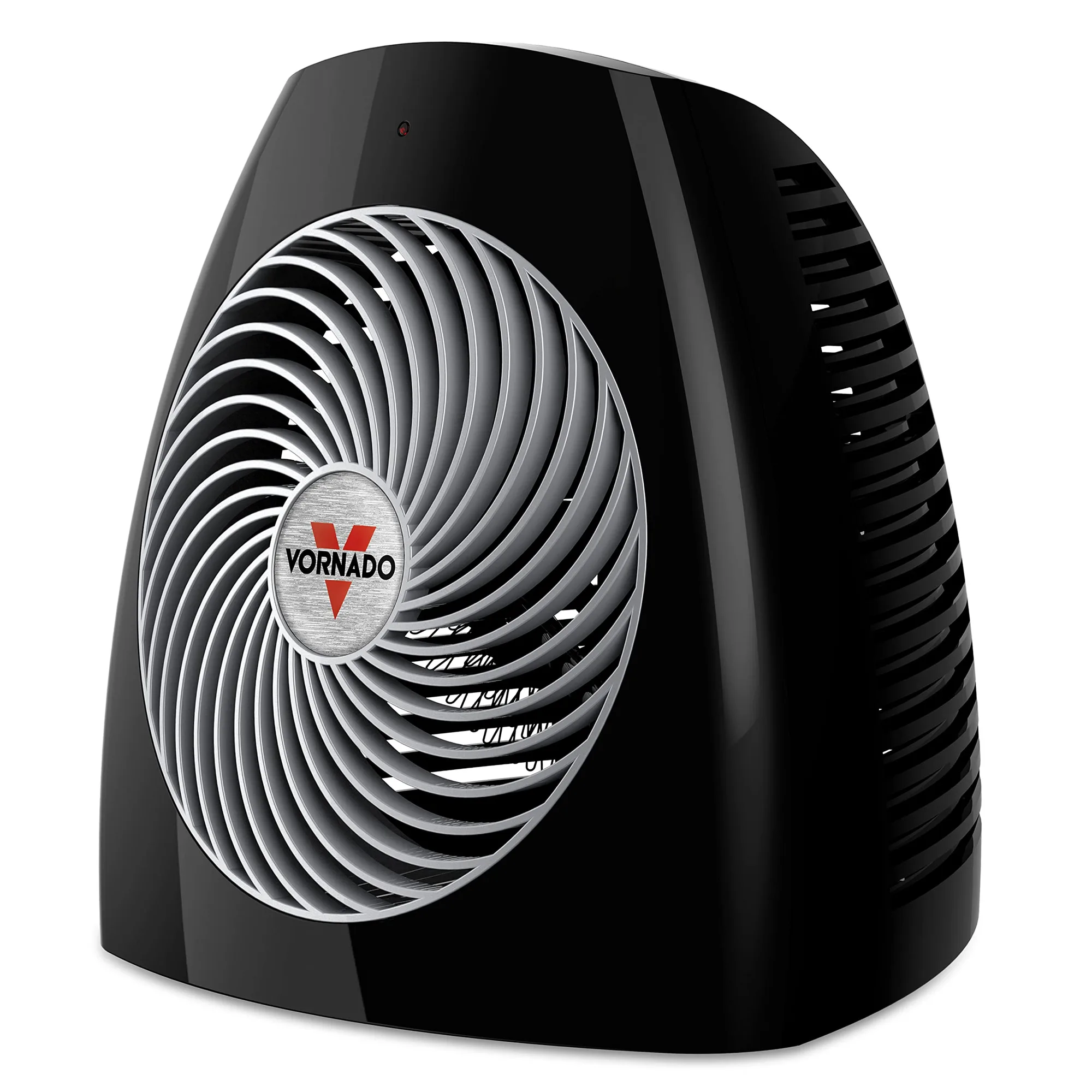
- MVH Whole Room Heater: The MVH whole room heater has a thermostatic temperature control knob and uses Vornado's signature Vortex Heat Circulation to distribute warm air throughout the room. A clear airflow path lets the thermostat read the room accurately, so the heater cycles less and uses less energy.
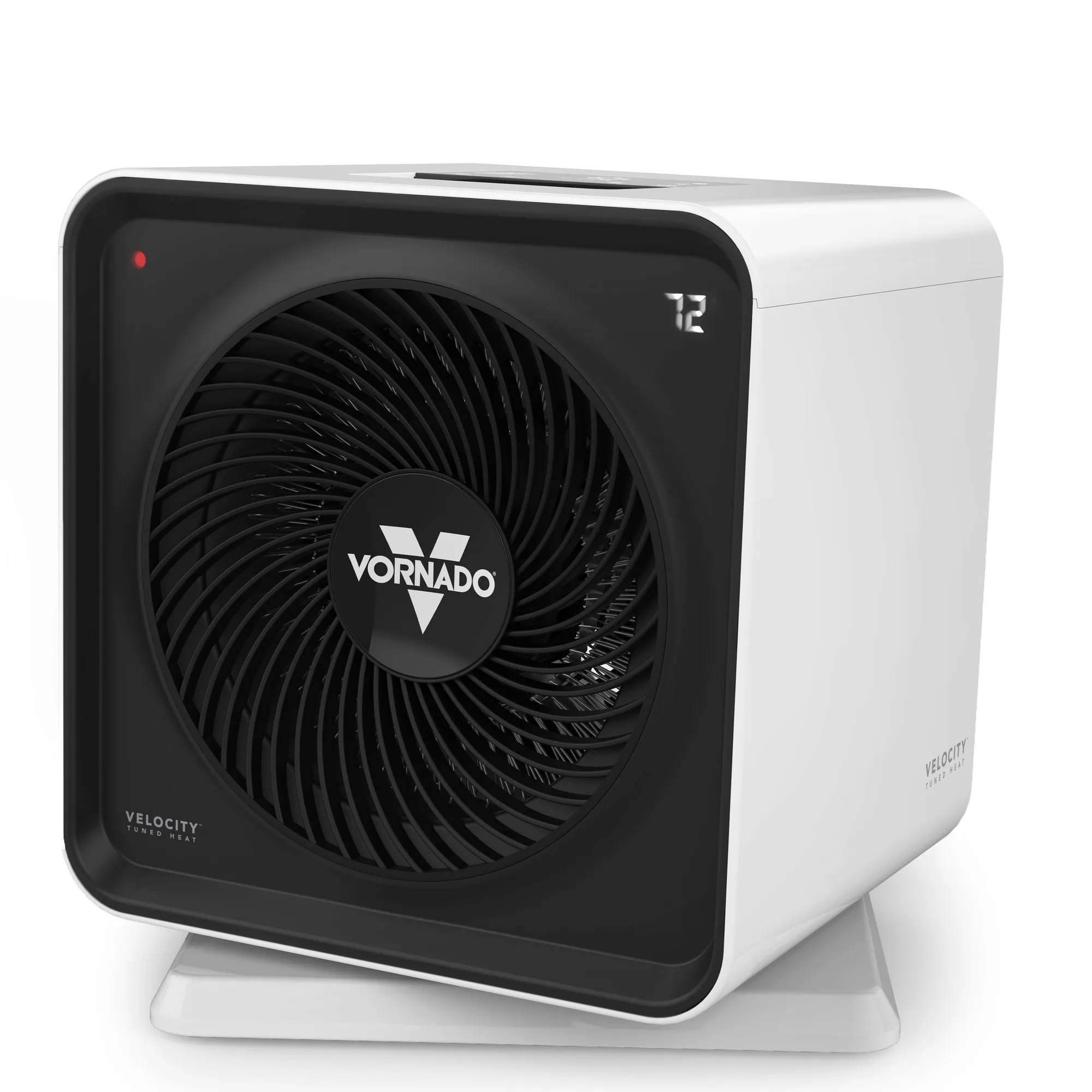
- Velocity Cube 5S Whole Room Heater with Swivel Base: The Velocity Cube 5S Whole Room Heater with Swivel Base has a rotating foundation that lets you direct heat without moving the unit, plus LED touch controls, 3 heat settings, and a fan-only mode. If you want to aim heat toward a seating area or switch to fan-only in shoulder seasons, the swivel base saves you from repositioning the heater.