Quick Answer
Drone is a low-frequency resonance that peaks at a specific rpm band, usually 2,000–3,000 rpm on the highway. To reduce it, first confirm the sound is rpm-linked, then add or swap a resonator, check for leaks and contact points, and choose a system with a straighter, better-damped design. If the drone persists after those steps, the system's fundamental tone is the cause, and changing the muffler or midpipe is the realistic fix.
You added an aftermarket exhaust for the sound and the flow, but now every highway commute comes with a deep, pulsing hum that sits right in your ears. That hum is drone, and it is different from the raspy buzz or the loud wide-open-throttle note you actually wanted.
Drone is not a sign you bought a bad part. It is a predictable result of how exhaust pulses interact with pipe length, diameter, and cabin resonance. This guide separates the symptom from the cause, gives you the fixes that work in order of effort, and tells you when to stop and change direction.
Drone vs. rasp: know which problem you have
Drone is a narrow, low-frequency boom that appears in a specific rpm range and often feels like pressure in your ears. It usually shows up at steady cruising, around 2,000–3,000 rpm, and fades once you accelerate past it. Rasp is a higher-frequency, buzzy, metallic sound that follows throttle and rpm more broadly and is often tied to thin piping, a missing resonator, or an exhaust leak.
The distinction matters because the fixes are different. A resonator or a Helmholtz-style chamber targets drone. Rasp is more often addressed by checking for leaks, adding sound-deadening material, or changing the muffler design. If you cannot tell which one you have, record a short clip at steady 65 mph and again at wide-open throttle, then compare the character of the sound.
- Drone: low, humming, rpm-specific, worst at light steady throttle.
- Rasp: buzzy, metallic, follows throttle and rpm broadly.
- If both are present, fix the leak or rasp source first, then tune the drone.
Why aftermarket exhausts drone more than stock
Factory exhausts are tuned with resonators, chambered mufflers, and sometimes active valves to cancel the frequencies that make a cabin uncomfortable. Aftermarket systems trade some of that cancellation for flow, weight savings, and a more aggressive tone. A straight-through muffler and mandrel-bent piping reduce restriction, but they also let more low-frequency energy reach the cabin.
Pipe diameter and exit style amplify the effect. Larger piping and single-exit designs can shift the resonance peak into a more noticeable range. Dual-exit systems sometimes split the pulse energy and change where the drone lands. None of this is a defect; it is the tradeoff you accepted for the sound and flow you wanted.
- Resonators cancel specific frequencies; removing one often creates drone.
- Straight-through mufflers flow well but damp less low-frequency energy.
- Single-exit and larger-diameter systems can move drone into a more audible band.
The exhaust drone fix checklist, in order of effort
Start with the cheap checks before you buy parts. Inspect the entire system for leaks at flanges, gaskets, and welds. A small leak can create a drone-like resonance. Check that the piping and muffler canisters are not touching the chassis, heat shields, or bumper cutouts. Contact points transmit vibration directly into the cabin and can sound exactly like drone.
Next, verify the install. Hangers should have some flex, not be rigid or stretched. Bolts should be snug but not so tight that they preload the piping. If the system is adjustable, loosen the clamps, let it settle, and retighten from front to back. If the drone remains, a resonator is the most effective next step, followed by tip changes if the system offers them.
- Check for leaks at every joint with the engine cold, then warm.
- Look for contact between piping and chassis, shields, or bumper.
- Re-seat the system: loosen clamps, settle, and retighten front to back.
- Add or replace a resonator before changing the muffler.
When the drone is the system's design, not a fault
Some systems are intentionally aggressive. A non-resonated midpipe paired with straight-through mufflers will drone at highway speed, and no amount of adjustment will make it quiet. If your setup matches that description and the drone is the dominant characteristic, you are hearing the design, not a problem to solve.
At that point you have three realistic options: add a resonator or Helmholtz chamber if the system supports it, switch to a system with a resonated midpipe or a more damped muffler, or accept the tone and manage cabin noise with sound-deadening material. Choose based on how much you value the current sound versus a quieter cruise.
- Non-resonated midpipe plus straight-through muffler equals drone by design.
- A resonator is the most targeted fix if the system allows it.
- Sound-deadening helps but does not eliminate low-frequency drone.
Choosing a system that drones less from the start
If you are still shopping, look for systems that include a resonator or offer one as an option. A resonated midpipe is the single most effective factory-style countermeasure against drone. Also consider the exit style: a single-exit system can be lighter and more direct, but a dual-exit or a system with a larger muffler canister often manages low-frequency energy better.
Tip options matter less for drone than for looks, but they are part of the system's overall tuning. A larger, slant-cut tip can change how the sound exits and how it reflects under the bumper. If a product page lists tip options, that is a styling and fit choice more than a drone fix, so do not expect a tip swap alone to solve a resonance problem.
- Prioritize a resonated midpipe if drone is a concern.
- Dual-exit or larger-canister systems often damp low frequencies better.
- Tip options are primarily cosmetic and fitment choices.
Drone diagnosis: symptom, cause, action, stop point
- Symptom: low hum at 2,000–3,000 rpm, worst at light steady throttle: This is the classic drone signature. It is rpm-specific and feels like pressure rather than volume. Confirm it by holding a steady 65 mph in the offending gear and noting the exact rpm where it peaks. If the peak moves with rpm and not with speed, you are dealing with resonance, not a leak or a wheel bearing.
- Likely cause: missing or ineffective resonator: A non-resonated midpipe or a straight-through muffler lets low-frequency pulses reach the cabin. If your system has no resonator, or the resonator is a small straight-through type, this is the most probable cause. Adding or upgrading a resonator is the single most effective fix before changing the whole system.
- Corrective action: leak check, contact check, re-seat, then resonator: Inspect all joints for leaks, look for piping touching the chassis or bumper, loosen and retighten the system from front to back, then add a resonator if the drone persists. Do these in order. Most drone complaints are resolved by the first three steps, and a resonator handles the rest.
- Stop point: the system is designed to be loud: If you have a non-resonated midpipe with straight-through mufflers and the drone remains after a resonator, the tone is the design. Further adjustment will not make it quiet. At this point, choose between accepting the tone, adding sound-deadening, or switching to a more damped system. Do not keep buying parts hoping for a different result.
How specific REMARK systems handle drone
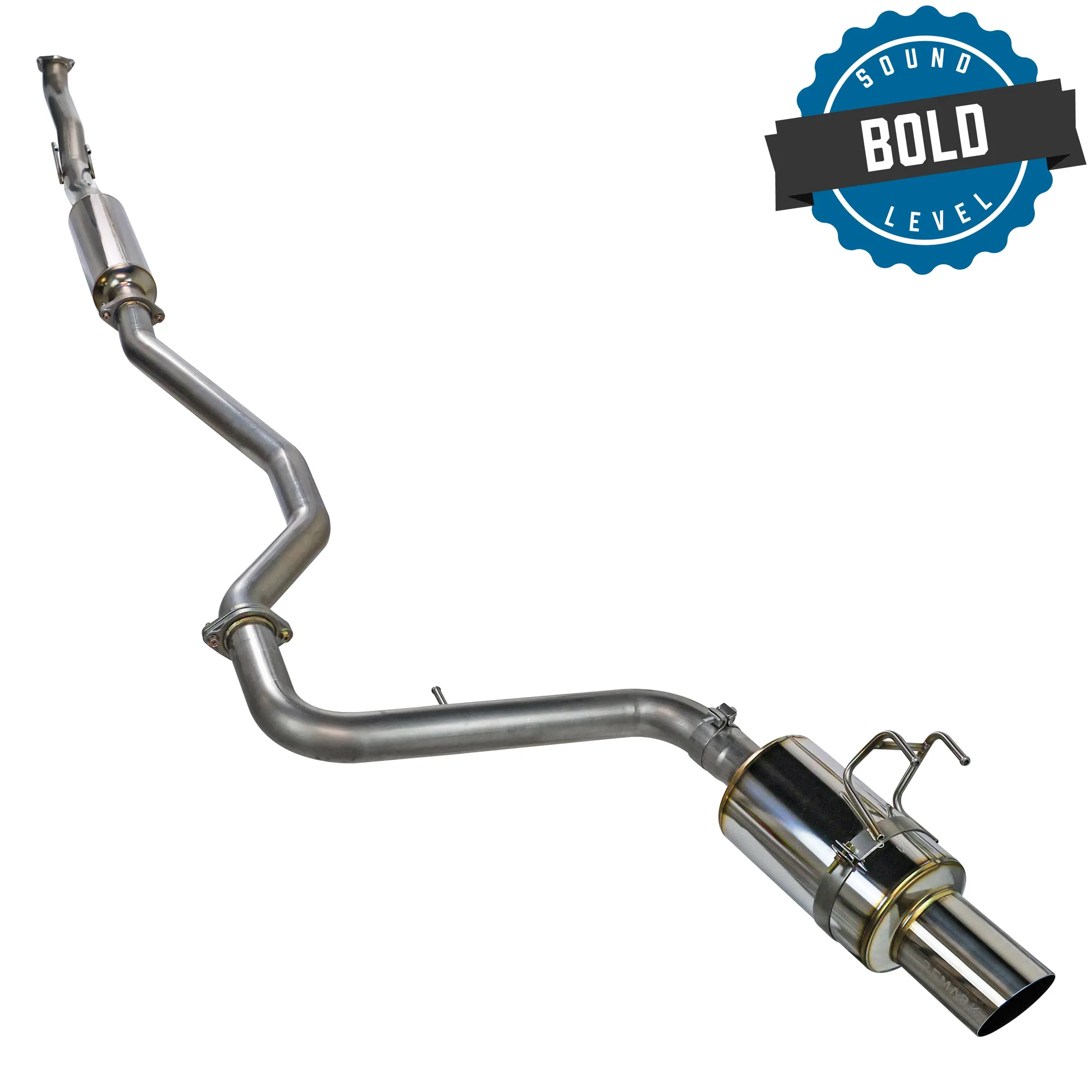
- R1-Spec Catback Exhaust - Honda Civic EX / Touring FE1 [2022+]: High flow design with minimal bends; single exit muffler; not too loud during acceleration and subtle at constant speed cruising; burbles during gear changes and off-throttle deceleration; 2.5 inch piping from the first section. This is a good example of a system tuned for a mild, livable tone rather than maximum volume. The 2.5-inch piping and single-exit design keep flow high, while the muffler is described as subtle at cruise, which is exactly the condition where drone is most annoying.
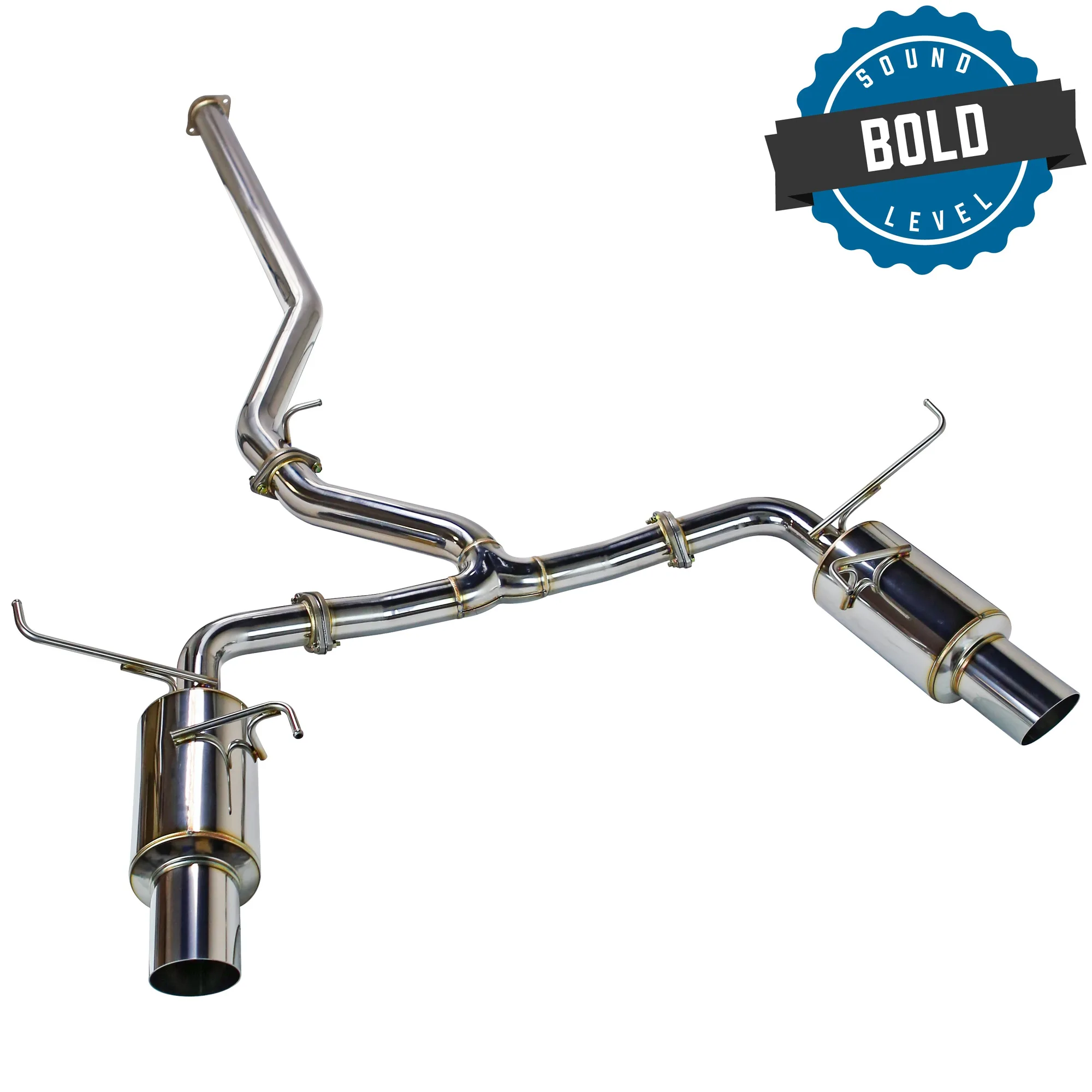
- R1-Spec Dual Catback Exhaust - Subaru WRX VB [2022+]: Dual exit with dual R1-Spec muffler canisters and 4.0 inch slant cut tips; 3 inch mandrel bent piping; high flow straight-through muffler design; non-resonated midpipe. The non-resonated midpipe and straight-through mufflers are the classic recipe for a louder, more aggressive tone. If you are sensitive to drone at highway speed, this system is more likely to produce it, and a resonator or a different midpipe would be the first fix.
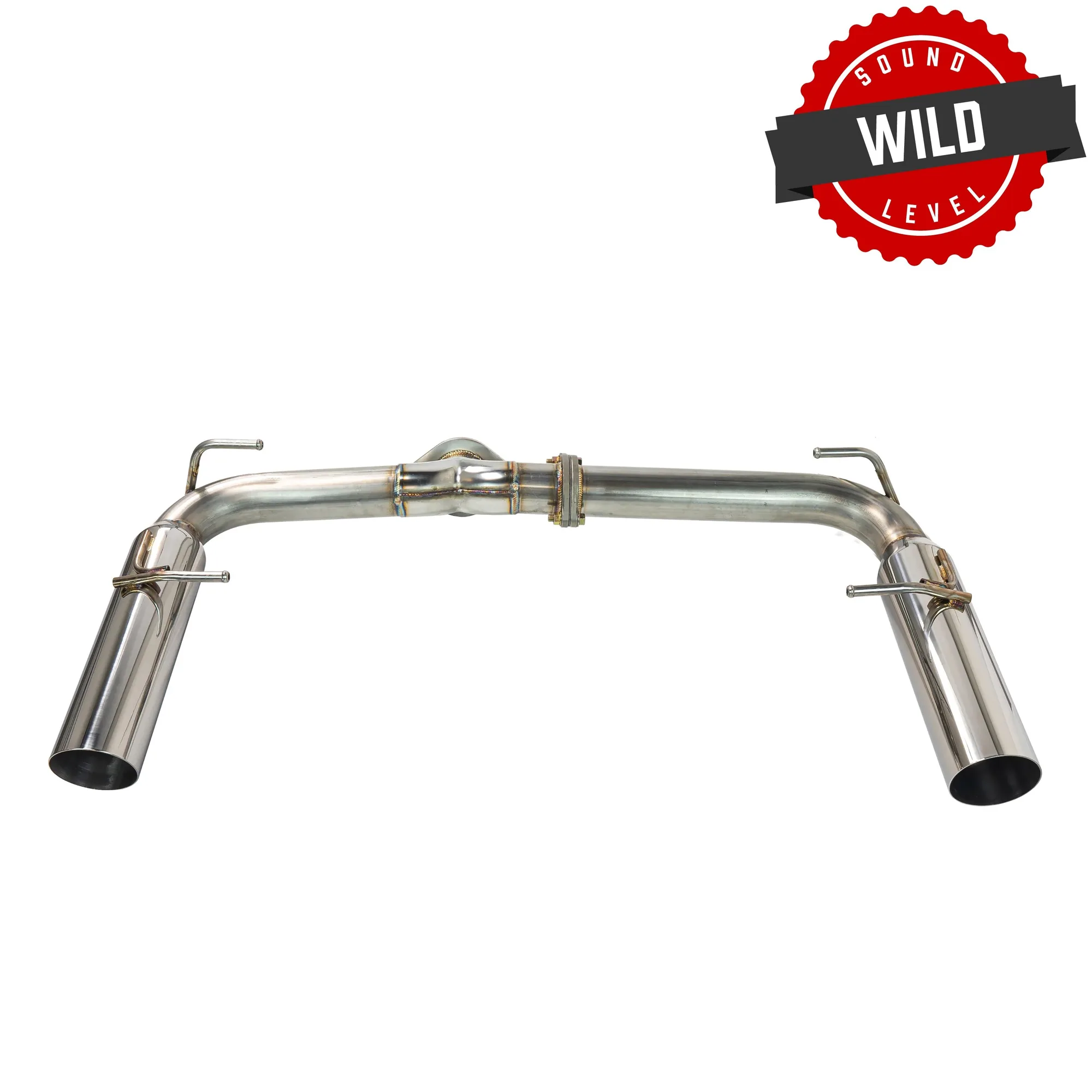
- Axleback - Scion FR-S / Subaru BRZ / Toyota 86 [2013-2021]: Quick, clean, cost effective solution; fits 2012-16 and 2017+ versions; tip options include stainless single wall, stainless double wall, burnt stainless single wall, and burnt stainless double wall. An axleback keeps the factory midpipe and resonator, which is the simplest way to add sound without introducing the drone that comes from a full non-resonated system. If drone is your main concern, starting with an axleback is a lower-risk path.
- https://remarkecp.com/products/axleback-boso-edition-toyota-gr86-subaru-brz-2023-909f86f04ceaa0bae93ae5e2-2721966Axleback (BOSO Edition) - Toyota GR86 / Subaru BRZ [2022+]: Inspired by Japanese Bosozoku style; known for huge exhaust systems and a very loud aggressive tone; tip options include stainless, burnt blue stainless, and burnt stainless. This is an intentionally loud, aggressive design. It is the opposite of a drone-reduction choice. If you want a quiet highway cabin, this system is not the right starting point, and no tip change will make it subtle.
Drone is a solvable problem when you treat it as resonance rather than volume. Check for leaks and contact points, re-seat the system, and add a resonator if the hum persists. If the drone is the design, decide whether the sound is worth the cabin noise, and change the system only if it is not.